RFK Rankings · Tokyo
Best Counter-Only Restaurants in Tokyo 2026
Counter dining · Tokyo · 7 counters ranked · Updated May 2026
Compiled by the Restaurants for Kings editorial team · Published March 11, 2023 · Updated May 30, 2026 · Reviewed by Fredrik Filipsson, Editor-in-Chief · How we rank · Corrections
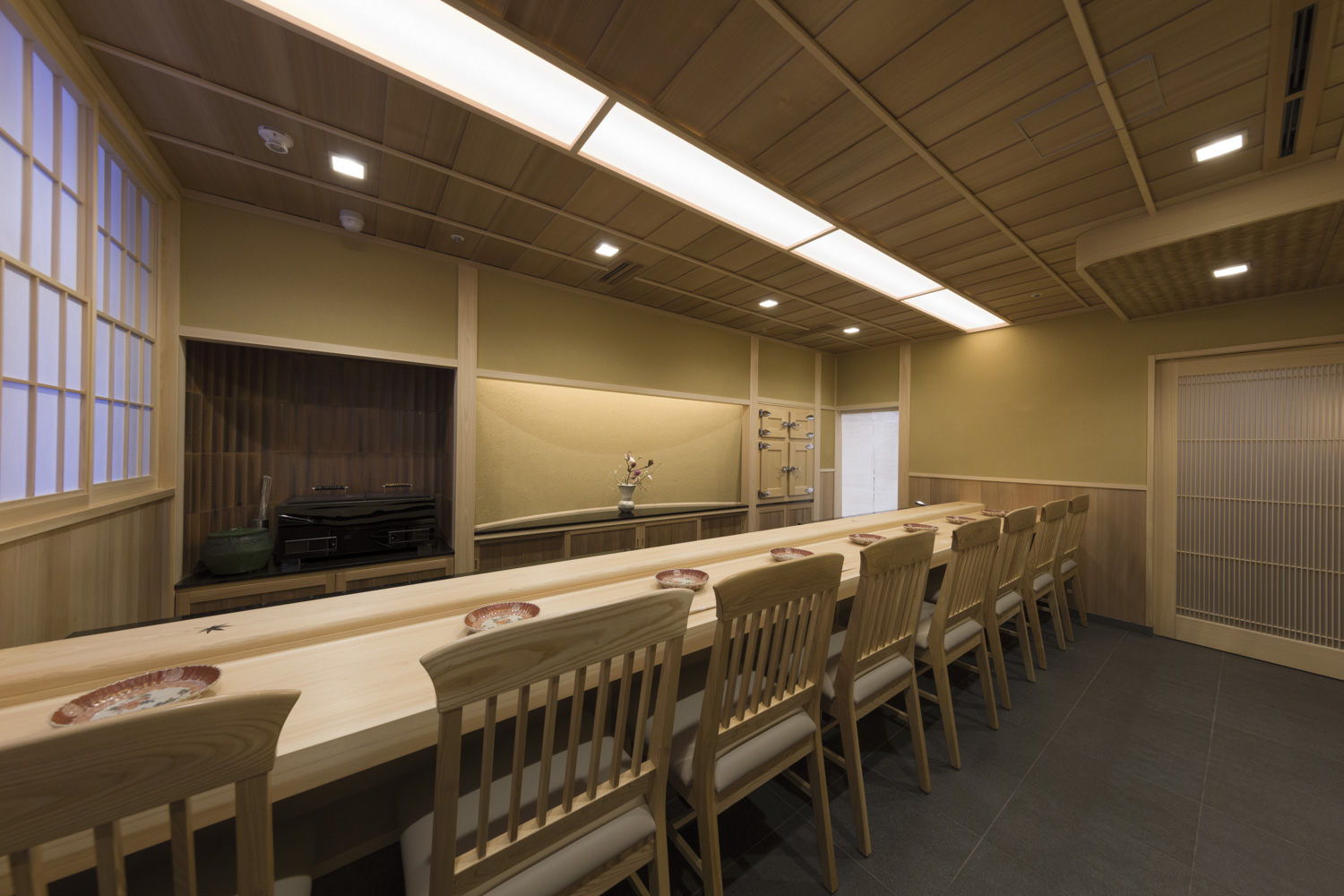
Nine seats, one chef, no tables. The counter is Tokyo's defining way to eat, and the city does more of it, at a higher level, than anywhere on earth. Sitting at the hinoki means the chef hands you each piece at its peak temperature, watches how fast you eat, and adjusts the next course to your pace. There is nowhere to hide and nothing to share. These seven rooms, ranked, are the counters worth flying for, from Edomae sushi masters in Ginza to a French two-star that tore out its tables and rebuilt the kitchen in the round.
1.Sushi Yoshitake
Masahiro Yoshitake's three-star, seven-seat Ginza counter, omakase near 38,000 yen; the city's benchmark nigiri. Reserve weeks ahead.
Sushi Yoshitake holds three Michelin stars in the 2026 guide, the second-floor counter at 4-12-2 Ginza seating only about seven. Chef Masahiro Yoshitake has cooked here since 2010 and has kept the top rating without interruption since 2012. The room is pure counter: five or six warm otsumami, then a run of roughly a dozen nigiri pressed on body-warm akazu rice. The signature is his abalone simmered and served with a sauce of its own liver, a course copied across Ginza and bettered nowhere. At around 38,000 yen the omakase is a real spend, and every yen is on the plate in front of you. Reserve weeks ahead through a hotel concierge or TableAll, and take the earlier seating for the freshest cuts.
Book through a Tokyo concierge or TableAll, four to eight weeks out. Reserve →
2.Sukiyabashi Jiro Roppongi
Takashi Ono's two-star Roppongi Hills counter, the 20-piece nigiri parade near 40,000 yen; Jiro's lineage, bookable. Book it.
The Roppongi Hills outpost of the Sukiyabashi Jiro family carries two Michelin stars in the 2026 guide and, unlike the un-bookable Ginza honten, can actually be reserved. Takashi Ono, the younger son of 95-year-old Jiro Ono, runs the nine-seat counter to the family's metronomic standard: roughly twenty pieces delivered in a fast, near-silent sequence, each set down the instant it is formed. The tamago, baked to the texture of castella sponge, is the house tell, and the lean-tuna zuke is textbook Edomae. Expect around 40,000 yen and a 30-to-40-minute meal, because the parade does not slow down. Book it a month ahead through the Roppongi Hills concierge, and arrive early, since latecomers are turned away.
Reserve via the Roppongi Hills concierge one month ahead. Reserve →
3.Tempura Kondo
Fumio Kondo's two-star Ginza tempura counter, the sweet-potato wedge a signature, from 13,000 yen; vegetable tempura's master. Try it once.
Fumio Kondo treats tempura as a method of steaming inside batter, and the two stars he holds in the 2026 guide are largely for what he does to vegetables. The counter sits on the ninth floor of the Sakaguchi Building at 5-5-13 Ginza, a calm, pale room where Kondo, a Michelin Mentor Chef Award honoree, fries to order in front of you. The signature is a thick wedge of Satsuma sweet potato, cooked slowly until the centre turns to candy, and a carrot kakiage shredded fine and bound loose. Lunch runs from about 13,000 yen and dinner near 22,000 yen, which for two stars in Ginza is close to a bargain. Try it once, take the lunch course, and let him pace the frying.
Book direct or via Omakase.in two to three weeks ahead. Reserve →
4.Sushi Kanesaka
Shinji Kanesaka's two-star Ginza counter, the akami zuke a signature, near 38,000 yen; a master who trains masters. Go for it.
Shinji Kanesaka runs a two-Michelin-star basement counter near 8-10-3 Ginza and received the Michelin Mentor Chef Award in the Tokyo 2025 guide for the chefs he has sent out across Japan, Singapore, Hong Kong and London. The room is small, warm and traditional, and Kanesaka's style is classic Edomae built on a firmer, red-vinegar shari. The marinated lean tuna, the akami zuke, is the piece to judge him by, cured just long enough to deepen without turning sharp. The omakase lands around 38,000 yen for otsumami and a long run of nigiri. Go for it when you want lineage over theatre, book three to four weeks out, and sit at the centre of the counter where Kanesaka himself works.
Reserve via TableAll or a concierge three to four weeks ahead. Reserve →
5.Sushi Harutaka
Harutaka Takahashi's starred Ginza counter, simmered anago a signature, near 33,000 yen; thirteen years of Jiro, his own voice. Worth the trip.
Harutaka Takahashi trained for thirteen years under Jiro Ono before opening his own Ginza counter, and he carries a Michelin star in the 2026 guide. The room is a quiet wooden counter seating about ten, where Takahashi works through a generous run of otsumami before the nigiri, a slightly warmer, more relaxed register than his old master's clockwork. The simmered anago, brushed with a sweet tsume and so soft it breaks under the tongue, is the dish regulars come back for. The omakase sits near 33,000 yen, with a sake list deeper than most sushi rooms bother with. Worth the trip for anyone who wants the Jiro grammar spoken in a gentler accent, and book two to three weeks ahead through a concierge.
Book through a Tokyo concierge two to three weeks ahead. Reserve →
6.Florilege
Hiroyasu Kawate's two-star French counter in Jingumae, aged dairy-cow beef near 27,500 yen; fine dining in the round. Claim a seat.
When Hiroyasu Kawate relocated Florilege to Jingumae in 2023, he built the new room as a horseshoe counter wrapped around an open kitchen, so every one of roughly two dozen guests watches the pass. It holds two Michelin stars in the 2026 guide and ranked number three in Asia's 50 Best in 2022. Kawate's signature is a course of aged Japanese dairy cow, meat usually discarded at the end of a milking life, served rare with a clear consomme drawn from the same animal, an argument about waste made delicious. The menu runs near 27,500 yen at dinner. This is the counter for diners who want French ambition with sushi-bar intimacy. Claim a counter seat the moment booking opens, since the horseshoe fills fast.
Reserve on the Florilege site as far ahead as the calendar allows. Reserve →
7.Hakkoku
Hiroyuki Sato's Ginza counter, a 25-piece red-vinegar parade near 33,000 yen; the city's most relentless nigiri run. Order the full parade.
Hiroyuki Sato earned a Michelin star as head chef of Sushi Tokami before opening Hakkoku in Ginza in 2018, and he built it for one thing: sushi, at volume. The counter seats about nine and the format is a near-continuous run of around twenty-five pieces, broken only by a single vegetable bite as a pause. Sato presses on a dark, assertive red-vinegar shari kept warm, and the run is paced so the rice never cools between pieces. The bafun uni gunkan and the fatty otoro are the high points of a parade that does not let up. The okonomi-leaning omakase sits near 33,000 yen. Order the full parade rather than holding back, and book well ahead, because Hakkoku is one of Ginza's hardest seats.
Book via TableAll or a concierge several weeks ahead. Reserve →
Avoid for this list
Great counters you still cannot plan around
Sushi Saito. The Roppongi three-star at Ark Hills is, by wide agreement, the finest sushi counter in Tokyo, and it stopped taking reservations from the general public years ago. Without a regular's introduction or a select hotel concierge tie, you will not get a seat, which is why it sits here rather than at number one. Admire it from a distance and book one of the seven above.
Den. Zaiyu Hasegawa's two-star room in Jingumae is one of the most joyful meals in the city, but it pairs a counter with tables and private space, so the pure counter-only experience is diluted. The DEN-tucky fried chicken and the monaka belong on a best-tasting-menu list, not this one. Save Den for a night when you want a table, not a seat at the pass.
How to book a Tokyo counter
Most of these counters seat under ten and release a single seating or two a night, so the lead time is the whole game. Sushi Yoshitake, Sushi Kanesaka, Sushi Harutaka and Hakkoku are easiest to reach through a hotel concierge or a Japan reservation service such as TableAll or Omakase.in, which clear the language barrier and the deposit. Tempura Kondo and Florilege take direct bookings and open their calendars a month or two out. Sukiyabashi Jiro Roppongi runs through the Roppongi Hills concierge and rewards calling the moment the month opens.
Sit where the head chef works, usually the centre of the counter, and eat at the pace he sets rather than talking through the nigiri. Tell the restaurant in advance about allergies, since an omakase has no menu to edit on the night. Cancellations carry real penalties at this level, often the full course, so treat the booking as fixed. For a first counter in Tokyo, start with Tempura Kondo at lunch, the gentlest door into the format, then graduate to the sushi rooms. For more, browse the full Tokyo dining guide or the best solo dining tables.
Frequently asked
What is the best counter-only restaurant in Tokyo?
Sushi Yoshitake is the top bookable counter. The three-Michelin-star room at 4-12-2 Ginza seats about seven, and chef Masahiro Yoshitake has held the rating since 2012, with an abalone-and-liver-sauce course that defines the genre. The omakase runs near 38,000 yen. Sushi Saito is widely rated higher still, but it no longer takes public reservations, so for a counter you can actually sit at, Yoshitake leads. Book several weeks ahead through a concierge or TableAll.
How many seats do Tokyo's top sushi counters have?
Most seat between seven and ten. Sushi Yoshitake holds about seven, Sukiyabashi Jiro Roppongi nine, and Hakkoku around nine. Even the larger rooms here stay small by design, since the chef hands each piece directly across the counter and paces the meal to how fast you eat. Florilege is the outlier at roughly two dozen seats, but it keeps the counter format by wrapping the whole room around an open kitchen. The small counts are exactly why these seats are so hard to win.
How much does an omakase counter cost in Tokyo?
Plan on 13,000 to 40,000 yen a head before drinks. Tempura Kondo is the gentlest at around 13,000 yen for lunch, Florilege sits near 27,500 yen, Sushi Harutaka and Hakkoku near 33,000 yen, and the three-star Sushi Yoshitake and two-star Sukiyabashi Jiro Roppongi push toward 38,000 to 40,000 yen. Sake and pairings move the bill further. For value against quality, Tempura Kondo's two-star lunch is the standout.
Can you walk in to a counter restaurant in Tokyo?
Almost never at this level. Every counter on this list takes reservations only, most release a single seating a night, and the best fill weeks ahead. Showing up at the door of a starred sushi or tempura counter will not get you a seat. If you want to eat at a Tokyo counter without booking, look instead at ramen and tonkotsu counters, covered in our Tokyo walk-in ranking. For these rooms, plan ahead and use a concierge or a Japan reservation service.
Which Tokyo counter is best for a first visit?
Tempura Kondo at lunch is the easiest first counter. The two-Michelin-star room in Ginza takes direct bookings, the lunch course starts near 13,000 yen, and tempura is a more forgiving format for a newcomer than a silent twenty-piece sushi parade. Chef Fumio Kondo fries each piece to order in front of you, so you see the craft up close without needing to know the etiquette of an Edomae counter. Graduate to Sushi Yoshitake or Sushi Kanesaka once you have the rhythm.
Related rankings
More from RFK
Compare the worldwide ranking of counter-only restaurants, browse the full Tokyo dining guide, see Best Restaurants Open Late in Tokyo 2026, or open the full RFK rankings index.
Restaurants for Kings is reader-supported. Some reservation links are affiliate links with OpenTable, Resy or Tock; we earn a small commission at no cost to you, and a link never buys a place on a ranking. Editorial scores and ranking order are independent of any commercial relationship. See our ranking methodology.