RFK Rankings · Seoul
Best Restaurants for Solo Dining in Seoul 2026
Solo Dining · Seoul · 8 tables ranked · Updated June 2026
Compiled by the Restaurants for Kings editorial team · Published December 5, 2024 · Updated June 20, 2026 · Reviewed by Fredrik Filipsson, Editor-in-Chief · How we rank · Corrections
Eight hinoki seats, one chef and 420,000 won, with nowhere to hide and nobody to perform for: that is solo dining at its purest, at Kojima. Seoul rewards the table for one better than almost any city in Asia, and it does so at both ends. At the top sit the counters, where an omakase or an open-kitchen tasting puts the cooking directly in front of you and the chef becomes the company. At the other end are the single-dish institutions, the gomtang and naengmyeon and samgyetang rooms built for fast turnover, where a diner alone is the norm and the bowl arrives in under a minute. These eight rooms, ranked, are where eating by yourself in Seoul is a pleasure rather than a compromise.
1.Kojima
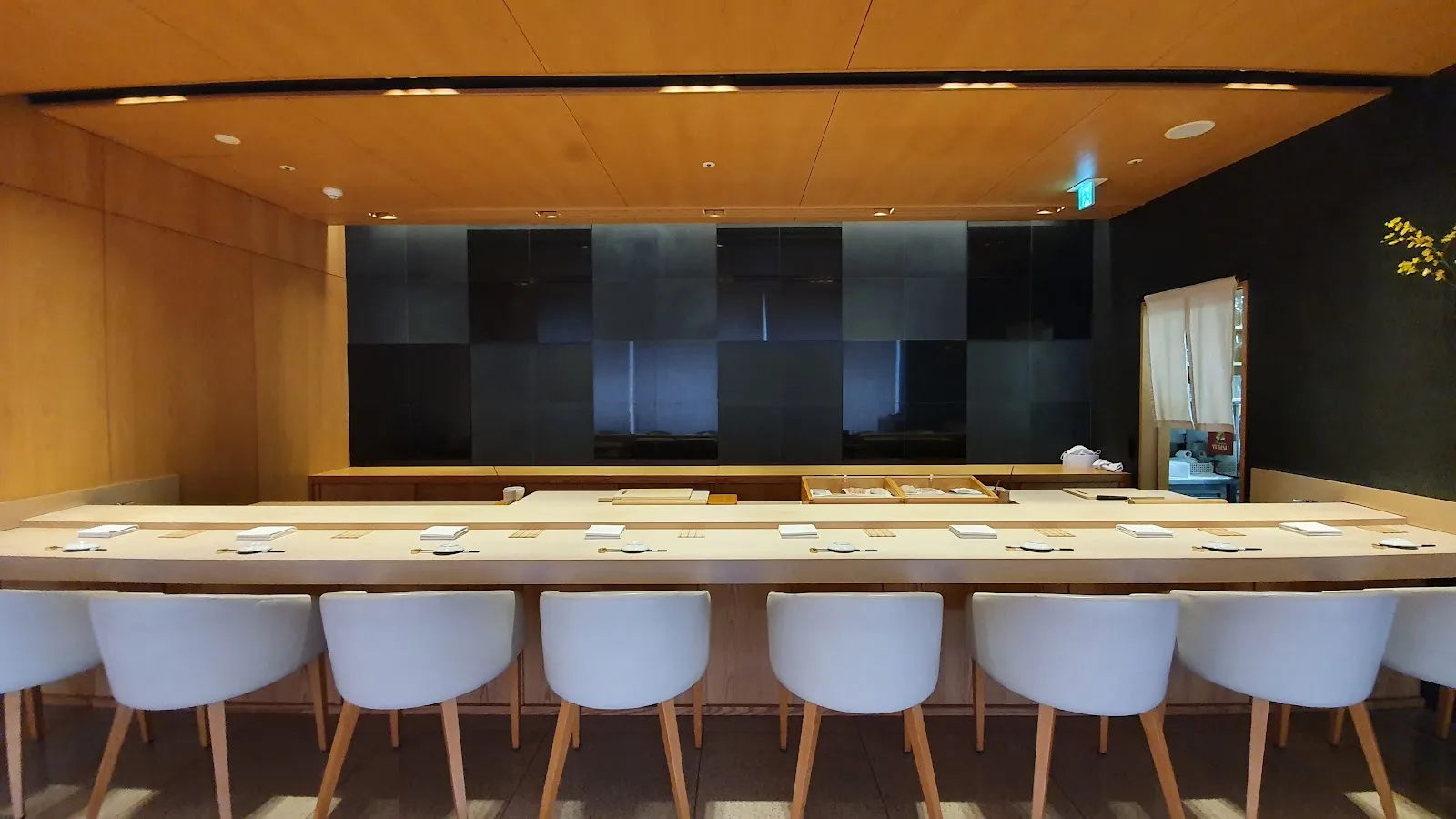
Korea's only two-star sushi counter, eight hinoki seats and a 420,000 won omakase; the platonic seat for a fine-dining table of one. Reserve the counter.
Kojima sits on the sixth floor of Boon the Shop in Cheongdam, the only Japanese restaurant in Korea to hold two Michelin stars. Chef Kim Woo-tae works an eight-seat hinoki counter, building Edomae nigiri on Korean-sourced fish, with firefly squid and lightly grilled bonito among the courses before the sushi proper. Dinner at the counter runs about 420,000 won, and that counter is the whole argument: a solo diner gets the same hand-to-hand pace, the same exchange across the wood, as anyone in a four-top, and none of the awkwardness. Watching one chef set the rhythm of the room is better company than most dinner dates. Reserve the counter two to three weeks out, take the earliest seating, and let the chef pace you.
Book the counter on Catch Table two to three weeks ahead. Reserve →
2.Mosu
Anh Sung-jae's reborn kitchen, a 420,000 won tasting and an open counter onto the pass; the city's most-watched cooking. Splurge on it once.
Mosu held three Michelin stars in 2023 and 2024, then chef Anh Sung-jae closed the Hannam room and reopened in 2025 on the slope of Mount Nam in Yongsan, near the Grand Hyatt, where it won back two Michelin stars in the 2026 guide. The new room keeps an open kitchen with counter views straight onto the pass, and the dinner tasting runs about 420,000 won for a single seating a night. For a diner alone the open counter answers the hardest question of a long tasting menu, which is where to put your attention: here you watch the cooking. Anh, familiar to Korean audiences from Culinary Class Wars, plates with a precision that rewards a guest paying full attention rather than holding up half a conversation. Splurge on it once, and book the counter weeks ahead through the restaurant.
Reserve direct; ask for a counter seat at the pass. Reserve →
3.Evett
Joseph Lidgerwood's two-star foraging kitchen, a 280,000 won menu and meju doughnuts; the warmest room in Seoul for a table for one. Try it at lunch.
Evett earned its second Michelin star in the 2025 guide, where Tasmanian chef Joseph Lidgerwood and Ginny Kim cook an almost entirely Korean larder, down to house-pressed meju and brewed sauces. The signatures are a squid mulhoe in cold, spicy broth and small doughnuts made from fermented soybean, and the long tasting is 280,000 won. The partially open kitchen and the team's habit of walking guests through the pass make Evett unusually kind to a single cover: the service treats a diner alone as a guest to teach rather than a table to turn over. Thirty seats, a warm room, and no theatre of pity for the one-top. Try it at a weekday lunch, when the kitchen has more time to talk.
Book on Catch Table; lunch runs Thursday to Saturday. Reserve →
4.Mingles
Korea's only three-star room, Kang Min-goo's Jang Trio dessert and a 350,000 won tasting; the country's best Korean menu, eaten solo at the early sitting. Plan ahead.
Mingles in Cheongdam-dong became Korea's only three-Michelin-star restaurant in the 2025 guide, where chef Kang Min-goo has cooked modern Korean since 2014. The signature is the Jang Trio, a dessert built from doenjang, ganjang and gochujang, and the tasting runs around 350,000 won with a pairing that mixes global wine and Korean liquor. This is the one table here where solo takes some planning: Mingles seats around twenty-five at tables, not a counter, and the room is calibrated for couples and small parties. But the kitchen and floor welcome single covers, and a solo seat at the early sitting is the cleanest route into the hardest three-star reservation in the country. Plan ahead, ask for an early table, and take the pairing slowly.
Reserve well ahead on Catch Table; request the early seating. Reserve →
5.Onjium
Cho Eun-hee's research kitchen by the palace wall, house-aged jang and a tasting from 150,000 won; a lunch for one that teaches. Go for lunch.
Onjium faces the stone wall of Gyeongbokgung in Jongno, where chef Cho Eun-hee reconstructs Joseon royal-court and temple cooking from centuries-old recipe books, fermenting and aging its own doenjang, ganjang and gochujang in house. It holds one Michelin star and climbed to number 57 on the World's 50 Best Restaurants list in 2025, up from 96 the year before. The tasting starts around 150,000 won, and the register is closer to a quiet research presentation than a show, which suits a diner who would rather learn than perform. Lunch, served noon to three Tuesday to Friday, is the move: a single seat, a sequence of fermented and dried Korean dishes, and the palace outside afterward. Go for lunch, then walk Bukchon.
Reserve direct; lunch is the quieter solo sitting. Reserve →
6.Hadongkwan
Seoul's gomtang institution since 1939, a 15,000 won ox-bone bowl, pre-paid and fast; the city's perfect lunch for one. Queue for it early.
Hadongkwan has poured the same clear ox-bone gomtang since 1939, and since 2007 it has done so from a bright room in Myeongdong, where the city named it a protected Oraegage heritage store in 2024 and Michelin lists it as a Bib Gourmand. A regular bowl is 15,000 won, a special 18,000 won, you pay on the way in, and the soup lands in under a minute. Nothing in Seoul is more built for a table of one: the turnover is brisk, the menu is a single dish, and a diner alone is the rule rather than the exception. It opens early and closes when the pot runs dry, usually mid-afternoon. Queue for it early, order the special, and add the extra rice off the side.
Walk in; cash and card at the door, no reservations. Reserve →
7.Pildong Myeonok
Bib Gourmand Pyongyang cold noodles near Namsangol, a 15,000 won bowl of buckwheat in clear beef broth; a meditative solo lunch. Slide in off-peak.
Pildong Myeonok serves Pyongyang-style naengmyeon near Namsangol Hanok Village by Chungmuro station, and has held a Michelin Bib Gourmand for the restraint of its cold buckwheat noodles in a delicate, almost austere beef broth. A bowl is around 15,000 won, with thick slices of boiled pork on the side. Pyongyang naengmyeon is a solo eater's dish by temperament: quiet, unshowy, eaten fast and best in your own company while you read the subtlety of the broth. The room is plain and the regulars come alone to the counter and small tables. Slide in off-peak, order the mul-naengmyeon, and resist the urge to drown it in mustard and vinegar before you have tasted it clean.
Walk in at an off-peak hour; no reservations. Reserve →
8.Tosokchon Samgyetang
Seochon's hanok samgyetang since 1983, a 20,000 won ginseng chicken, 400 seats and a fast-moving queue; the reliable solo restorative. Pencil it in.
Tosokchon has ladled ginseng chicken soup from the same sprawling hanok near Gyeongbokgung in Seochon since 1983, and its four hundred-odd seats across courtyards and covered walkways mean the long queue clears in about fifteen minutes. The standard samgyetang is 20,000 won, a whole young chicken stuffed with rice, ginseng and jujube in a milky broth, with a wild-ginseng version at 26,000 won. It is the rare Seoul landmark where eating alone draws no second glance: the portion is built for one by design, and the turnover is quick enough that a single diner never feels they are holding a table. Pencil it in for a restorative weekday lunch, take the black-chicken version if you have ordered it ahead, and arrive before noon.
Walk in before noon; black chicken needs a same-day call. Reserve →
Avoid for solo dining
Right city, wrong format
Born and Bred. The premium hanwoo barbecue house is one of the best beef rooms in Seoul, and it is the wrong shape for one. Korean barbecue assumes a second pair of hands and an order of at least two portions; a single diner pays for a grill built around shared cuts and either over-orders or is gently turned away. Keep a hanwoo house for two or more.
Mapo Galmaegi. The everyday galmaegisal grill is a group sport, loud and smoky, ordered by the two-portion minimum, with banchan and soju framed for sharing. A solo cover is awkward here and often quietly discouraged. It is a place to bring friends and a long evening, not a book and a table for one.
Reservation strategy for solo dining in Seoul
Two systems run the city, and a solo diner needs both. The counters live on Catch Table, the app nearly every fine-dining room in Seoul uses, where slots open on a fixed schedule and the best counter seats at Kojima, Mosu and Evett vanish within minutes of release. Set the app to alert you, book the moment a window opens, and choose the counter over a table or private room every time the option exists, because the counter is what makes eating alone work. For Mingles, the hardest three-star booking in Korea, take the early sitting, where a single cover is easiest to place.
The institutions are the opposite discipline. Hadongkwan, Pildong Myeonok and Tosokchon take no reservations and reward timing instead: go before noon or in the mid-afternoon lull, when the queue is short and a diner alone slips straight in. Order the one dish each is built around, pay up front where they ask you to, and eat at the pace the room sets. Across both ends of the city, the single rule for solo dining in Seoul is to pick rooms designed for a fast, focused meal rather than a long, shared one.
Frequently asked
What is the best restaurant for solo dining in Seoul?
Kojima is the top pick. The eight-seat hinoki counter on the sixth floor of Boon the Shop in Cheongdam is the only Japanese restaurant in Korea with two Michelin stars, and chef Kim Woo-tae builds Edomae nigiri on Korean-sourced fish. The counter is the point for a solo diner: you get the same hand-to-hand pace as anyone in a party of four, with the chef across the wood as company. Dinner runs about 420,000 won. Book the counter two to three weeks out and take the earliest seating.
Can you eat alone at Michelin restaurants in Seoul?
Yes, and the counters make it easy. Kojima and Mosu both seat guests at an open counter facing the kitchen, which solves the hardest part of a long tasting menu alone, where to look. Evett's partially open kitchen and teaching service suit a single cover, and even Mingles, Korea's only three-star, welcomes solo diners at its early sitting. Counters are the natural home for eating well alone in Seoul, so reserve a counter seat rather than a table when the option exists.
How much does solo dining cost in Seoul?
Anywhere from 15,000 won to 420,000 won a head before drinks. The counters are the splurge: Kojima and Mosu both run about 420,000 won, Mingles around 350,000 won, Evett 280,000 won and Onjium from roughly 150,000 won. The institutions are the everyday end, with Hadongkwan's gomtang at 15,000 won, Pildong Myeonok's cold noodles near 15,000 won and Tosokchon's ginseng chicken at 20,000 won. Pick the room by how much of an event you want the meal to be.
Where can you eat alone in Seoul without a reservation?
The institutions take walk-ins and are built for one. Hadongkwan in Myeongdong serves a pre-paid gomtang that lands in under a minute, Pildong Myeonok near Chungmuro pours Pyongyang cold noodles to a counter of regulars eating alone, and Tosokchon in Seochon turns its 400-seat hanok over fast enough that the queue moves in fifteen minutes. Go off-peak, before noon or mid-afternoon, order the one dish each is known for, and you will never feel you are holding a table.
Is omakase good for solo dining in Seoul?
Omakase is the format built for one. A counter seat puts the chef directly in front of you, setting the pace and the conversation, so a solo diner is never short of company or a focus for the evening. Kojima is the two-star benchmark in Cheongdam at about 420,000 won, and the city has a deep bench of counter rooms below it. Book the counter rather than a private room, take an early seating, and let the chef pace the meal.
Related rankings
More from RFK
Browse the full Seoul dining guide, see the best solo dining tables worldwide, compare fine dining worldwide, or open the full RFK rankings index.
Restaurants for Kings is reader-supported. Some reservation links are affiliate links with OpenTable, Resy, Tock or Catch Table; we earn a small commission at no cost to you, and a link never buys a place on a ranking. Editorial scores and ranking order are independent of any commercial relationship. See our ranking methodology.