Nice Restaurants
Ranked by occasion suitability


Best for First Date in Nice
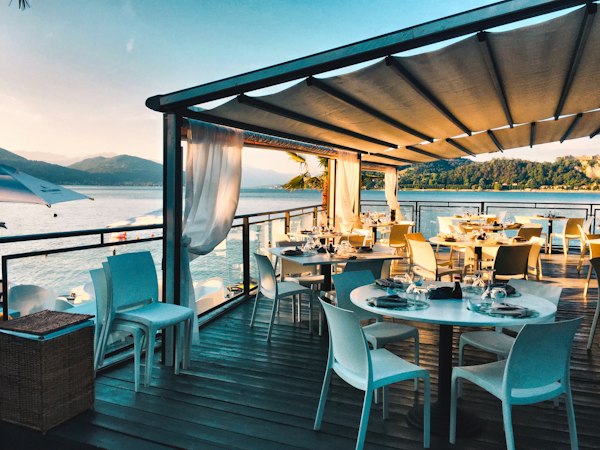
Nice offers an embarrassment of first-date riches. The city's intimate scale and inherent romance mean the question is not whether the evening will be beautiful, but which beautiful you prefer. Onice delivers the electricity of a Michelin-starred new opening in the historic port quarter — intimate, inventive, the kind of meal that fills the conversational gaps naturally. Restaurant JAN creates its own world: 24 seats, a genre-defying menu, and the sense that you've discovered something together. For something more relaxed but undeniably romantic, Le Bistrot des Serruriers in Vieux Nice offers warmth, candlelight, and niçoise cooking at prices that leave room for the bottle upgrade. On a warm evening, Le Plongeoir above the sea makes a first impression that requires no other effort. Explore all our picks for first date restaurants.
Best for Business Dinner in Nice
Nice has always had a dual identity — a pleasure city that nonetheless takes money seriously. The Promenade de Anglais corridor sees more deals quietly closed over dinner than most boardrooms manage in a month. Flaveur is the apex: two Michelin stars signal seriousness to any client, while the Tourteaux brothers' cuisine provides genuine conversational material. Le Chantecler at the Negresco carries institutional weight — walking into the hotel's Belle Époque grandeur tells your guest something specific about your judgement. For closing rather than impressing, Le Bistrot de JAN provides the starred kitchen's ethos in a more conversational setting. La Petite Maison remains the city's de facto power table — where the Côte d'Azur's establishment has always dined, and where being seen carries its own value. See all business dinner picks.
Dining in Nice — A Complete Guide
Nice occupies a singular position in the world's dining landscape — a city of 340,000 people that punches well above its weight in gastronomic ambition, anchored by a local cuisine (niçoise) so distinct and flavourful that it constitutes its own culinary tradition. This is not Provençal cooking transposed to the coast; it is something older, more particular, shaped by centuries of Sardinian, Italian, and Ligurian influence and the specific produce of this stretch of Mediterranean shoreline. The olives, the stockfish, the anchovies, the chickpea flour — these ingredients form a vocabulary that Nice's best chefs, from the humblest socca vendor to the Michelin-starred kitchen, speak fluently.
The city's dining geography divides neatly. Vieux Nice — the Baroque old town behind the Promenade des Anglais — is the epicentre of traditional niçoise eating. The narrow streets around Cours Saleya (the city's legendary flower and food market) are lined with restaurants of every level, from the unmissable La Merenda, where former two-star chef Dominique Le Stanc cooks market vegetables and slow-braised meats in a 25-seat room with no phone and no reservations, to Jacques en Terrasse with its theatrical terrace above the stalls. The port quarter, centred on the old harbour, has in recent years become Nice's most dynamic dining neighbourhood — Restaurant JAN established itself here first, and the starred newcomer Onice has confirmed the area's transformation.
At the summit, Nice now holds five Michelin stars. Flaveur, with two, remains the city's most intellectually serious kitchen — the Tourteaux brothers' approach to niçoise ingredients is creative without ever becoming abstract, and their dining room on rue Gubernatis is tight, focused, and charged with the particular energy of a room that knows it is operating at a high level. Le Chantecler, the Negresco's flagship, offers something different: the single star functions almost as an understatement for a dining experience in which the room, the service, the cellar, and Virginie Basselot's Mediterranean haute cuisine all operate in harmony. It is the most total evening in Nice — the kind that justifies travelling to the city expressly for the purpose.
The Riviera context matters for understanding Nice's dining culture. Monaco and its constellation of starred restaurants are forty minutes east; Cannes is thirty minutes west; and Mirazur in Menton — for years ranked among the world's very best — is the region's pole star. Nice exists within this rarefied regional context, and its chefs are aware of what they are competing against. The result is a dining scene of genuine ambition, one that has transcended its postcard reputation to become a serious destination for anyone who cares about eating at the highest level in France.