All Restaurants in Mostar
Every listing ranked by occasion, from Michelin-starred tasting rooms to the neighbourhood tables the locals keep quiet about.

Top 5 in Mostar
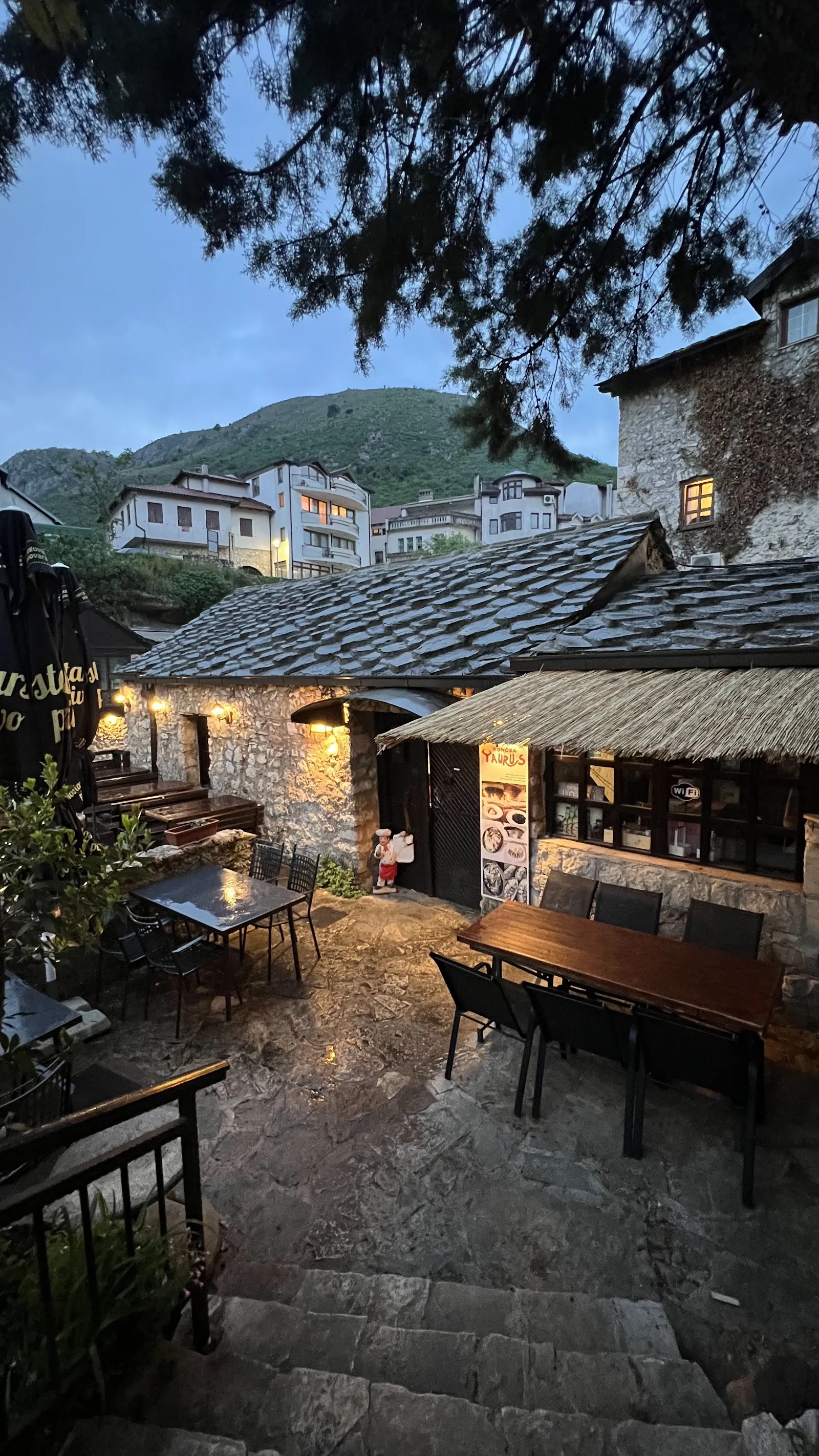
Restoran Taurus
The finest table in Mostar, a rooftop terrace above the old bazaar where local lamb meets precise modern technique.
Hindin Han
Steps from the Crooked Bridge, the most atmospheric riverside table in Mostar, where the river almost touches your meal.
Šadrvan
The courtyard table beside the Stari Most, where the bridge view is unobstructed and the ćevapi are the best in the old town.
Restaurant Babilon
Mostar's most ambitious contemporary room, local ingredients refined by genuine technique, away from the tourist crowds.
Kriva Ćuprija
An Ottoman-era stone restaurant beside the Crooked Bridge, Mostar's most intimate heritage dining experience.
Dining in Mostar
Mostar occupies a singular place in the European dining imagination. The city's defining image, the reconstructed Stari Most bridge arching above the turquoise Neretva, Ottoman tower houses on either bank, the sound of the call to prayer mixing with the sound of the river, is so cinematically perfect that it risks becoming a backdrop rather than a context. The dining scene has been sophisticated enough to use the backdrop without being consumed by it.
Herzegovinian cuisine is a specific thing, distinct from the more internationally known Bosnian cooking of Sarajevo. Lamb is central, the sheep of Herzegovina graze on limestone hillsides that give the meat a specific mineral character. Ćevapi, the grilled minced meat rolls that are Bosnia's signature dish, reach their definitive form in Mostar, made with beef and lamb in proportions that local cooks guard carefully. The village bread, somun, arrives warm with everything and is never as good anywhere else.
The best restaurants in Mostar operate on terraces above the Neretva or in restored Ottoman courtyards that have been dining venues for centuries. The atmosphere in these rooms is impossible to manufacture: the stone walls, the sound of the river, the light changing across the bridge as the day progresses. Price levels remain far below Western European comparisons, a full dinner with wine at the city's best table costs what a mediocre lunch costs in London.
The local wine, Herzegovinian Žilavka white and Blatina red, is produced in the Neretva valley and rarely travels. Drinking it at the source, with food it was made to accompany, is one of the most compelling reasons to visit.
Stari Grad (Old Town) for atmospheric terraces and Ottoman konaks; Kujundžiluk bazaar street for traditional ćevapi; Bulevar for more contemporary options.
Most restaurants are walk-in; book ahead only for large groups (6+). High season is June, August when terraces fill by 7pm. Off-season is pleasantly quiet.
Tipping is not obligatory but 10% is appreciated and becoming standard in tourist-facing restaurants.