Split waited two thousand years for a Michelin star and got it in 2025, when Karlo Kaleb’s twelve-seat counter at Krug took the first one Dalmatia has ever held. The city around it is a Roman emperor’s retirement palace that people never stopped living inside, so dinner happens against limestone Diocletian commissioned in 305 AD. The cooking splits cleanly. Bib Gourmand konobas fry the morning’s catch for about €35; a small tier of tasting rooms charges €90 and up. Both earn the evening. This guide ranks twelve Split restaurants by what you are actually there to do.
How Split Eats
Split eats late and outdoors. Dinner rarely starts before 8pm in summer, and the konoba (a family-run Dalmatian tavern) fills last, after the evening passeggiata along the Riva, the marble seafront promenade. Lunch is often a stand-up marenda, the late-morning working meal, rather than a sit-down event. Service is unhurried by design; a table is yours for the night and no waiter will rush the cheque.
Tipping is light and discretionary. Locals round up or leave roughly 10 per cent in cash; there is no automatic service charge, and the figure on the bill is the figure you owe. Croatia switched to the euro in 2023, so prices are quoted in euros everywhere. Reservations matter more than visitors expect. Krug’s counter and the tasting rooms book two to four weeks out in July and August, and the Bib Gourmand konobas, Konoba Fetivi, the Tolstojeva Bib Gourmand, turn walk-ins away on Friday and Saturday nights. Villa Spiza takes no bookings at all: arrive at opening or wait.
Dress is Mediterranean-smart, not formal. Linen and good shoes clear any room in town, jackets optional even at Krug. The local plate is honest and sea-facing: crni rižot (cuttlefish-ink black risotto), pršut (Dalmatian air-dried ham), whole fish grilled or baked in salt, and the slow peka, meat or octopus cooked under an iron bell, which most kitchens want ordered a day ahead. Peak season runs June to September; book further out then, and expect the palace lanes to be loud with cruise crowds until the ships leave at dusk.
Best Neighbourhoods for Dinner
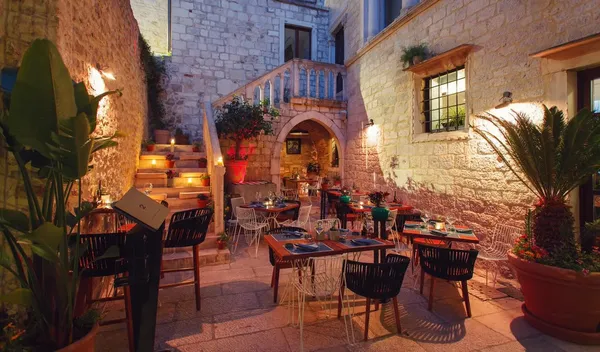
Inside Diocletian’s Palace. The walled old town is the postcard and the dining-room. Kinoteka runs a contemporary-Mediterranean kitchen on Marulićeva, Villa Spiza keeps eight tables and a no-bookings rule on Petra Kružića, and Mazzgoon hides down a lane just behind the Iron Gate.
The Riva and the western seafront. The marble promenade and its extension along Trumbićeva obala hold the city’s top tables: Krug’s counter, the Michelin-listed dining room at ZOI, and Štorija’s terrace, which has the best sea-rail seats on the strip.
Varoš. The old fishermen’s quarter of steep stone alleys west of the palace is where Split eats like itself. The neighbourhood Bib Gourmand here buys at the market each morning and cooks without ceremony.
Matejuška and the ACI marina. Past the old fishing harbour the water widens toward Uvala Baluni. A harbour-view seafood room sits above the old port, and Zrno Soli looks straight down the marina from its terrace.
Manuš and the streets east. Around Tolstojeva and Šubićeva, a short walk from the centre, sit the everyday rooms: the city’s best pizza, the Bib Gourmand at Šug, and the modern-Croatian bistro Apetit City that residents keep half to themselves.
The RFK Split Top 10
Ranked by Michelin and Bib Gourmand standing first, then by how completely each room delivers on its own promise. The star sits at the top; the konobas earn their places on cooking, not price.
- #1KrugSeafront / Trumbićeva obala · Dalmatian tasting · $$$$
Karlo Kaleb plates nine Dalmatian courses for €130 at a twelve-seat counter that won Split its first Michelin star, book it for a milestone dinner.
- #2ZOIThe Riva · Contemporary Mediterranean · $$$$
Contemporary Mediterranean tasting on the Riva, Michelin Guide listed, with a wine room built for slow nights, reserve it to impress a client.
- #3KadenaAbove the old port · Adriatic seafood · $$$
Adriatic fish handled with restraint above the old port, in the guide since 2018, take the harbour-view table for a birthday.
- #4Konoba FetiviVaroš · Traditional Croatian · $$
Varoš’s Bib Gourmand kitchen sells crni rižot and pršut at €35 a head, go for an unhurried first date that won’t empty the wallet.
- #5ŠugOff the Riva, Tolstojeva · Dalmatian / Mediterranean · $$$
A Bib Gourmand Dalmatian room named for the local word for sauce, a walk off the Riva, book it for a relaxed dinner with friends.
- #6Zrno SoliACI marina, Uvala Baluni · Adriatic seafood · $$$
Nikola Marušić bakes whole Adriatic fish in salt above the marina, a Gault&Millau young-chef pick, take the terrace to mark an occasion.
- #7ŠtorijaThe Riva, palace frontage · Modern Croatian · $$$
Ivan Pažanin’s truffle pasta on the finest terrace on the Riva, palace stone behind you, reserve the rail for a first date to remember.
- #8MazzgoonBehind the Iron Gate · Mediterranean · $$
Daily pasta and morning seafood down a lane behind the Iron Gate, earn the labyrinth and book it for an intimate dinner for two.
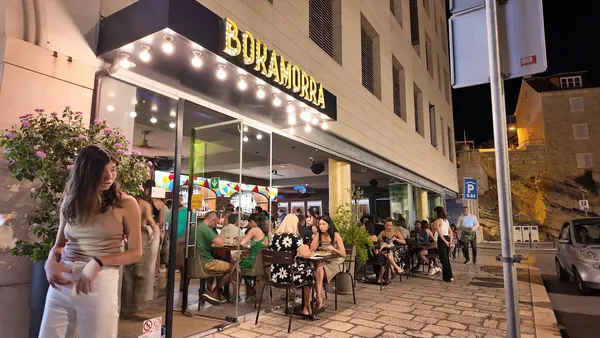
- #9BokamorraManuš, Tolstojeva · Neapolitan pizza · $
Split’s consensus best pizza: 48-hour dough, truffle and air-dried meats, prices that undercut the room, bring the table for a casual night.
- #10KinotekaInside the palace · Contemporary Mediterranean · $$$
Fine dining inside Diocletian’s own walls, where the setting does half the work, book it when the address has to do the impressing.
Best Restaurants in Split by Occasion
Best for a First Date in Split
Split’s alleys do half the work; you want a room small enough to lean across and a kitchen that won’t demand silence. The waterfront terraces and the konobas both deliver.
Štorija’s sea-rail · the Varoš konoba · Mazzgoon · Apetit City
Best for Impressing Clients in Split
When the address has to carry weight, Split has exactly the rooms for it: a Michelin star, a guide-listed tasting menu, and fine dining inside the palace walls.
Krug’s counter · the guide-listed tasting menu · the harbour-view seafood room · Kinoteka
Best for a Birthday in Split
A birthday in Split wants a view and a table you can hold all night. Book a terrace over the water or a harbour room and let the evening run long.
Kadena · Zrno Soli’s terrace · the palace dining room · the Šubićeva bistro
Best for a Proposal in Split
You want privacy, a sightline, and a kitchen that can rise to the moment. Reserve a window or terrace table and tell them why in advance.
Split Dining: Frequently Asked
Does Split have a Michelin-star restaurant?
Yes. Krug earned Split’s first Michelin star in the 2025 Michelin Guide Croatia, the only star Dalmatia has ever held. It is a twelve-seat counter near the seafront where chef Karlo Kaleb serves a nine-course Dalmatian tasting menu for around €130. Split also holds Bib Gourmands at Konoba Fetivi and Šug, and several Michelin Guide listings including Kadena and ZOI.
What is the best restaurant in Split?
Krug is the obvious answer if you want the single best meal: it carries the city’s only Michelin star. But the best dinner depends on the night. For Adriatic fish with a view, Kadena and Zrno Soli lead; for an honest Dalmatian konoba at a fair price, Konoba Fetivi in Varoš is hard to beat. Our Top 10 ranks all of them by occasion.
How much does dinner cost in Split?
A Bib Gourmand konoba like Konoba Fetivi runs about €35 a head before drinks. Mid-range seafood and modern-Croatian rooms such as Kadena, Šug and Štorija land roughly €60 to 90 per person. The tasting rooms sit higher: Štorija’s menu is €60 to 90, while Krug’s nine-course Dalmatian tasting is around €130, with wine pairings from €55. Croatia uses the euro, so all prices are quoted in euros.
Do you need a reservation in Split?
For anything serious, yes. Krug’s counter and the tasting rooms book two to four weeks ahead in July and August, and the Bib Gourmand konobas turn walk-ins away on weekend nights. Off-season you can often get a table a few days out. The exception is Villa Spiza inside the palace, which takes no reservations at all, arrive at opening or be prepared to wait for one of its eight tables.
What food is Split known for?
Split’s cooking is Dalmatian and sea-facing. The signatures are crni rižot (cuttlefish-ink black risotto), pršut (air-dried ham), whole Adriatic fish grilled or baked in salt, and peka, meat or octopus slow-cooked under an iron bell that most kitchens want ordered a day ahead. Olive oil, capers and Hvar lavender honey show up across menus, and the wines lean to local Pošip and Plavac Mali.
When do restaurants serve dinner in Split?
Dinner runs late. Most kitchens open around 6pm but locals don’t sit down until 8 or later in summer, and konobas fill last, after the evening walk along the Riva. Lunch is often a quick stand-up marenda rather than a long meal. Book the early end of the evening if you want a quieter room; the palace lanes stay loud with cruise crowds until the ships leave at dusk.
Do you tip in Split restaurants?
Tipping is light and optional. There is no automatic service charge, and the number on the bill is what you owe. Locals round up or leave roughly 10 per cent in cash for good service; at the tasting rooms a little more is welcome but never expected. Cash is the surest way to make sure the tip reaches the table that served you, especially in the smaller konobas.
What should I order at a Split konoba?
Start with pršut and local cheese, then a plate of crni rižot, and build the meal around whatever whole fish came in that morning, ask and the staff will steer you. If you can plan ahead, order peka a day in advance; the slow bake under the bell is the dish konobas do best. At Konoba Fetivi the black risotto is the order that settles arguments.
Where to Eat Near Split
Working down the coast and inland: the Dubrovnik dining guide covers the walled city to the south, Hvar restaurants are a ferry away across the channel, Rovinj in Istria anchors the north, and the Zagreb dining guide leads the mainland capital. For the cooking itself, see our best seafood restaurants and fine dining worldwide guides.