Gwangju Restaurants
The Gwangju Dining Guide
Gwangju carries a reputation that has quietly outpaced its international profile: South Korea's food capital. The claim is made by Koreans first — a people who are serious about their food hierarchy — and it is not contested by the cities that rank above Gwangju in size. Seoul has the density, the international chefs, and the Michelin stars. Gwangju has the ingredients, the technique, and the conviction that Korean food is best when it reflects its origins.
The city sits in the heart of Jeolla Province — Jeonnam — which is South Korea's agricultural breadbasket. The soil produces exceptional vegetables; the South Sea coast delivers seafood that arrives in Gwangju's markets hours after it leaves the water; the mountain terrain of Mudeungsan National Park yields wild greens and mushrooms that form the backbone of the regional cuisine. The Jeolla cooking tradition is built on abundance, seasonality, and the accumulation of generations of fermentation knowledge. The kimchi from this region is different from Seoul kimchi — sweeter, more complex, made with vegetables that carry more inherent flavour.
Tteokgalbi is Gwangju's most famous culinary contribution: minced and shaped beef rib, charcoal-roasted, with a marinade that varies by family but always includes the same core vocabulary of soy, sesame, and fermented soybean paste. The Songjeong-dong neighbourhood near Gwangsan-gu has been producing it for generations and remains the authentic source. This is not a nostalgic claim — the restaurants on that strip are simply better than their imitators in other cities.
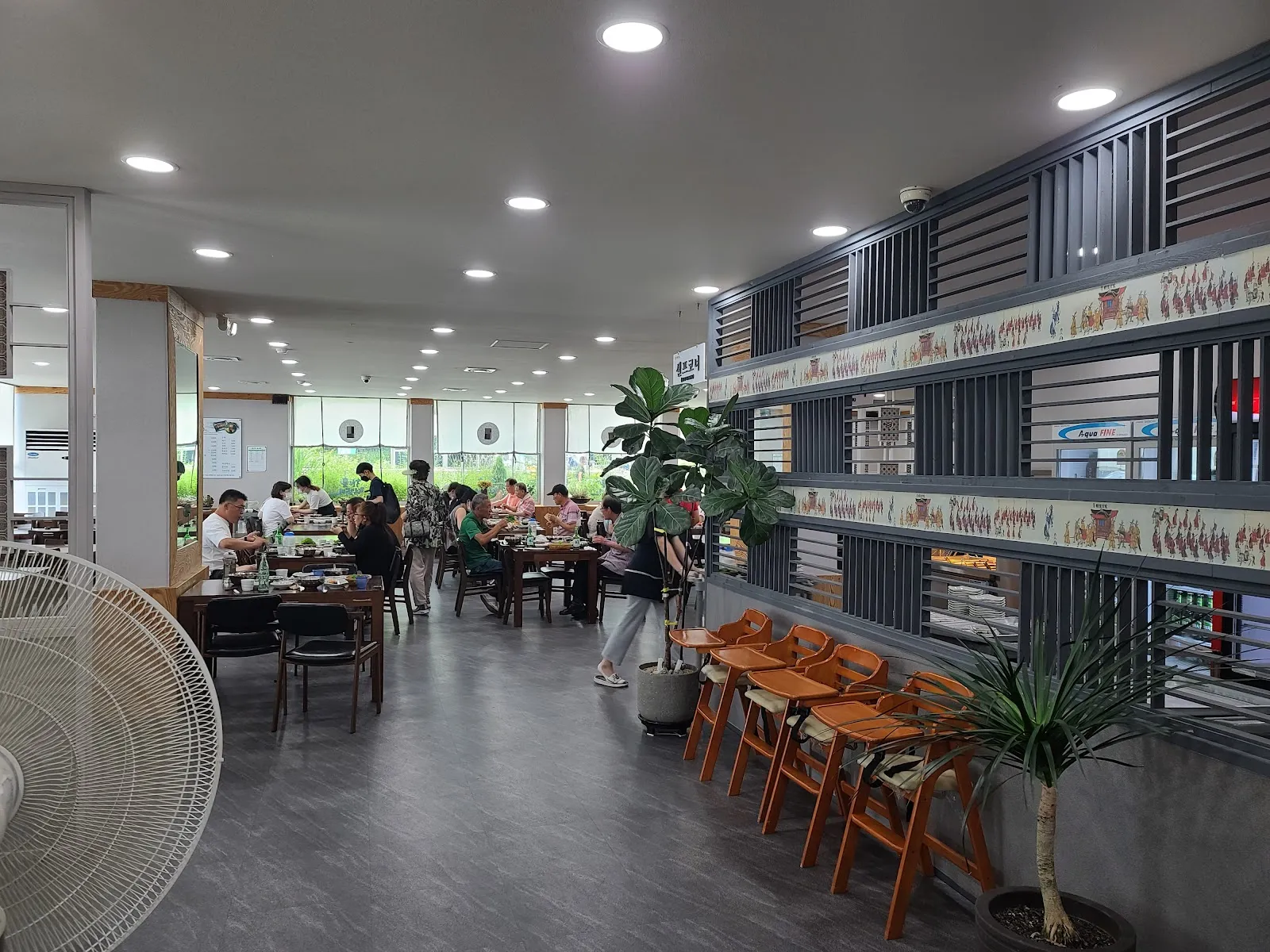
Hanjeongsik — the full Korean table — is practised in Gwangju with the seriousness that Kyoto applies to kaiseki. A full Jeolla hanjeongsik at a restaurant like Juwon is not merely dinner; it is a structured encounter with the region's food culture, season by season. International visitors who have experienced Korean food only through Seoul barbecue restaurants consistently name their Gwangju hanjeongsik as a revelation.
The raw-fish culture at Daein Market's Hwae Town adds another dimension. This is not the refined omakase of a Japanese seafood counter — it is rougher, more direct, and in its own way more interesting. Live fish selected from tanks, sliced to order, eaten with fermented dipping sauces and raw garlic. It is one of the most honest dining experiences in Korea.