The Experience
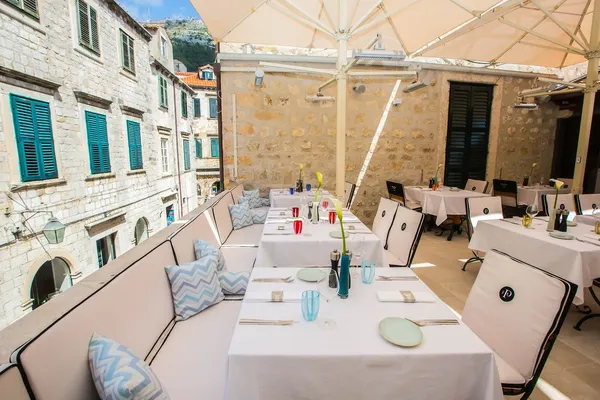
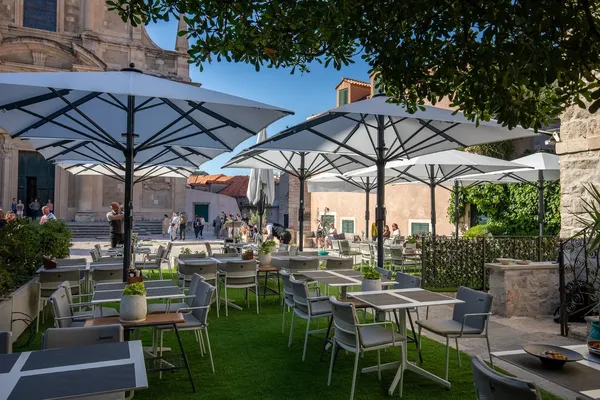
Sesame occupies a two-hundred-year-old stone house on the quiet road leading down to Danče beach — a five-minute walk from the Pile gate, but a complete tonal departure from the Old Town's high-season compression. The house itself dates to the mid-eighteenth century; the restaurant concept on this site dates to 1880; the current kitchen, under Chef Marina Žibert, has held the address since 1999. The combination of stone walls, walled garden, orange trees and pittosporum shade produces one of the most genuinely calm rooms in Dubrovnik, and one of the most obvious calls for a lunch that needs to carry actual conversation rather than accommodate the crowd.
Chef Žibert is a Cordon Bleu Grand Diplome holder, which in a Dubrovnik context means technical training at a level most hotel kitchens never reach. Her menu is a Mediterranean base with a deliberate Italian lean — fresh pastas made in-house, slow-simmered sauces, grilled Adriatic fish, and Dalmatian-inflected cuts from the coast's best butchers. The cooking is intentionally restrained; Sesame is not a restaurant that attempts to surprise its guests with plating, and this restraint is precisely why the city's lawyers, architects, and gallerists choose it for their working lunches.
The terrace is the restaurant's obvious advantage. A green canopy of mature trees produces deep shade even in the August sun; the stone walls keep the road noise out; and the tables are spaced widely enough that a quiet negotiation will not carry to the next party. In low season the dining room inside the stone house is equally generous, with a fireplace that runs from October through April. The wine cellar occupies the building's lower level and can be booked for small groups wanting complete privacy.
Service is one of Sesame's quiet strengths. The team is long-tenured, knowledgeable about both the kitchen and the wine list, and practised at the tempo adjustments a business lunch requires — quick at the start when time matters, patient in the middle when decisions are being made, unobtrusive at the end when the handshake is being worked out. This is a competence most hotel dining rooms struggle to match.
Best Occasion: Close a Deal
Sesame is, candidly, the Dubrovnik restaurant that the city's own professionals choose when they need to close a deal over lunch or early dinner. The combination of privacy, quiet, adequate space between tables, and a kitchen that does not interfere with the conversation is precisely what a working table requires. The five-minute walk from the Pile gate removes the restaurant from the tourist crush; the stone house removes it from the cruise-ship timeline. Visitors conducting business in Dubrovnik would do well to follow the locals' practice.
The pricing is the other argument for Sesame as a deal-closing table. At forty to seventy euros per person, it is meaningfully below the Pile luxury brackets while delivering a kitchen at a clearly higher level than the Stradun average. This makes Sesame an easy recommendation for the closing lunch where the budget is tight enough to matter but the quality cannot be compromised. The wine list is priced with similar restraint.
For impressing clients with depth rather than spectacle, Sesame works well in the opposite direction: this is a restaurant that signals a host's familiarity with Dubrovnik beyond the postcard, and that tends to earn respect from clients who have seen every city walls panorama a hundred times. For a small team dinner, the garden accommodates eight comfortably; for a larger group, the cellar is the right room to request.
What to Order
The handmade pastas are Chef Žibert's most direct argument — the ravioli with seasonal fillings, the tagliolini with seafood, and the black gnocchi with cuttlefish ink are the dishes that have been on the menu in some iteration for a decade. Order one as a primo to see the kitchen's fundamentals clearly; the pastas alone justify the visit.
For mains, the grilled sea bass filleted at the table is the cleanest expression of the kitchen's Adriatic fish preparation. The slow-cooked lamb shoulder — available when the producer delivers — is the other direction the kitchen takes with equal confidence; braised with rosemary and Dalmatian wine, it is among the most satisfying winter plates in the city. The steak with truffle (black Istrian truffle in season) is a reliable, if less distinctive, alternative for clients expecting a protein-led main.
The wine list favours the Dalmatian coast and Istria with appropriate depth — Pla&vcaron;nac Mali from Pelješac, Pošip from Korčula, and Malvazija from the Istrian producers. The sommelier's Plavac Mali selection is particularly good with the lamb. For the pasta courses, a younger Pošip or a dry Malvazija both work; ask for the current recommendation.