RFK Rankings · Beijing
Best Restaurants for Solo Dining in Beijing 2026
Solo Dining · Beijing · 7 tables ranked · Updated June 2026
Compiled by the Restaurants for Kings editorial team · Published June 7, 2026 · Updated June 10, 2026 · Reviewed by Fredrik Filipsson, Editor-in-Chief · How we rank · Corrections
Beijing is a city built for the round table. The classic banquet, where ten dishes land at once and everyone reaches in, is a group sport, which makes eating alone here harder than in Tokyo or New York. So the solo map runs through different rooms: the sushi bars, the international kitchens with a proper counter, and the duck houses that keep a real bar rather than a wall of banquet tables. At those, a single cover is normal and looked after. The reward for knowing where to go is real, because the food in this city is some of the best in China. These seven rooms, ranked, are where a table for one in Beijing is a pleasure rather than a compromise.
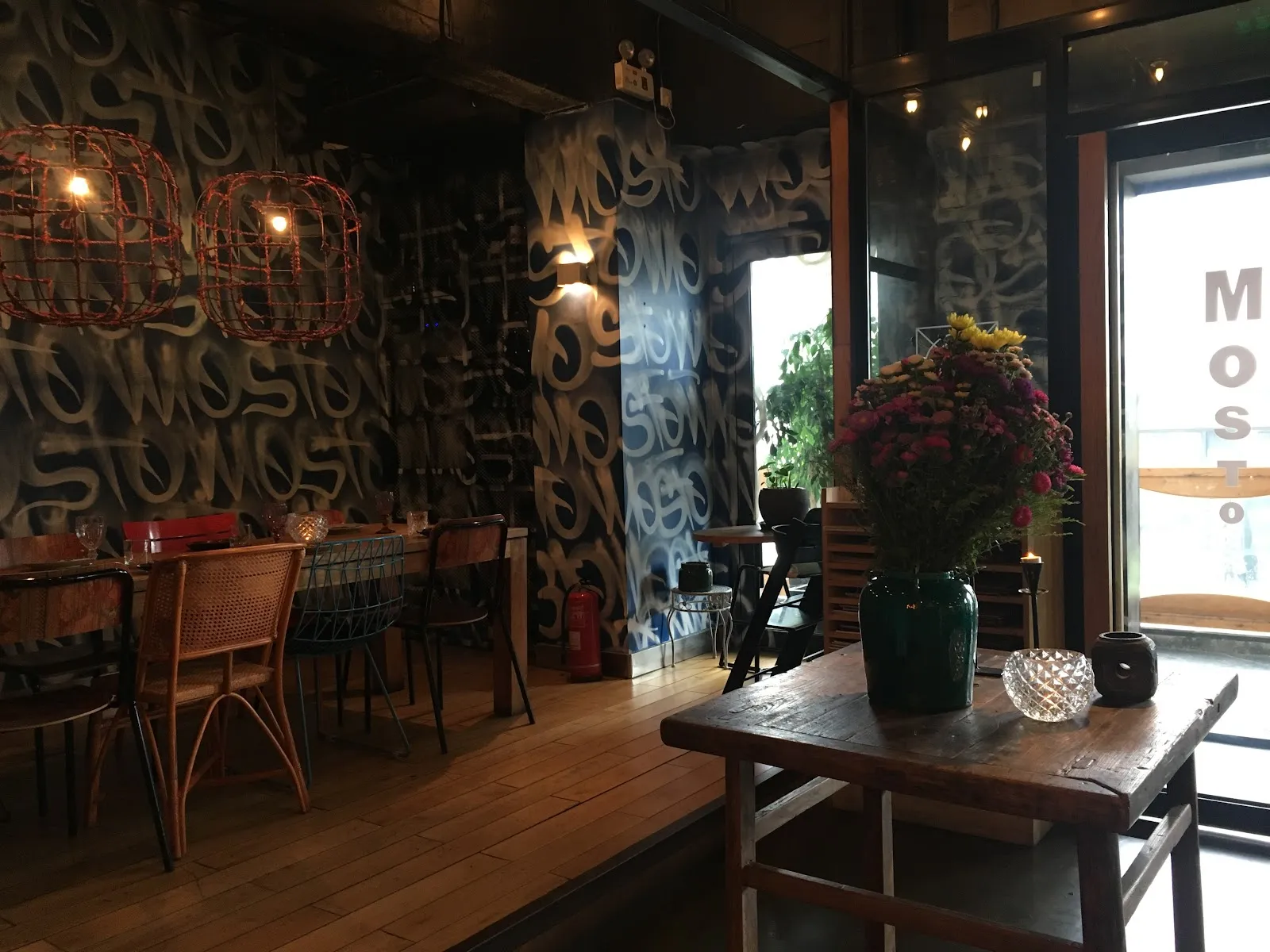
1.Mosto
Daniel Urdaneta's open-kitchen Sanlitun room and its foie-gras saffron risotto; the easiest excellent solo meal in Beijing. Sit at the pass.
Daniel Urdaneta, the Spanish-Venezuelan chef who has collected Chef of the Year honours across the Beijing press, has run Mosto from the Nali Patio in Sanlitun since 2008, and it is the city's most reliable solo seat for anyone who wants to eat well without a banquet. The cooking is modern Mediterranean with a South American accent, plated in an open kitchen: the foie gras with saffron risotto and Parmesan crisp has been the signature since the restaurant opened, and the yellowtail ceviche cured in lime over a coconut-milk base is the other order to make. The open pass turns the meal into something to watch, and the à la carte menu keeps the length and the bill under your control. Take a seat at the kitchen, order the foie risotto and the ceviche, and eat as a single diner with the whole room in view.
Book on the Mosto site and ask for a seat at the open kitchen; lunch is quietest. Reserve →
2.Hatsune
Alan Wong's California-sushi mainstay since 2001 and its cult 119 roll; the easiest casual table for one in town. Walk in.
Alan Wong brought California-style sushi to Beijing when he opened the first Hatsune in 2001, and twenty-five years on the Sanlitun Taikoo Li room is still the city's most dependable sushi bar. The format is the draw for a solo diner: a proper counter you can walk into, dozens of inventive rolls, and an à la carte order that scales to one. The famous one is the 119 roll, tuna with a spicy sauce that built the restaurant's reputation, with the stuffed crab and avocado roll close behind. Sit at the bar rather than a table, order three or four rolls and a bowl of miso, and you have a complete, unfussy dinner with no minimum and no wait for a two-top. It is the lowest-effort good meal on this list.
Walk in and take a seat at the sushi bar; no reservation needed off-peak. Reserve →
3.King's Joy
A two-star Buddhist vegetarian tasting beside the Lama Temple; the city's most exacting meatless meal and a calm solo splurge. Book ahead.
Chef Pan Jianjun, who trained at a monastery before bringing temple cooking into the city, runs King's Joy from a Zen-quiet courtyard house at No. 2 Wudaoying Hutong, beside the Yonghe Lama Temple. It held three Michelin stars from 2021 and sits at two in the 2026 guide, still the most exacting vegetarian kitchen in China. The set menus, from around 600 RMB, turn vegetables into sleight of hand: a mushroom and tofu “Peking duck,” truffle dumplings, dragon-fruit “sushi.” A fixed tasting in a calm room is kinder to a single diner than a banquet floor, because there is no ordering to negotiate and the team can give a solo cover full attention. Take it as a quiet event, book a weeknight, and let the kitchen run the menu for you.
Reserve on the King's Joy site a week or two out; weeknights are calmest. Reserve →
4.Duck de Chine
Date-wood roast duck and China's first Bollinger Champagne bar; a duck house built for eating alone. Sit at the bar.
Duck de Chine roasts a Cherry Valley and local crossbreed over date wood and brings it to the table to the banging of a gong, a Cantonese-and-Beijing duck with a French accent. What sets the Jinbao Street room at No. 98 apart for a solo diner is the entrance: China's first Bollinger Champagne bar, a quiet counter where a single cover can take a glass and a plate of duck without committing to a full banquet table. The Michelin Guide lists the room, and the service builds custom sauces for each guest. Sit at the Champagne bar rather than in the dining room, order a half portion of duck with bubbles, and you have turned a group dish into a refined meal for one. Go at lunch or early, before the dinner parties arrive.
Book the Bollinger bar on the Duck de Chine site, or walk in early for a single seat. Reserve →
5.Da Dong Roast Duck
Dong Zhenxiang's lean Su Bu Ni duck rewrote Peking duck; a half-duck lunch is an easy solo order. Go midday.
Dong Zhenxiang, the chef they call Big Dong, rebuilt Peking duck around a spherical wood-fired oven and a leaner bird he named Su Bu Ni, crisp-skinned without the fat, and entered the Beijinger's Dining Hall of Fame in 2016 for it. The flagship sits on the fifth floor of Jinbao Place at 88 Jinbao Jie, a polished room that turns out the duck alongside a long menu of refined Chinese dishes. A whole duck is sized for a table, so the solo move is a half-duck at lunch with one or two small plates, which the kitchen handles without fuss. It is less of a bar than Duck de Chine, so come at midday rather than the group-heavy dinner rush, order the lean duck, and eat the best version of the city's signature dish on your own terms.
Go at lunch and ask for a half-duck; book dinner on the Da Dong site. Reserve →
6.Susu
Vietnamese cooking in a 140-year courtyard house with DIY cha ca la vong; a calm hutong table for one. Drop in.
Susu hides behind red double doors at the end of Qianliang Xixiang, east of the National Art Museum, in a 140-year-old siheyuan stripped back to a bright courtyard and a roof terrace. The cooking is careful Vietnamese, and the dish to order is the DIY cha ca la vong: turmeric-marinated fish cooked in dill at the table over a burner, assembled with fresh noodles, rice crackers and a peanut sauce. The set-up is gentle on a single diner: an à la carte menu of small, sharp plates, a relaxed room, and a courtyard that feels calm rather than exposed when you eat alone. Take a corner of the courtyard at lunch, order the cha ca and a bowl of pho, and the hutong does the rest. It is the prettiest low-key solo seat in central Beijing.
Walk in for lunch or book dinner on the Susu site; ask for a courtyard seat. Reserve →
7.Migas Mercado
Spanish tapas and a rooftop bar over the China Zun skyline; the best CBD solo seat with a view. Take a stool.
Migas Mercado sits on the seventh floor of China World Mall at 1 Jianguomenwai Dajie, the larger CBD outpost of the Migas group that has worked the Mediterranean-lifestyle angle in Beijing since 2010. The kitchen turns out Spanish tapas, paella and Iberian ham, and the terrace looks straight across the CBD towards the China Zun and the CCTV tower. For a solo diner the bar is the seat: tapas are made for one, the rooftop is built for drifting in for a few plates and a glass of Rioja, and a single cover at the bar with a skyline view is the opposite of self-conscious. Take a stool, order a run of tapas and the Iberian ham, and watch the towers light up. Go at golden hour and stay for the view.
Walk in to the rooftop bar, or book a terrace seat on the Migas Mercado site. Reserve →
Avoid for solo dining
Right city, wrong format
Xin Rong Ji. The Xinyuan South Road room won three Michelin stars in the 2026 guide and is one of the best meals in China, but it is built on Taizhou seafood ordered for the table: whole fish, large shared dishes, a menu that assumes several people pointing at the trolley. A single diner can only graze the edges of it and pays banquet prices to do so. Bring a group and do it properly.
Najia Xiaoguan. The imperial-court cooking here is a sharing format by design, a spread of Manchu-Han dishes meant to be passed around a full table. Eaten alone it is too much food and too little of the range, and the warm, busy room is pitched at parties. Save it for a dinner with friends rather than a table for one.
Reservation strategy for solo dining in Beijing
Two habits cover the city. The fine-dining rooms want a booking, and a single seat is the easiest cover to place on a quiet night: King's Joy takes reservations on its own channels, Mosto books through its site, and a lone diner asking for a weeknight seat a week or two out will usually get one. Choose a weeknight over a weekend, ask for a seat at the open kitchen or pass where the option exists, and lean on the staff, who in the international rooms are used to looking after a solo cover.
The bars and counters are the opposite discipline. Hatsune will seat a single diner at the sushi bar without a booking off-peak, Duck de Chine keeps its Bollinger Champagne bar for exactly this, and Migas Mercado's rooftop takes drop-ins for a few plates. Go before seven or at lunch, take the bar rather than a banquet table, and order the one or two dishes each room is known for. Eaten this way, a table for one in Beijing never feels like a compromise.
Frequently asked
What is the best restaurant for solo dining in Beijing?
Mosto is the top pick. Spanish-Venezuelan chef Daniel Urdaneta has run it from Nali Patio in Sanlitun since 2008, and the layout suits a table for one: an open kitchen to watch, an a la carte menu of modern Mediterranean and South American dishes, and a bar you can eat the whole thing from. Order the foie gras with saffron risotto, his signature since day one, and the yellowtail ceviche, and you have a complete dinner alone without committing to a long tasting. Beijing is a city built for the round table, so the international rooms like Mosto are where eating solo is easiest.
Where can you eat alone at a counter or bar in Beijing?
The Japanese and Western rooms are the natural home for a single cover. Hatsune keeps a proper sushi bar at Sanlitun Taikoo Li where you can walk in and order a la carte, Mosto plates past an open kitchen in Sanlitun, and Duck de Chine runs China's first Bollinger Champagne bar at its Jinbao Street room, where a solo diner can take a glass and a plate of duck. Migas Mercado has a rooftop bar over the CBD. Ask for a counter or bar seat rather than a banquet table whenever the room offers one.
How much does solo dining cost in Beijing?
Anywhere from about 150 to 700 RMB a head before drinks, depending on the room. The two-star vegetarian tasting at King's Joy is the splurge at upwards of 600 RMB. Da Dong's roast duck runs a couple of hundred RMB for the bird, and a solo diner can take a half-duck with a few small plates. Mosto, Hatsune, Susu and Migas Mercado all let you eat well alone a la carte for roughly 150 to 400 RMB. Pick the room by how much of an event you want the evening to be.
Is it strange to eat alone in Beijing?
Chinese dining is built around the shared round table, so a solo diner is less common than in Tokyo or New York, and the big banquet rooms genuinely work better for groups. The trick is to choose rooms designed for a single cover: the international restaurants, the sushi bars, and the duck houses with a proper bar. At Mosto, Hatsune, Duck de Chine and Migas Mercado a table for one is normal and looked after. Sit at the bar or counter, order a la carte, and you will eat very well by yourself.
Can you eat Peking duck alone in Beijing?
Yes, with a little planning. A whole roast duck is sized for a table, so a solo diner should order a half-duck where the kitchen allows it and fill out the meal with small plates. Da Dong serves its lean Su Bu Ni duck at the Jinbao Place room and is used to single covers at lunch, while Duck de Chine pairs its date-wood duck with a Bollinger Champagne bar that is built for eating alone. Go at lunch rather than the group-heavy dinner rush, and ask for the half portion.
Related rankings
More from RFK
Browse the full Beijing dining guide, see the best solo dining tables worldwide, compare the best Chinese restaurants worldwide, or open the full RFK rankings index.
Restaurants for Kings is reader-supported. Some reservation links are affiliate links with OpenTable, Resy or Tock; we earn a small commission at no cost to you, and a link never buys a place on a ranking. Editorial scores and ranking order are independent of any commercial relationship. See our ranking methodology.