Tucson's Greatest Tables
30 restaurants listedGet the complete Tucson dining guide.
New openings, reservation tips, and editor picks — updated quarterly. Free to join.
$ under $40 · $$ $40–$80 · $$$ $80–$150 · $$$$ $150+ per person









Best First Date Restaurants in Tucson
See the full First Date restaurants guide for top tables across all cities.
Best Business Dinner Restaurants in Tucson
See the full Close a Deal restaurants guide for power tables across all cities.
Tucson's Top 10, The Definitive List
BATA
The most uncompromising table in southern Arizona. Chef Nick Meyers runs a live-fire tasting menu from a converted warehouse on Toole Avenue, sourcing almost exclusively from Arizona and the broader Sonoran region. The chef's counter — where guests sit facing the kitchen and are served by the cooks who prepared their meal — was the first of its kind in Tucson. Ten courses, two hours, and a singular conviction about what desert food can be. If you eat one meal in Tucson, BATA is the answer to every question you didn't know you had.
The Grill at Hacienda del Sol
Since 1929, this former girls' school on the Foothills has been the most atmospheric address in Tucson dining. The Grill's terrace faces the Santa Catalina Mountains and catches the last golden light of Tucson evenings in a way that no other restaurant in the city can match. Executive Chef Ramon Delgado's Southwest-driven menu earns its setting, and the wine program has held a Wine Spectator Award of Excellence every year since 1998. For a proposal dinner or a milestone anniversary, there is nowhere better in the Sonoran desert.
Vivace Restaurant
Chef Daniel Scordato opened Vivace in 1993 and it remains the finest Italian restaurant in Arizona. Perched high in the Foothills, the room commands views across the Tucson basin that make the Burrata and truffle preparations taste even better than they are. The seafood lasagnette, the veal piccata, the house-made desserts — Vivace succeeds because it has never tried to be anything other than a great Italian restaurant. TripAdvisor consistently ranks it in the top five in all of Tucson, a city of 1,500 restaurants.
Tito & Pep
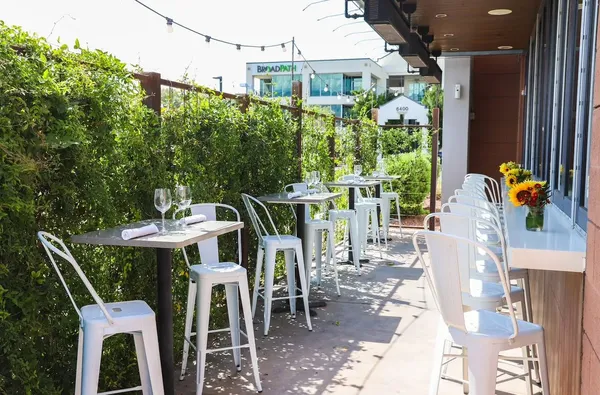
Chef and owner John Martinez draws from the multi-cultural history of the Sonoran borderlands to create a menu that is neither purely Mexican nor conventionally American but entirely its own thing. The mesquite-fired posole is as good as any single dish in the city. The mezcal and agave spirits list is encyclopedic without being exhausting. The covered patio is one of the best outdoor dining rooms in Tucson. First dates, casual celebrations, or simply a serious Tuesday dinner — Tito & Pep delivers every time.
CORE at The Ritz-Carlton, Dove Mountain
Thirty-five miles north of downtown Tucson, the Ritz-Carlton at Dove Mountain delivers the desert's most complete luxury dining experience. CORE's open kitchen produces true American cuisine inspired by Sonoran regional ingredients — the citrus grove adjacent to the resort supplies fresh oranges and grapefruits year-round. The setting is stunning, the service is Ritz-level, and the wine list is appropriately serious. For an out-of-town client who needs to understand that you operate at a certain level, CORE communicates it fluently.
Feast
Doug Levy's Feast is Tucson's most interesting restaurant. The menu changes weekly based on what is growing, arriving, and interesting. No cuisine category fully contains it — Feast is simply the work of a very good cook who refuses to be pinned down. The room is consistently filled with the people who know where to eat in this city. If BATA is Tucson's most serious restaurant, Feast is its most curious — and in a UNESCO City of Gastronomy, curiosity carries enormous value.
El Charro Café
No serious engagement with Tucson's food culture is complete without a meal at El Charro Café. Open since 1922 and still family-operated, it is the oldest continuously operating Mexican restaurant in the United States. The carne seca — beef dried on a rooftop cage above the restaurant — is one of the most singular dishes in American dining. Carlotta Duffy invented the chimichanga here. You cannot come to Tucson and skip it.
Janos
James Beard Award-winning Chef Janos Wilder built the vocabulary of Southwestern fine dining from this kitchen. His contemporary Southwestern approach — using Sonoran desert ingredients within a refined, globally informed technique — predates every chef in the country who claims a similar vision. The room at the Westin La Paloma is intimate, quiet, and deliberately unhurried. For a proposal dinner or a celebration requiring the weight of culinary history, Janos delivers a profoundly Tucson experience.
Arizona Inn Main Dining Room
The Arizona Inn opened in 1930 and has been awarded AAA Four-Diamond status for decades. The Main Dining Room — cathedral ceilings, fireplace, garden views — is the most formally beautiful room in Tucson dining. The Catlin Room offers a smaller, more intimate setting. The wine program is properly considered. For business dinners requiring the kind of institutional weight that newer restaurants simply cannot manufacture, the Arizona Inn is Tucson's singular answer.
Kingfisher Bar & Grill
Kingfisher has been Tucson's trusted destination for serious seafood since 1993. In a landlocked desert city, that is a statement of genuine conviction. Oysters, expertly handled fish, and a bar section designed for solo dining — the kind of honest, well-executed American bistro cooking that every city needs and most cities fail to sustain for three decades. Kingfisher has not only survived; it has thrived, and the locals who fill it nightly are the proof.
The Tucson Dining Guide
Everything you need to eat well in America's Desert Gastronomy Capital
The UNESCO Factor
In 2015, Tucson became the first city in the United States to receive UNESCO's City of Gastronomy designation — a recognition of a food culture stretching back 4,000 years to the Hohokam people who farmed the Sonoran desert using irrigation systems that modern engineers still admire. That heritage is not a marketing exercise. It shows up in every serious kitchen in this city in the form of tepary beans, cholla buds, saguaro fruit, mesquite flour, and Sonoran wheat grown from seeds that predate European contact. When BATA sources 90% of its ingredients within 400 miles, it is drawing from a pantry that has no equivalent anywhere else in America.
The practical consequence for visitors: Tucson's finest restaurants offer a culinary identity you cannot replicate in New York, Los Angeles, or anywhere else. The Sonoran beef, the green corn tamales, the carne seca dried in the desert air above El Charro — these are things that exist, fully formed, only here.
Neighbourhoods for Dining
Downtown Tucson along Congress Street and Toole Avenue is the city's most forward-thinking dining corridor. BATA, Ursa, The Parish, Casa Madre, and The Coronet all anchor this zone — it is walkable, energetic after dark, and where Tucson's food scene is currently evolving fastest. The Scottsdale restaurant comparison is instructive: where Scottsdale leans resort-luxury, downtown Tucson leans chef-driven conviction.
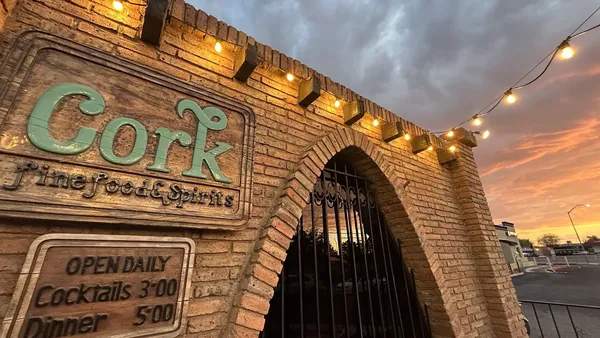
The Foothills — the residential zone climbing toward the Santa Catalina Mountains along North Campbell Avenue and Sunrise Drive — is where Vivace, Hacienda del Sol, The Cork, Bottega Michelangelo, and Fleming's Prime operate. These are Tucson's established fine dining addresses, with mountain and city views that provide legitimate drama. Reservations are essential on weekends year-round.
South Tucson, technically a separate municipality within Tucson's borders, is the spiritual and physical home of Tucson's Sonoran Mexican food culture. Mi Nidito and the family taquerias along South 4th Avenue serve carne seca, green corn tamales, and Sonoran-style enchiladas that represent an irreplaceable American food tradition. Any visitor who skips South Tucson has missed the point of the entire city.
Reservation Strategy
Tucson operates on two very different reservation timelines depending on which restaurant you are targeting. BATA books two to four weeks ahead and new slots sell out within hours of release — add yourself to their email list and book the moment slots appear. The Grill at Hacienda del Sol and Vivace require one to two weeks advance booking during peak winter season, which runs November through March when Tucson fills with snowbirds escaping northern winters.
Many of Tucson's best mid-range restaurants — Tito & Pep, Feast, The Parish, Kingfisher — are more accessible and often have availability within a week. The Sunday and Monday dining culture is notably relaxed in Tucson, and these evenings frequently offer both availability and a quieter, more intimate atmosphere than the weekend crowds.
Dress Code & Tipping
Tucson is a city that dresses comfortably rather than formally. Even at the finest restaurants — The Grill at Hacienda del Sol, CORE at the Ritz-Carlton, Janos — smart casual is the standard and almost universally accepted. The desert heat reinforces this: linen, sundresses, and open collars are entirely appropriate at any table in the city. The only exception is BATA's chef's counter, where the intimate proximity to the kitchen seems to invite slightly more considered dressing among regulars, though nothing is required.
Tipping follows American norms: 18-20% for satisfactory service, 22-25% for excellent, and 15% as a minimum at table-service restaurants. At Tucson's more serious establishments — BATA, Vivace, The Grill — service is professional enough that 22-25% is entirely warranted. Note that a number of Tucson's newer restaurants include automatic service charges for larger parties; confirm before adding gratuity on top.
The best way to reach Phoenix from Tucson is the I-10, roughly a ninety-minute drive that connects both of Arizona's major dining cities for a productive two-day gastronomic itinerary. Consider also Sedona, three hours north, which provides the complete Southwestern luxury dining experience.