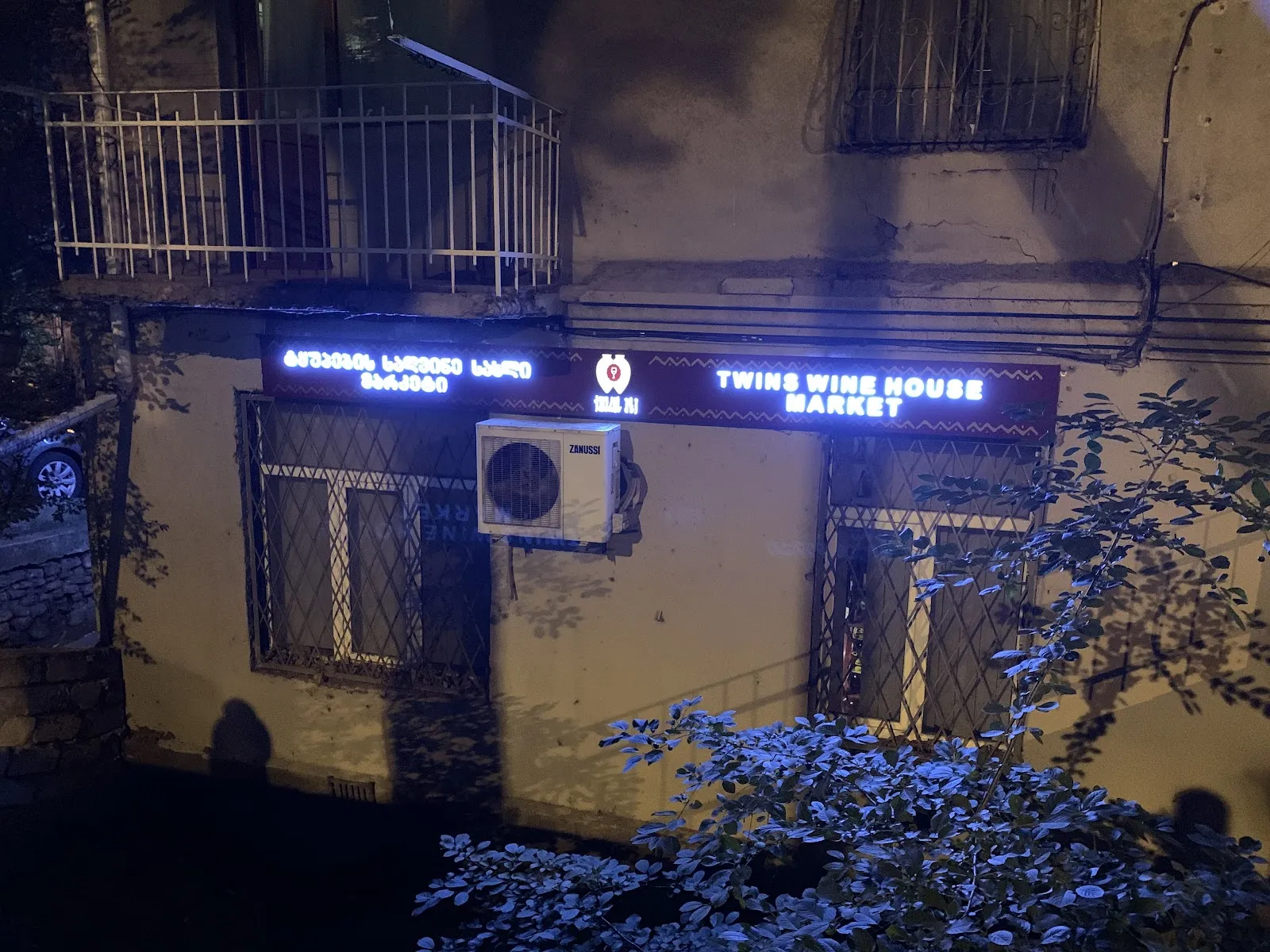
Eight Thousand Years of Georgian Wine
Georgia is the oldest continuously producing wine country in the world. The qvevri, the buried clay vessel in which Georgian wines have been fermented and aged for at least eight millennia, is on the UNESCO Intangible Cultural Heritage list. None of that means anything to most visitors until they sit down somewhere that explains it properly. Twins Wine House is the place that does.
Founded by twin brothers from Kakheti, Georgia's principal winemaking region, Twins is a genuine producer with a Tbilisi tasting room and restaurant. The underground cellar houses working qvevri and a clear, patient explanation of how the wines are made, six months under the earth, on the skins, fermenting on native yeasts. Above that cellar, the dining room serves the kind of traditional Georgian plates that are designed, fundamentally, to be eaten with these wines.
What to Drink
Begin with amber wine, Georgia's defining contribution to global wine. Rkatsiteli or kisi, fermented on the skins in qvevri, served at slightly cooler than red wine temperature. The flavour profile, dried apricot, walnut, beeswax, controlled tannin, is unlike anything in the broader European canon. Saperavi, Georgia's signature dark grape, is the obvious red choice; ask about the single-vineyard bottlings. The food is built for these wines: walnut-bound pkhali, lamb stews, charred Imeretian cheeses, breads from the clay tone oven. The pairings work because they have been working for eight thousand years.
The Cellar Tour
Take the cellar tour. It costs little and explains everything. The brothers (or one of their senior team) will walk you through the qvevri pit, explain why the orange-amber colour develops, and show you how the wine is racked from one vessel to the next over the course of months. By the time you sit down to eat, you will understand exactly what you are drinking and why it tastes this way. Few wine programmes in any city explain themselves this clearly.
Best Occasion: Solo Dining
Twins is one of the great solo-dining options in Tbilisi for the simple reason that the staff want to teach. A solo diner sitting at the tasting bar with a flight of qvevri wines and a few small plates will receive more education in an hour than three days of generic city tours could deliver. The sommeliers are generous; the bar pace is unhurried; the cellar is open to walk through between courses.