"Taiwan's only three-Michelin-star table, and the duck must be ordered two days out, book it to impress a client in Taipei."
About Le Palais
The roast duck is the whole reason to book, and you cannot order it on the night. Cherry Valley birds from Yilan, carved in courses, NT$3,980 a whole duck, reserved at least two days out when you take the table. Le Palais runs on the 17th floor of the Palais de Chine Hotel at No. 3, Section 1, Chengde Road, the only kitchen in Taiwan holding three Michelin stars, and Hong Kong-born Ken Chen has cooked it there since 2010. Treat the duck order as the booking, not an add-on.
This page anchors part of our Taipei dining guide and our best Chinese restaurants coverage.
The Kitchen
Ken Chen learned his trade in Hong Kong before taking the pass at Le Palais in 2010, and he cooks classical Cantonese with no apologies, no fusion flourishes, no tasting-menu theatre for its own sake. Co-executive chef Matt Chen works the same line. The reputation rests on the roast duck: Yilan Cherry Valley birds, air-dried and lacquered, brought to the table whole and carved into a multi-course service, skin first, then the meat, then a final preparation from the carcass.
Past the duck, order the way regulars do. The kung pao frog comes stir-fried to a deliberate chew; the pork tendon is tossed with house XO sauce; the char siu, dim sum, abalone and bird's nest all hold three-star standard. Seven tasting set menus start at NT$2,680 a head, but the strongest meal here is a hand-built à la carte order around the duck. A full dinner with the bird sits firmly at the top of the bill, this is a $$$$ room and it knows it. The dated proof is simple: three Michelin stars every year since the guide reached Taipei in 2018, the only Taiwanese restaurant ever to hold three.
The Room
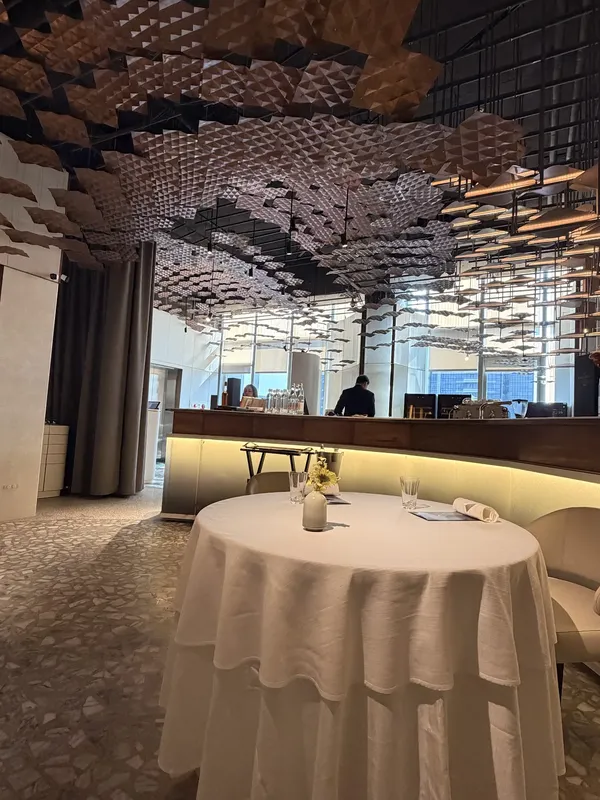
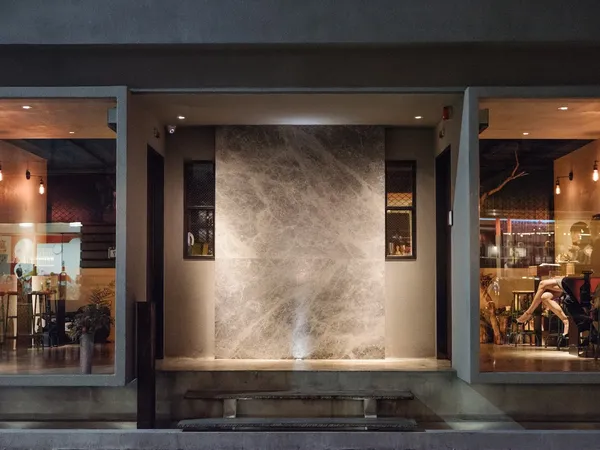
This is a serious room, and it reads that way to a guest the second they walk in, dark wood, carved screens, low light, white linen and service that moves quietly and formally. The noise level stays conversation-easy; you can run a negotiation across the table without leaning in. Tables are generously spaced rather than packed, which is the other reason it works for business.
Dress smart, a jacket is never wrong here, even if not strictly enforced. Ask for a window table when you book: the 17th-floor height is part of what you are paying for. Tables turn slowly, so this is an evening, not a stop.
Best for impressing a client or a milestone dinner
Book Le Palais to impress a client, mark a milestone anniversary or stage a proposal, because three things line up: a three-star name your guest will recognise instantly, a quiet well-spaced room you can actually talk in, and a signature dish, the carved duck, that does the theatre for you. The play is to pre-order the duck, request a window table, and let the carving land mid-meal. For other Taipei tables, compare Tairroir, MUME and RAW.
Not for
Don't bring a walk-in appetite or a tight budget. The duck has to be ordered two days ahead, the room is formal, and a full dinner runs to the top bracket, there is no quick, cheap version of this meal.
Frequently Asked
How hard is it to book Le Palais?
Book well ahead, weekend dinner is the tightest slot, and the kitchen is the only three-star in Taiwan, so it fills fast. Phone the restaurant or book through the Palais de Chine Hotel, and crucially, pre-order the roast duck at the same time. The duck needs at least two days' notice; without it you have missed the point of the table.
What should I order at Le Palais?
Lead with the Cantonese roast duck, Yilan Cherry Valley birds, NT$3,980 whole, carved in courses. Around it, build an à la carte order: kung pao frog, XO pork tendon, char siu, dim sum, and abalone or bird's nest if the budget runs to it. The seven set menus from NT$2,680 are fine, but the duck-plus-à-la-carte route is the better meal.
What is the dress code at Le Palais?
Smart. A jacket is never out of place in this room, though it is not strictly required. This is a formal three-star Cantonese dining room with dark wood, carved screens and hushed service, so dress like you mean the occasion, it is not a place for shorts or gym wear, especially at dinner.
Is Le Palais good for impressing clients?
Yes, it is one of Taipei's strongest client tables. The three-star credential registers instantly, the room is quiet and well-spaced enough for real conversation, and the duck carving gives you built-in theatre mid-meal. Pre-order the duck, request a window table on the 17th floor, and let the service carry the evening.
How many Michelin stars does Le Palais have?
Three. It has held three Michelin stars every single year since the Michelin Guide launched in Taipei in 2018, the only restaurant in Taiwan ever to do so. Chef Ken Chen has run the kitchen since 2010, and that consistency at the top is exactly why it stays the city's benchmark fine-dining room.
Reserve a Table
Reserve at Le Palais
Book well ahead and pre-order the roast duck. Find Le Palais on the 17th floor of Palais de Chine, No. 3, Section 1, Chengde Road.
Affiliate disclosure: Restaurants for Kings may earn a commission when you book through our reservation links, at no cost to you. Our scores are editorial and never paid for.
Practical Information
AddressNo. 3, Sec. 1, Chengde Rd, 17F, Taipei
NeighbourhoodDatong District
CuisineCantonese fine dining
RecognitionThree Michelin stars (since 2018)
ChefKen Chen, Executive Chef (since 2010)
SignatureCantonese roast duck, NT$3,980 whole
Set menusFrom NT$2,680 per person
ReservationEssential; pre-order the duck 2 days ahead