Best for First Date in Suzhou
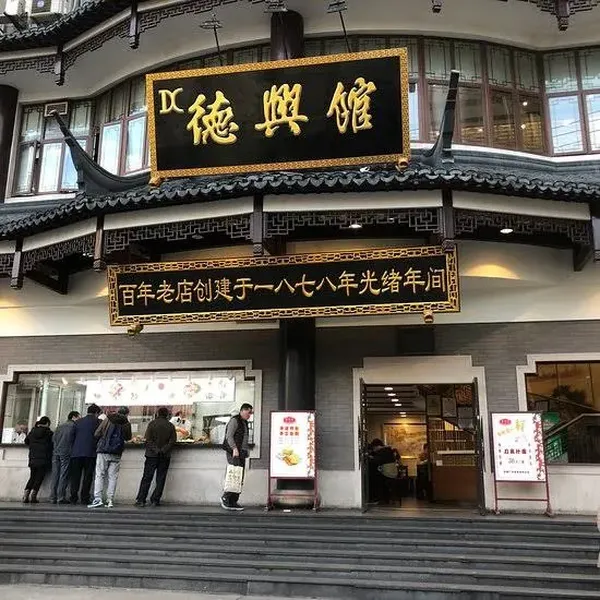
Song He Lou is the Suzhou restaurant for the team dinner, the birthday, the visiting relative who wants to understand what Suzhou cuisine is. The banquet-table format, the generational continuity, and the 268-year reputation together create an evening that functions at multiple levels, cultural, celebratory, and genuinely delicious. Reserve an upstairs private room for groups of six or more.
- Song He LouTwo hundred and sixty-eight years of Suzhou cuisine in a single restaurant. The living museum of classical Jiangsu cooking, and still the city's most-loved restaurant.
The Suzhou Dining Guide
Dining culture
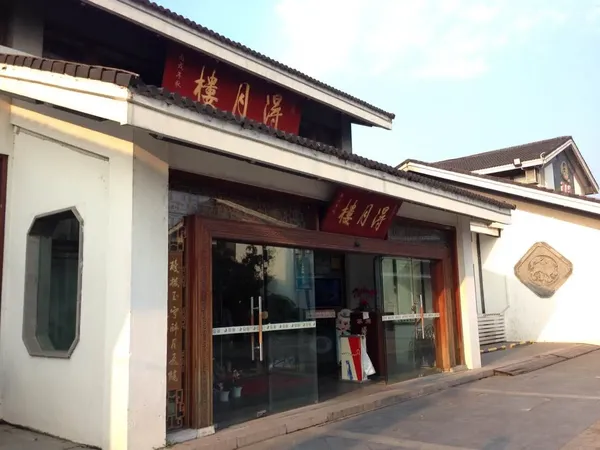
Suzhou's cuisine is one of the eight regional schools of Chinese cooking, and it is the sweetest and most delicate of the eight, a style shaped by the mild climate of the Yangtze Delta, by the profusion of freshwater fish from nearby lakes and canals, and by the tastes of the Ming and Qing literati who made Suzhou their summer capital. The classical dishes, squirrel-shaped mandarin fish, braised pork knuckle, hairy-crab xiaolongbao, are served at century-old halls like Song He Lou and De Yue Lou, but a generation of Shanghai-trained chefs has expanded the landscape to include French fine dining, omakase sushi, and modern Jiangnan tasting menus that put the region's ingredients in conversation with Paris technique.
Where to eat, neighbourhoods
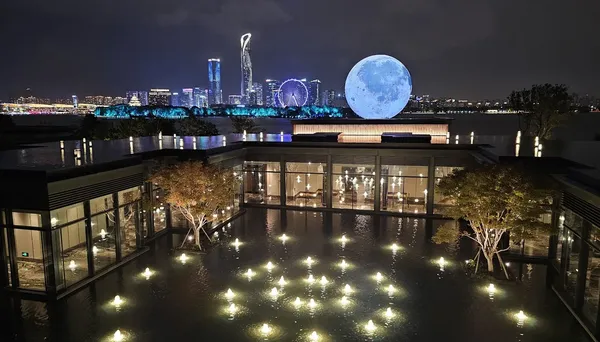
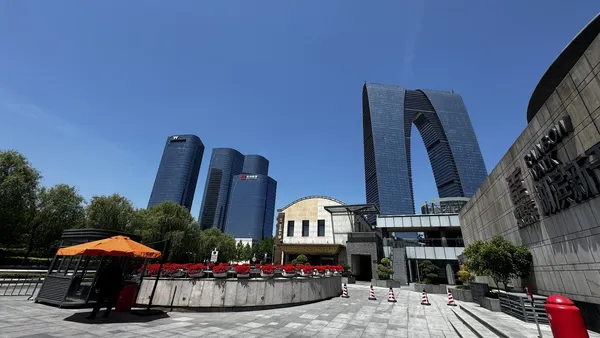
The Suzhou Industrial Park (SIP) around Jinji Lake is the city's international business quarter and houses the Four Seasons, W Suzhou, and most of the luxury hotel dining. Pingjiang Road and Shantang Street, both along the UNESCO-listed canals in the old city, hold the restored courtyard restaurants and canalside tea houses. Guanqian Street, Suzhou's central pedestrian shopping spine, is home to Song He Lou's flagship, 268 years in the same block. The Xiangcheng District has quietly become the chef-driven corridor, with sushi omakase and natural-wine rooms drawing weekenders from Shanghai, ninety minutes west by high-speed rail.
Reservations and etiquette
Dianping and Meituan are the primary booking channels domestically; Four Seasons and W Suzhou take reservations through their own websites and OpenTable. The classical institutions, Song He Lou, De Yue Lou, take walk-ins during the week but should be booked for weekends and during Shanghai high season (April, May, September, October). Tipping is not expected; a 10 percent service charge is standard at luxury hotel restaurants. Smart casual is the city's general dress code; the canalside courtyard rooms often request long sleeves and closed shoes for evening service.
Planning your visit
For readers building a longer Asian itinerary, pair Suzhou with the dedicated First Date, Close a Deal, and Proposal lists to understand how the city's best rooms compare with the regional heavyweights in Tokyo, Kyoto, Singapore, and Hong Kong. The full Cities Directory tracks the global expansion in progress.
The shortlist
This seed edition of the Suzhou index lists the most consequential restaurants the editorial team has verified. The full target of 40 restaurants represents every address worth considering across occasions, price points, and neighbourhoods, expected to be published in full during the 2026 rollout. For now, the shortlist below represents the city's most confident recommendations.
Frequently Asked Questions
What is the best restaurant in Suzhou?
For 2026, our editorial pick is Jin Jing Ge. Editorial runners-up: Song He Lou, De Yue Lou, Sushi Ryugetsu, CHOC+.
Where should I eat in Suzhou tonight?
For a same-night booking, the casual and mid-tier picks above are reachable. CHOC+ typically takes walk-ins; Sushi Ryugetsu accepts day-of reservations. The splurge picks (Jin Jing Ge, Song He Lou) need 3 to 5 weeks notice.
How much does dinner cost in Suzhou?
At the splurge picks (Jin Jing Ge, Song He Lou), expect $200, $400 per person without wine, full tasting menus. Mid-tier rooms run $80, $140. Casual but excellent neighborhood spots in Suzhou sit at $40, $70.
What is the most expensive restaurant in Suzhou?
Jin Jing Ge sits at the top of the Suzhou dining list, full tasting menu with wine pairings runs $400+ per person. Other splurge-tier rooms (Song He Lou, De Yue Lou) cluster at $250, $350.
Which Suzhou restaurants have Michelin stars?
The top of our Suzhou list is anchored by Michelin-starred and globally-recognized rooms. Jin Jing Ge, Song He Lou and De Yue Lou are the rooms most frequently cited in international guides.
Do I need a reservation for restaurants in Suzhou?
For the splurge and mid-tier picks: yes, always. Splurge tier needs 3 to 6 weeks notice; mid-tier 1 to 2 weeks. Casual rooms in Suzhou take walk-ins early evening (5:30 to 6:30pm) and last-minute cancellations open up regularly through the booking apps.
What's the best neighborhood for restaurants in Suzhou?
Suzhou's strongest dining clusters around the central business district and the high-end residential quarters, that's where the splurge picks (Jin Jing Ge, Song He Lou) sit. Casual options spread further; bookmark this guide for the full neighbourhood breakdown.
Where do locals eat in Suzhou?
The casual and mid-tier picks above are local-frequented, fewer tourists, better pricing, and the rooms where Suzhou-based diners have weekly tables. The splurge picks attract a mix of locals (anniversary, business) and international visitors.