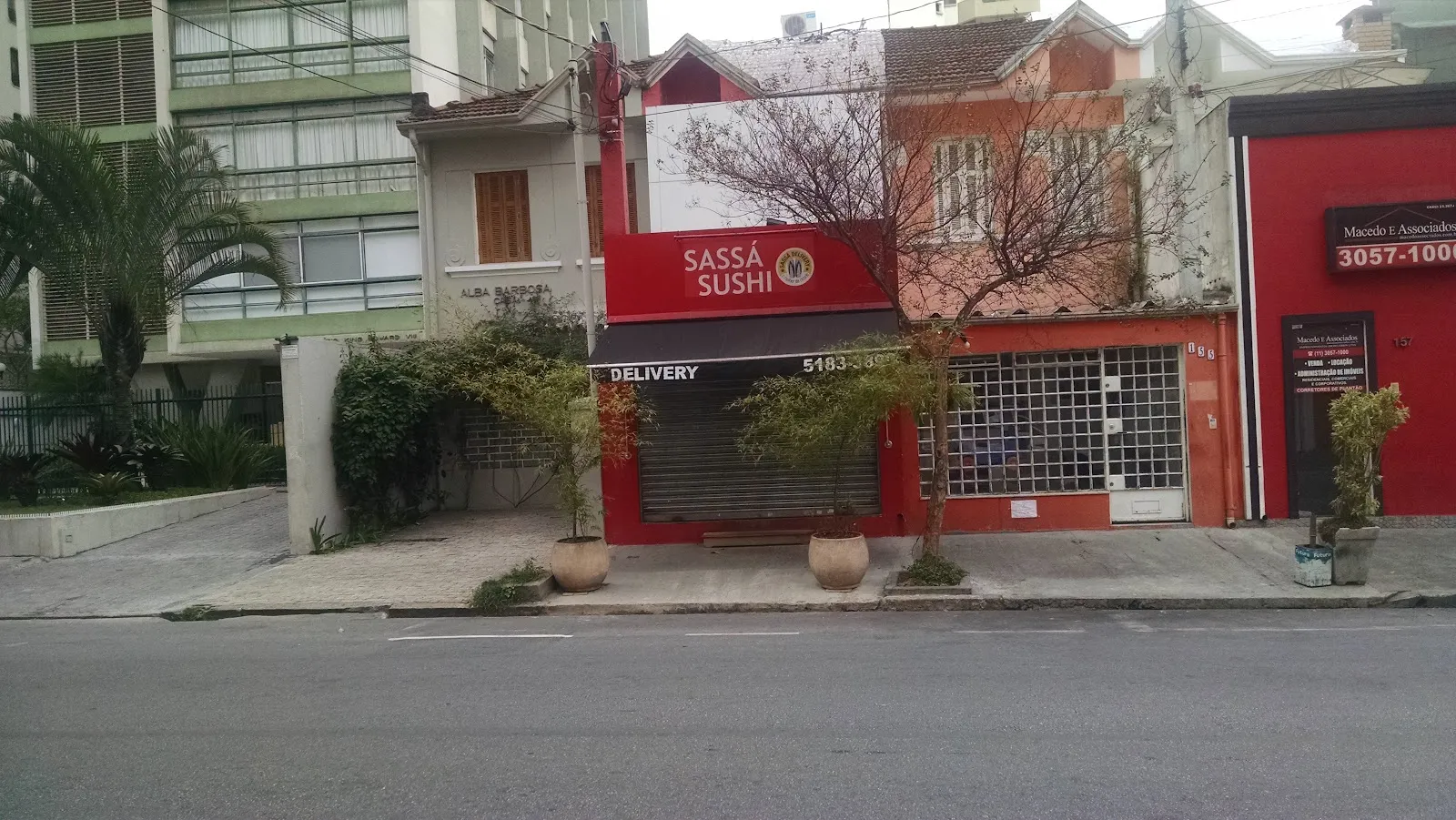
The Room
Sushi Sasá sits in a converted Jardins ground-floor space on Rua Bela Cintra, with a small omakase counter at the centre of the room, a few low tables along the perimeter, and forty seats total across the main dining room and a small private tatami room. The premise is the high-end Tokyo sushi counter — Mitsuharu Sasamori, Brazilian-Japanese chef trained in Tokyo, runs the omakase in front of eight diners at the counter, with imported Japanese fish flown in three times a week.
The interior is studied minimal-Japanese. Pale wood panelling, washi-paper lighting, a small ikebana arrangement at the entrance, and the obligatory cedar omakase counter where the chef works in front of the diners. The private tatami room at the back, holding eight diners, is the seat to request for the discreet business dinner. The captains have been with the room for a decade.
Sushi Sasá draws a serious São Paulo Japanese-food crowd — Jardins regulars who book the omakase once a month, the international tourist set who recognise the room from the city's hotel-concierge lists, and a small but loyal cult of São Paulo sushi obsessives. The booking window for the omakase counter holds at two weeks. The address is one of the city's most disciplined high-end Japanese dinners.
The Food
The kitchen runs Tokyo-style sushi with serious discipline. The signature omakase — eighteen courses moving through nigiri, sashimi, tempura and the chef's seasonal specials — is the order to make on a first visit. The fish is imported three times a week from the Toyosu market in Tokyo, with the kitchen receiving the night-flight delivery on Tuesday, Thursday and Saturday mornings. The omakase changes with the seasonal harvest from Japan, so an autumn menu and a spring menu are different meals.
Beyond the omakase, the à la carte counter — a smaller eight-course tasting at R$280 — is the most efficient introduction to the kitchen for first-time diners who don't want to commit to the full omakase. The tempura programme is one of the most disciplined in São Paulo, with the kitchen running a separate fryer for each course. The hot programme — the chawanmushi, the grilled wagyu, the seasonal Japanese vegetable course — is shorter than the sushi programme but executed with the same precision.
Sake list is one of the deepest in São Paulo — forty references with serious junmai daiginjo, junmai ginjo, and a small tokubetsu programme. The pairings are designed alongside each omakase and are the order to make on a first visit. Service is brigade-Japanese in the precise sense — captains who explain each course at the right depth without lecturing the table, and a sushi chef who works the counter with the focus of a watchmaker.
Best Occasion Fit
Close a Deal: The private tatami room at Sushi Sasá is the most discreet high-end Japanese seat in Jardins. The omakase, the sake pairings, the captain who knows when to leave the table alone. The room communicates the host's seriousness in a register few São Paulo dining rooms can match. Book three weeks ahead.
Impress Clients: International visitors recognise Sushi Sasá's Tokyo-import discipline immediately — the fish, the sake programme, the omakase format are all calibrated to the level Tokyo regulars expect. The full omakase with sake pairings is the meal that frames the city's Japanese ambition correctly.
Birthday: Sushi Sasá handles birthdays the way a serious Japanese counter should — a small sake from the bar, a candle on the dessert course, a signed omakase menu the table will keep. The omakase counter holds eight diners in a single sitting; the private tatami room is the seat to request for the family birthday.


