Paris Restaurants
Ranked by occasion suitability



Best for First Date in Paris
All First Date →Paris rewards first dates more generously than any city on earth. Verjus, tucked behind the Palais-Royal, changes its menu almost daily — a tasting counter that creates a story without trying. Septime on rue de Charonne requires three weeks of planning and rewards it with the most exciting food in the Bastille. For something less strategic and more cinematic, Le Train Bleu at Gare de Lyon delivers Belle Époque grandeur and a setting that simply cannot fail.
Best for Close a Deal in Paris
All Close a Deal →Paris's power dining culture is among the most ritualised on earth. Guy Savoy at the Monnaie de Paris positions every dinner as a monument to French excellence — the perfect frame for a negotiation that needs to feel historic. Taillevent has closed deals across decades with its impeccable discretion and a wine cellar that signals seriousness. For private dining without the palace price, Allard's 40-seat room in Saint-Germain is where Paris's dealmakers meet out of sight.
Best for Proposal in Paris
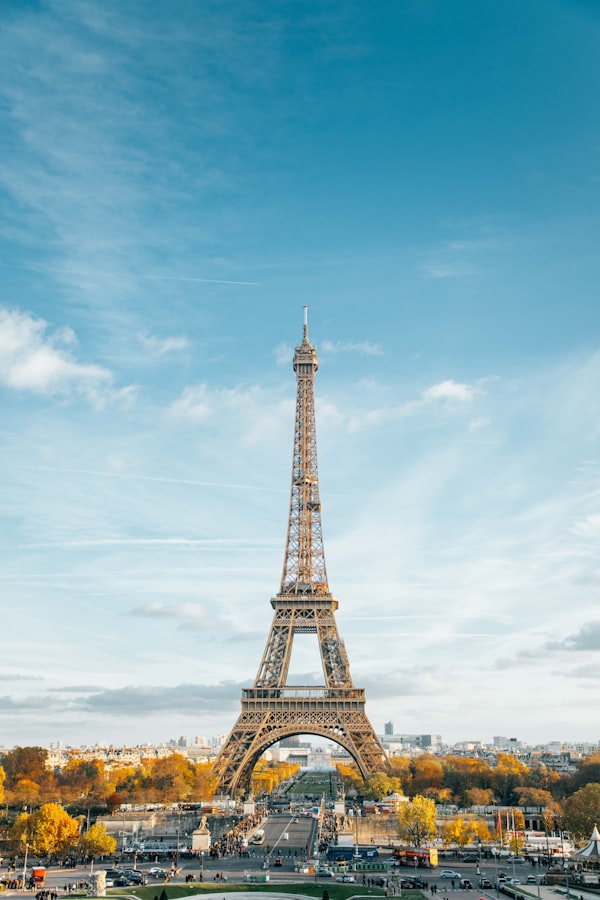
All Proposal →No city in the world has more proposal-perfect restaurants per square kilometre than Paris. Le Jules Verne is the most cinematically obvious choice — two Michelin stars inside the Eiffel Tower, with a private elevator and a view that removes all other arguments. Plénitude inside Cheval Blanc offers a more interior kind of romance: the Seine below, the Pont Neuf ahead, and food so beautiful it constitutes its own declaration. Le Pré Catelan in the Bois de Boulogne removes you from the city entirely — the Second Empire pavilion is Paris's most intensely private setting.
Best for Solo Dining in Paris
All Solo Dining →Paris is the world's greatest city for eating alone with intention. L'Abysse at Pavillon Ledoyen offers an omakase counter of such refinement that solitude becomes a gift — the chef's work demands your full attention. L'Arpège at lunch is the ultimate solo Parisian pilgrimage: a single table at Alain Passard's counter, watching a three-star kitchen in motion. Le Comptoir du Relais at carrefour de l'Odéon requires no reservation at lunch — counter only, extraordinary cooking, and the pleasant anonymity of a neighbourhood that has no interest in your status.
The Paris Dining Guide
Paris is not merely the world's most celebrated dining city. It is the city that invented the concept. The restaurant — a public establishment serving meals at individual tables, with menus, service, and a bill — was born in Paris in the 1760s. Everything that followed, everywhere on earth, is a descendant of that moment. To eat seriously in Paris is to participate in a tradition of almost unbroken refinement, and to do so with the knowledge that the city has never once stopped caring.
The current state of Parisian gastronomy is, by the evidence of the 2026 Michelin Guide, the most competitive in the city's modern history. One hundred and twenty-seven starred restaurants now operate within the périphérique. Ten carry three stars — a concentration of culinary excellence unmatched by any city on earth, including Tokyo. The top echelon operates at a level of ambition and technical accomplishment that justifies every superlative applied to it: Plénitude at Cheval Blanc, Épicure at Le Bristol, Le Gabriel at La Réserve, Guy Savoy at the Monnaie de Paris, Arpège on rue de Varenne — these are not merely restaurants. They are arguments about what cooking can be.
The geography of Parisian dining has its own logic. The 8th arrondissement — the Triangle d'Or — remains the centre of institutional excellence: Le Cinq at the George V, Taillevent on rue Lamennais, Pierre Gagnaire on rue Balzac, Épicure at the Bristol, the Pavillon Ledoyen with Alléno Paris and L'Abysse operating within the same building. This is where power eats, where clients are impressed, where the city's most enduring culinary institutions have survived regime changes, recessions, and fashion with their ambitions intact.
The Left Bank offers a different grammar. The 7th arrondissement — Arpège on rue de Varenne, Le Jules Verne above the Trocadéro skyline, L'Ami Jean on rue Malar — is quieter, more residential, more intimate. The 6th gives you Saint-Germain-des-Prés: Allard, Le Comptoir du Relais, the ghosts of Sartre and de Beauvoir arguing over côte de veau. The 11th, once working-class, is now the home of Paris's most exciting contemporary cooking: Septime on rue de Charonne changed European dining when it opened in 2011 and has held that position every year since.
What Paris rewards above all other cities is preparation. The city does not improvise gracefully. The table at Septime that requires three weeks of deliberate action, the counter at L'Abysse that books out the day it opens, the window table at Le Jules Verne that needs ninety days' notice — these are not inconveniences. They are the price of admission to the world's most consequential dining scene, and they are worth every effort.