Japan — Asia

Kyoto

Five three-Michelin-star restaurants. Two hundred and thirty-eight restaurants in the guide total. A dining culture so rooted in ceremony, season, and restraint that even a bowl of tofu becomes a philosophical statement. The world's most historically dense food city.

60Restaurants Listed
5Three-Star Michelin
7Occasions Covered

Kyoto's Finest Tables

60 restaurants listed
Kyoto Kitcho Arashiyama kaiseki private garden dining room
1
Proposal
Kikunoi Honten kaiseki autumn seasonal course Higashiyama Kyoto
2
Impress Clients
Hyotei traditional Japanese morning kaiseki counter Nanzenji Kyoto
3
First Date
Nakamura kaiseki seasonal dishes Kyoto imperial tradition
4
Birthday
Mizai six-seat kaiseki counter Higashiyama Kyoto Michelin three stars
5
Solo Dining
Kichisen Kyoto traditional tea ceremony kaiseki private tatami room
6
Close a Deal
Kodaiji Jukyuan two Michelin star kaiseki Higashiyama Kyoto
7
Birthday
Gion Maruyama seasonal kaiseki Gion district Kyoto
8
First Date
Gion Fukushi one Michelin star kaiseki counter organic vegetables Kyoto
9
Solo Dining
Gion Owatari one Michelin star kaiseki intimate Gion Kyoto
10
Proposal
Gion Takamitsu sushi counter Hanamikoji-dori Kyoto 2025 opening
11
Impress Clients
Sushi Hayashi one Michelin star omakase counter Kyoto Nakagyo
12
Solo Dining
Sushi Tamahime Kyoto Station 11th floor Edomae sushi city view
13
Team Dinner
Kanga-an Buddhist shojin ryori vegetarian temple garden Kinkakuji Kyoto
14
Proposal
Gion Vitra French-Japanese fusion seasonal menu Gion Kyoto townhouse
15
First Date
Wagyu Bungo Gion Oita beef Shimbashi-dori Gion historic street Kyoto
16
Birthday
Torisei yakitori chicken sake brewery Fushimi Kyoto team dinner
17
Team Dinner
Arashiyama Yoshimura soba noodles Togetsukyo Bridge river view Kyoto
18
Solo Dining
Izuju traditional Kyoto sushi pressed mackerel Gion landmark 1940
19
Solo Dining
Gion Yamaneko izakaya craft sake bar 150-year townhouse Gion Kyoto
20
Team Dinner

Best for Proposal in Kyoto

View all proposal restaurants

Kyoto is the most romantic city in Japan and arguably in Asia. Private tatami rooms overlooking moss gardens, kaiseki courses that last three hours, views of cherry blossoms from Arashiyama — the city is engineered for once-in-a-lifetime moments. Kyoto Kitcho Arashiyama is the obvious first choice for a proposal of maximum grandeur. Hyotei works for those who prefer ancient intimacy over showmanship. Kanga-an is the choice for couples who want something genuinely extraordinary and completely unlike anything else.

Best for Close a Deal in Kyoto

View all business dining restaurants

Bringing a client to Kyoto already communicates taste. What you do with them once there determines whether you've closed the deal or merely bought an expensive lunch. Kikunoi Honten is the safest and most reliable power table — three Michelin stars, a century of tradition, and private rooms that enforce discretion. Gion Takamitsu is the choice for clients who understand sushi at the highest level. Kichisen is the nuclear option — two stars, complete ceremony, and a reservation that requires months of lead time to secure.

Kyoto Dining Guide

Kyoto is not Tokyo. That distinction is worth stating plainly, because the temptation — for visitors and food writers alike — is to treat them as interchangeable expressions of Japanese cuisine. They are not. Tokyo's food culture is urban, competitive, relentlessly innovative, and cosmopolitan. Kyoto's is ancient, seasonal, rooted in ritual, and defined above all by kyo-ryori — Kyoto cuisine — a tradition so precisely calibrated to the city's particular geography, religious history, and social hierarchy that it resists replication anywhere else on earth.

The foundational form is kaiseki. Not the casual kaiseki you encounter in hotel restaurants across Japan, but the full ceremony — ten to sixteen courses, each timed to the season and the occasion, served in sequence with the kind of attentiveness that can feel, to the uninitiated, almost alarming in its precision. The vegetables come from specific farms. The fish is sourced from the Sea of Japan via Nishiki Market, Kyoto's four-hundred-year-old covered marketplace. The ceramic plates are chosen to reflect the season. In autumn, maple leaves appear as garnish. In spring, cherry blossoms. Every detail is intentional, and the chef will have spent years, sometimes decades, developing the eye to choreograph it.

The five three-star restaurants — Kyoto Kitcho Arashiyama, Kikunoi Honten, Hyotei, Nakamura, and Mizai — represent the apex of this tradition. Getting a reservation at any of them requires months of lead time, hotel concierge involvement, and, in some cases, a personal introduction. They are worth the effort. They are also not the beginning of Kyoto's food story. One-star kaiseki restaurants, sushi counters, Buddhist vegetarian temples, atmospheric yakitori halls, and sake-soaked izakayas with 150-year-old bones each offer their own irreplaceable argument for the city's greatness.

Kyoto is also a city where the best meal you eat may cost under ¥2,000 — a bowl of tofu hot pot from a vendor near Nishiki Market, or soba noodles at Arashiyama Yoshimura overlooking the Katsura River. That is the paradox the city holds without apparent discomfort. You can spend ¥60,000 at Kyoto Kitcho and feel that the money was spent on something real. You can spend ¥1,500 on a bowl of tofu and feel exactly the same way.

Neighbourhoods
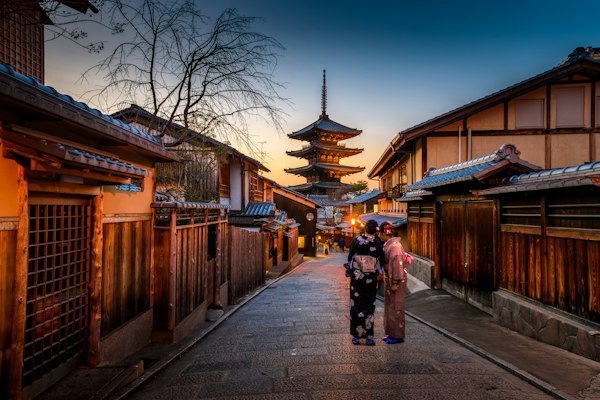
Gion is the spiritual centre of Kyoto dining — Hanamikoji-dori and Shimbashi-dori concentrate the city's greatest kaiseki restaurants, sushi counters, and intimate bars within a few atmospheric blocks. Arashiyama in western Kyoto houses Kyoto Kitcho and Arashiyama Yoshimura alongside the bamboo groves; it's worth the journey for the setting alone. Nanzenji in the Sakyo Ward is Hyotei's territory — quiet, ancient, and bordered by the canal that once fed the Nanzenji Temple's garden. Higashiyama runs the full southern circuit from Kikunoi Honten to Mizai, with the city's temple-district atmosphere at every turn. Fushimi in the south is sake country — Torisei and the great yakitori halls are here, rooted in the brewing culture that defines this historically distinct neighbourhood.
Practical Notes
Reservations: Secure bookings at three-star restaurants months in advance — many require contact through a hotel concierge or Japanese-speaking intermediary. English-friendly options are increasing; Kodaiji Jukyuan specifically caters to international guests. Dress code: Smart to formal at kaiseki establishments. Tatami rooms require the removal of shoes — wear elegant socks. Geta (wooden sandals) are not appropriate. Tipping: Not practiced. Service is included in every price and tipping is considered rude. Dietary restrictions: Kaiseki is notoriously difficult to adapt — vegetarian and vegan guests should communicate requirements weeks in advance. Kanga-an's shojin ryori is the natural solution for those who cannot eat meat or fish. Timing: Kyoto's restaurant culture is lunch-forward in ways Tokyo's is not. Many of the finest kaiseki establishments shine at midday, when natural light enters the garden rooms.