"Nine seats, one Michelin star, and a French-trained sushi chef bridging Edomae and Kyoto — reserve it for a solo counter night."
About Sushi Hayashi
Nine counter seats. One seating focus per service. A chef who answers in French if you prefer. Sushi Hayashi sits in a quiet block of Kamigyo-ku, a six-minute walk from Demachiyanagi station, and it holds one Michelin star for a style most Kyoto rooms do not attempt: Edomae nigiri — the Tokyo idiom of aged fish and nikiri-brushed sushi — built on the seasonal produce of the old capital.
Chef Yoshio Hayashi cooks the counter himself. The omakase runs roughly ¥20,000 to ¥40,000 depending on lunch or dinner and the course chosen, paired, unusually for sushi, with a wine list he assembled during years working abroad. It is a serious, adult room rather than a tourist conveyor.
The Kitchen
Yoshio Hayashi spent around twenty-five years at the trade, including a stint in Switzerland — which is why he speaks French — and was involved in setting up the sushi counter at a Four Seasons before opening his own room. His nigiri reads as Edomae first: tuna aged and cut for the moment, shari served warm and lightly vinegared, each piece brushed with nikiri rather than handed a soy dish.
What sets the counter apart is the Kyoto overlay — seasonal delicacies from across Japan worked into a Tokyo grammar, and a wine pairing offered alongside the expected sake. The one Michelin star recognises exactly this hybrid. At ¥20,000–40,000 it is not cheap, but it is the rare Kyoto omakase where the chef trained for the wine as seriously as the rice.
The Room
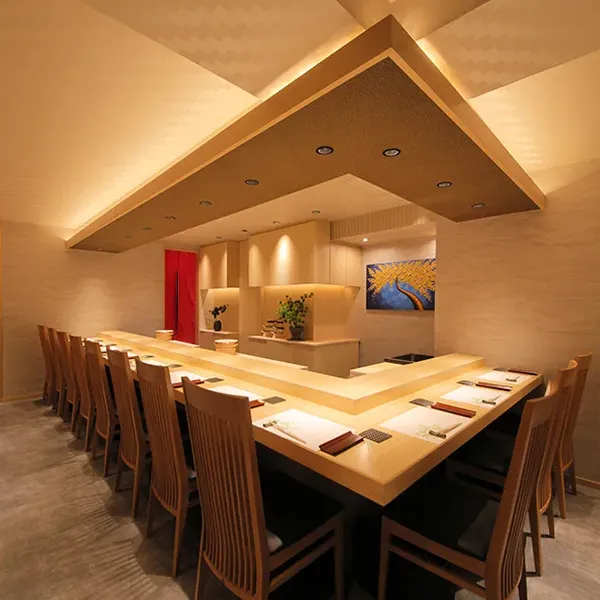
The space is a single hinoki counter for nine, styled like a hidden retreat: low, calm, conversation-quiet, with the chef directly across the wood. Lighting is soft and the pace is deliberate. Dress is smart; there is no formal jacket rule but the room rewards it. Reservations are required and run through online booking platforms rather than a phone line, which suits the international guests Hayashi cooks for.
Best for Solo Dining
Reserve Sushi Hayashi for a solo counter night because the nine-seat format is built for it: you sit across from the chef, the omakase needs no second opinion, and Hayashi will talk you through each piece in Japanese, English or French. It is one of the calmest serious sushi rooms in the city — see more in our best sushi worldwide guide and the best restaurants for solo dining.
Not for
Not for a big celebration or a group — the counter seats nine, the focus is the chef and the fish, and a loud party of six would break the room. Bring one guest at most.
Frequently Asked
Is Sushi Hayashi worth it?
Yes, if you want serious Edomae sushi in Kyoto. Chef Yoshio Hayashi holds one Michelin star for nigiri that pairs Tokyo-style aged fish with Kyoto seasonality, and he is one of the few sushi chefs offering a genuine wine list alongside sake. At ¥20,000–40,000 it earns its place among our top sushi counters worldwide.
How hard is it to book Sushi Hayashi?
Moderately hard, and you book online. The counter seats only nine, reservations are required, and they are taken through booking platforms rather than by phone. Dinner slots go first; lunch, which offers two omakase courses, is the easier table to secure on shorter notice.
What is the dress code at Sushi Hayashi?
Smart. There is no jacket requirement, but this is an intimate, one-Michelin-star counter, so diners dress neatly rather than casually. Avoid strong fragrance — it interferes with the fish at a counter this small, and the chef serves directly across the wood.
What does omakase cost at Sushi Hayashi?
Roughly ¥20,000 to ¥40,000 per person, for both lunch and dinner, depending on the course. Two omakase options run at lunch and one at dinner. A wine pairing, which is part of what distinguishes this counter, adds to the figure. It is priced as a destination meal.
Is Sushi Hayashi good for solo dining?
Yes — reserve it for a solo night. The nine-seat counter is designed for it: you face the chef, the omakase removes any need to negotiate a menu, and Hayashi speaks English and French as well as Japanese, so a lone international diner is never stranded.
Reserve a Table →
Reserve a Table
Reserve at Sushi Hayashi
Online reservation required; nine counter seats. Lunch and dinner omakase.
Affiliate disclosure: Restaurants for Kings may earn a commission when you book through our reservation links, at no cost to you. Our scores are editorial and never paid for.
Practical Information
AddressGran Cosmo Gosho 101, 31-1 Omotecho, Kamigyo-ku, Kyoto
NeighbourhoodGosho-Kita, near Demachiyanagi
CuisineEdomae Sushi
PriceOmakase ¥20,000–¥40,000 (lunch and dinner)
Dress CodeSmart
Seating9-seat hinoki counter
ReservationOnline booking · required