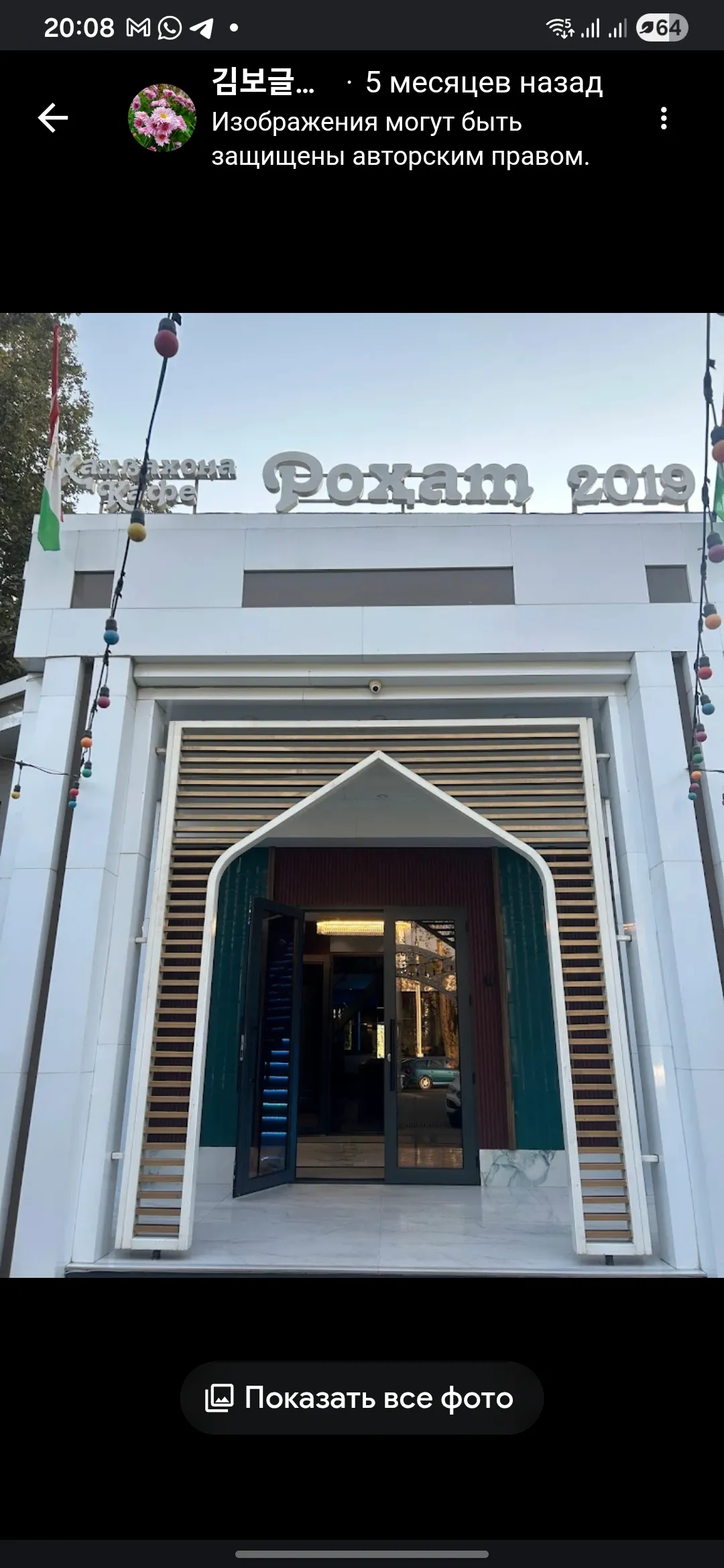
Dining in Dushanbe
Dushanbe dines in the country least-visited in Central Asia. The Tajikistan capital, population 850,000, the largest city in this mountainous Central Asian nation, sits at the foot of the Pamir Mountains and operates as the country's primary urban centre. The cuisine is Tajik-Persian, distinct from the Uzbek-influenced cuisine of Bukhara or the Kyrgyz-nomadic of Bishkek: qurutob (the country's national dish, a flat-bread-and-yogurt-cheese preparation similar to a Tajik nachos with onion-and-tomato dressing), plov (the rice-and-lamb pilaf, with the Tajik version slightly less oily than the Uzbek plov, often served with raisins, chickpeas and quince), and a strong tradition of mountain-fresh herbs from the Pamir highlands.
The dining map clusters along the central Rudaki Avenue, the ten-kilometre tree-lined boulevard running through central Dushanbe from the Sadriddin Aini Park in the south to the Hyatt Regency Hotel in the north. The avenue holds the city's iconic restaurants, the Soviet-era cafes, the modern international fine-dining (the Hyatt's Latitude restaurant, the Serena Inn's restaurants), and the Bazaar-area working kitchens. The Mehmonsaroi Mehmonon district north of central Dushanbe holds the contemporary Modern-Tajik fine-dining scene that's emerged over the last decade.
Reservations matter at the higher-tier hotel restaurants and at the better Modern-Tajik destinations on weekend evenings; walk-ins for two work elsewhere. English menus are common at the tourist-tier restaurants and the hotel kitchens, less common elsewhere. The Dushanbe restaurant rhythm matches the broader Central Asian, lunch peaks at 1pm and dinner runs from 7pm to 10pm.
Pair the food with one of the local Tajik green teas (the country has a long tradition of green-tea-drinking distinct from the Russian-influenced black-tea cultures of Kyrgyzstan and Kazakhstan) or with the regional Pamir-Mountain herbal teas. The proper post-dinner anchor is a walk along Rudaki Avenue at sunset, the boulevard is lit until midnight and the Soviet-era architectural set-pieces (the National Library, the Palace of Nations, the Ismaili Centre) are evocative in the evening light. Cap the day at the Sadriddin Aini Park's central pavilion for a view of the city's eastern mountains.
Explore more: dining by occasion • all cities • dining guides