Copenhagen’s Finest Tables
70 restaurants listed

Best for First Date in Copenhagen
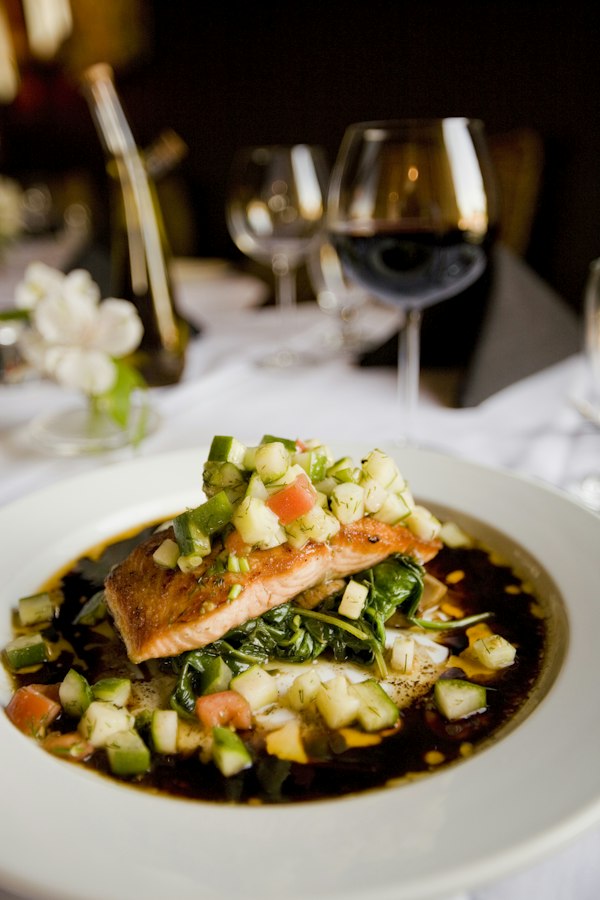
Copenhagen’s first-date scene rewards the considered over the ostentatious. Kadeau’s Christianshavn candlelight is intimacy itself; Formel B’s choose-your-own menu creates instant conversation; and Alouette on Islands Brygge strikes exactly the right balance between impressive and approachable. Avoid the three-star rooms — the silence and ceremony can paralyse a first encounter.
Best for Close a Deal in Copenhagen
Copenhagen’s power dining operates on different rules to London or New York. There are no obvious Wall Street temples here — instead, the city’s most serious business is conducted in subterranean vaulted cellars (AOC, Kong Hans Kælder) where the quiet intimacy seals more agreements than any corner suite. Reserve AOC or Kong Hans for contracts that matter; Marchal for anything that requires a show of grandeur.
The Copenhagen Dining Guide
Copenhagen is not a city that happened to become great at food. It is a city that decided, in the early 2000s, to reinvent what food could mean — and then spent twenty years executing that vision with characteristically Danish single-mindedness. The movement that produced Noma did not merely create a three-Michelin-star restaurant; it created an entire culinary ecosystem. Former Noma alumni now run half the best kitchens in Europe. The fermentation lab, the foraging philosophy, the obsessive localism — all of it began on a grey wharf in Christianshavn and spread outward from there.
What makes Copenhagen extraordinary today is not nostalgia for that revolution but the maturity it has produced. Geranium has refined the New Nordic template into something of breathtaking precision. Alchemist has taken theatrical dining further than anyone thought possible. And a new generation — Koan, JATAK, Udtryk — is building on those foundations with an ease that suggests Copenhagen’s dominance has a decade left to run, at minimum.
The practical reality of dining here is that reservations are among the hardest to secure in Europe. Geranium, Alchemist and Kadeau routinely fill months in advance. For the top three or four restaurants, treat reservation day as an event: set calendar alerts, refresh constantly, and consider email waiting lists. Restaurants at the Michelin one-star level are significantly more accessible, though Formel B and Alouette fill quickly on weekends.
Tipping in Copenhagen is never expected but always welcomed. A 10% addition for exceptional service is generous by local standards. Most restaurants at the fine dining level have included service in the menu price. The exception is the wine pairing: always ask whether service is included in the pairing price, as this varies significantly between establishments.
Christianshavn — The canal district that feels like a small Dutch town embedded in Copenhagen. Kadeau anchors the fine dining scene here. The neighbourhood rewards explorers: smaller natural wine bars and new-wave smørrebrød spots line the cobblestone streets.
Refshaleøen — The former industrial island east of Christianshavn where Noma, Alchemist and Amass turned a derelict shipyard into the world’s most exciting dining destination. A 15-minute cycle from the centre; unforgettable as a destination in itself.
Vesterbro & Frederiksberg — The neighbourhood for more relaxed evenings: Formel B in Frederiksberg, JATAK in Vesterbro’s Kødbyen meatpacking district, and dozens of natural wine bars for post-dinner drinking that Copenhagen does better than anywhere else.
Alchemist — Operates a ticket-based system through Tock. Sign up for the waitlist; cancellations do surface. An experience worth the effort of six months’ planning.
Kadeau — Books out two months ahead. Email the restaurant directly for last-minute cancellations — they are more responsive than most at this level.
Dress code — Copenhagen fine dining is smart but not formal. Men in blazers and open collars are entirely appropriate at every establishment on this list, including Geranium. Women in evening-casual dress. Ties are never required. The Danes find over-dressing faintly comic.
Seasons — The kitchen garden season from June through September produces Copenhagen’s most exciting menus. Winter brings ferments, aged game and preserved summer’s bounty — equally compelling, and significantly easier to book.