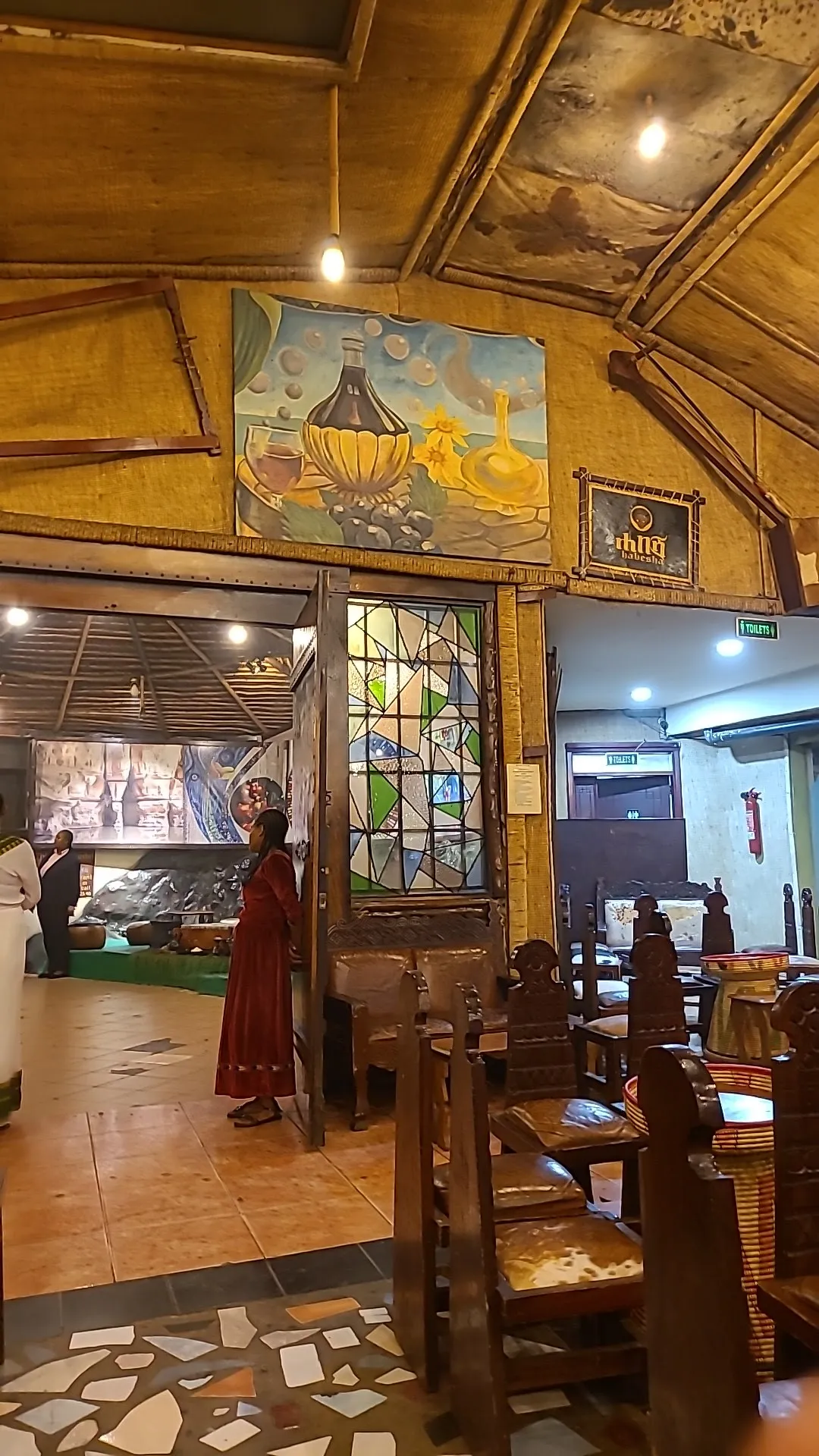
Habesha 2000 — Traditional Ethiopian, Addis Ababa
Habesha 2000 is the traditional Ethiopian restaurant that visitors to Addis Ababa are directed to when they want to understand what the city’s permanent population actually eats: the injera prepared from teff grown on the Ethiopian plateau, the wot stews that have been simmering on the same recipes for generations, the tibs (sautéed meat) that constitute the city’s most popular everyday dining.
The menu covers the Ethiopian food tradition without the tourism premium of the cultural show restaurants: the berbere-spiced stews, the milder wots for those unaccustomed to Ethiopian spice, the vegetarian fasting dishes (shiro, misir, gomen) that constitute a significant part of the Ethiopian Orthodox culinary tradition, and the tibs that arrive sizzling on their clay serving dish.
The Ethiopian coffee ceremony at Habesha 2000 is performed with the conviction of a cultural practice rather than a tourist attraction: the roasting of the beans in front of the table, the grinding, the three ceremonial cups that tradition demands. This is how Addis Ababa has been starting and ending its days since coffee was first discovered in the Ethiopian highlands.
Habesha 2000 is the restaurant for visitors who want to eat as Addis Ababa eats: simply, honestly, and with the cultural context that only a neighbourhood restaurant serving its own community can provide.
Best Occasion: Solo Dining
The traditional Ethiopian communal eating format is one of the most naturally welcoming solo dining experiences in African dining. At Habesha 2000, the solo diner is absorbed into the general warmth of a table that treats every guest as a member of the community it serves.
Best Occasion: Team Dinner
The injera format — all dishes shared from a single large flatbread, the group gathered around a mesob (basket table) — is the original team dinner. Habesha 2000 provides the most authentic version of this experience in Addis Ababa.