Quintessence
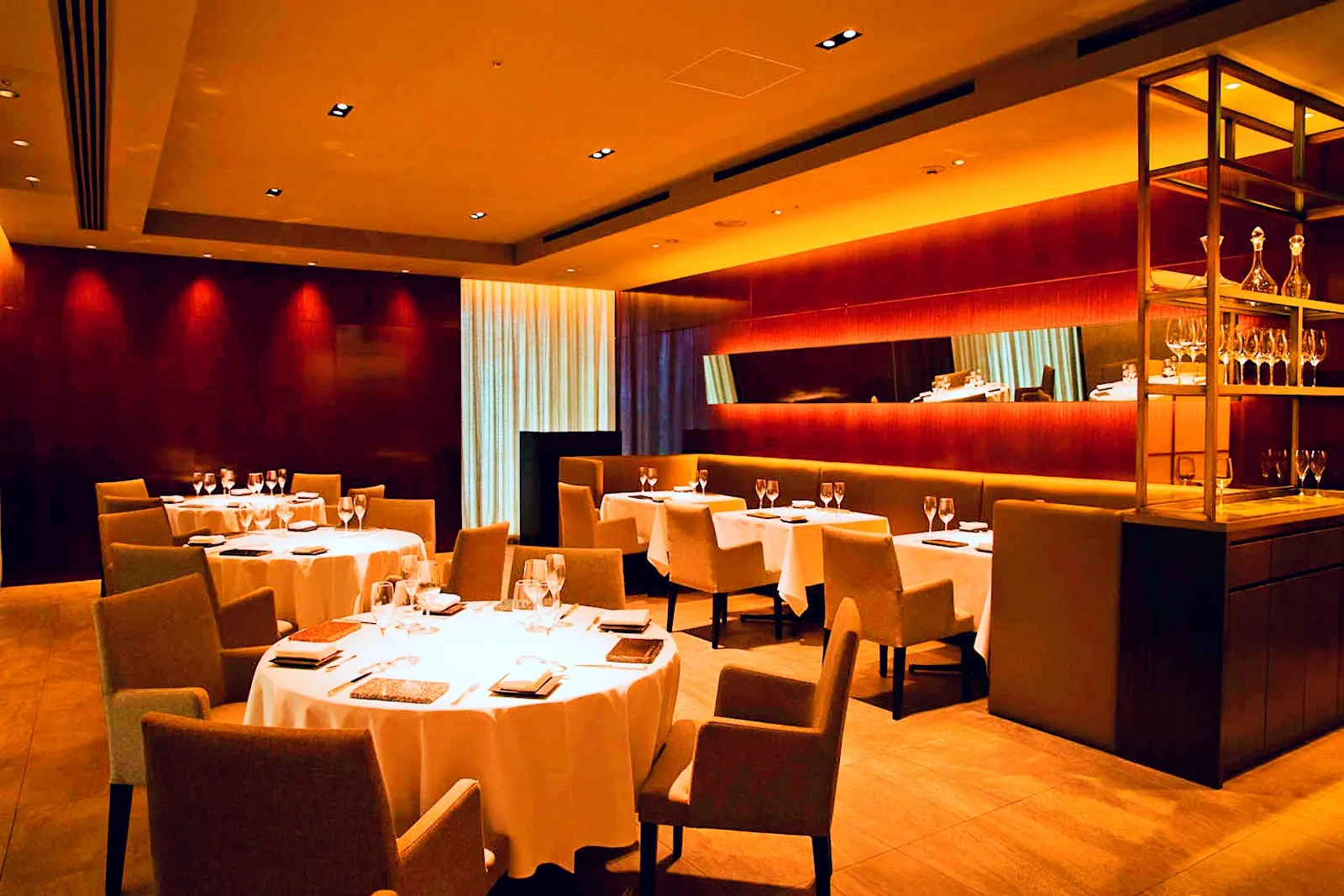
“Nineteen straight years of three stars for Shuzo Kishida's carte blanche French. Book it for the client who has eaten everywhere.”
About Quintessence
Shuzo Kishida came back from Paris in 2006 after three years as sous chef to Pascal Barbot at Astrance, opened Quintessence, and won three stars in the first Tokyo Michelin guide of 2008. He has never let one go: the 2026 edition marks nineteen consecutive years at the top rating, the longest unbroken French run in Japan. The restaurant sits on the ground floor of Garden City Shinagawa Gotenyama, a quiet office block address that filters out anyone dining for the scene rather than the plate.
There is no menu. Kishida cooks a daily carte blanche of around thirteen courses, and two constants bookend it: the goat milk bavarois dressed with olive oil, salt and lily bulb that opens the meal, and the meringue glacee that closes it. Between them the kitchen roasts proteins with a patience that borders on stubbornness, resting meats through long, low cycles until the fibres relax. Dinner lands around ¥40,000 with tax and service, a restrained figure for cooking at this altitude, and the reason regulars call it the best priced three stars in Japan.
Booking is the test. Tables for the following month release at the start of each month through the restaurant's site and evaporate within hours; TABLEALL and hotel concierges hold the practical keys for visitors. The dining room is hushed, the service exact, and photography of the dishes is restricted, which tells you who this room is for: people who came to eat. In 2026 that discipline still reads as confidence rather than theatre, and the guide keeps agreeing.
The Room
Around twenty seats in a low lit room of charcoal tones and linen, with a private room for small parties. Conversation carries at a murmur; this is one of the quietest three star rooms in Tokyo. Jackets are the norm, phones stay pocketed during the courses, and the sommelier works the narrow aisle with practiced economy.
Why book it, occasion by occasion
Great kitchens are specialists in moments as much as dishes. Quintessence specialises in these.
For the guest with nothing left to prove
Nineteen years of three stars is a fact your guest cannot argue with, and the no photography rule guarantees a table focused on the people at it. The carte blanche format removes ordering politics entirely; everyone eats the same peak. Seat the guest facing the room, hand the wine decision to the sommelier, and let the goat milk bavarois open the conversation for you.
For terms that need a quiet room
A fixed menu, a silent room and service that never interrupts make Gotenyama an unlikely but lethal deal venue. Courses arrive on the kitchen's rhythm, roughly three hours end to end, so structure the conversation around the roast course when the table relaxes. The address sits minutes by taxi from Shinagawa station's shinkansen gates, which matters when your counterpart flies out at nine the next morning.
For a year worth marking without noise
Carte blanche means the meal is a gift neither of you chose, which is the right register for an anniversary. Mention the year you are marking when the confirmation arrives; the kitchen folds the acknowledgment into dessert without a candle in sight. The meringue glacee has closed every meal here since 2006, a fixed point worth borrowing as a metaphor for the marriage.
What to order
Kishida decides everything on the plate, so your decisions live around it. Four calls that shape the meal.
- Trust the carte blanche completely
There is no menu to game. State allergies at booking and then stop steering; the format rewards surrender, and the kitchen answers fussiness with politeness.
- The goat milk bavarois moment
Olive oil, salt, lily bulb. It looks like nothing and explains nineteen years of three stars in three spoonfuls. Do not rush it.
- The wine pairing over the list
The cellar runs deep in Burgundy but the pairing is calibrated daily to a menu you cannot read in advance. Let the sommelier drive.
- A weekday over a weekend
Release day demand concentrates on Fridays and Saturdays. A Tuesday table is materially easier to win and the kitchen does not change.
Practical
- Address
- 1F Garden City Shinagawa Gotenyama, Kitashinagawa 6 chome, Shinagawa
- Reservations
- Restaurant site, monthly release for the following month · TABLEALL
- Menu
- Carte blanche only, about 13 courses
- Price
- About ¥40,000 at dinner with tax and service
- Dress
- Jackets standard · quiet room
- Photography
- Not permitted of the dishes
- Access
- Shinagawa or Gotanda station, then a short taxi
- Dietary
- Allergies at booking only · no substitutions
Questions diners ask
Is Quintessence worth it?
Yes, and at about ¥40,000 with tax and service it is arguably the best priced three star dinner in Tokyo. Nineteen consecutive years at three stars since the 2008 guide, a daily carte blanche that never repeats, and two signatures worth the flight on their own. The Value score of eight reflects that rare combination.
How hard is it to book Quintessence?
Very. Tables for the following month open on the restaurant's site at the start of each month and go within hours. Realistic routes: set a reminder for release day, aim for weekday tables, or pay the premium through TABLEALL or a hotel concierge, which hold allocations for exactly this problem.
What is the carte blanche at Quintessence?
A menu that does not exist on paper. Kishida composes roughly thirteen courses daily from the market, bookended by the goat milk bavarois and the meringue glacee. You state allergies when booking and then eat what arrives. It is the purest expression of chef's choice dining in Tokyo's French canon.
Can I take photos at Quintessence?
No, photography of the dishes is not permitted, a policy the room enforces gently but consistently. The restriction keeps service moving and tables present. If you need content, this is the wrong booking; if you need dinner, it is among the best arguments in Japan.