Kojima
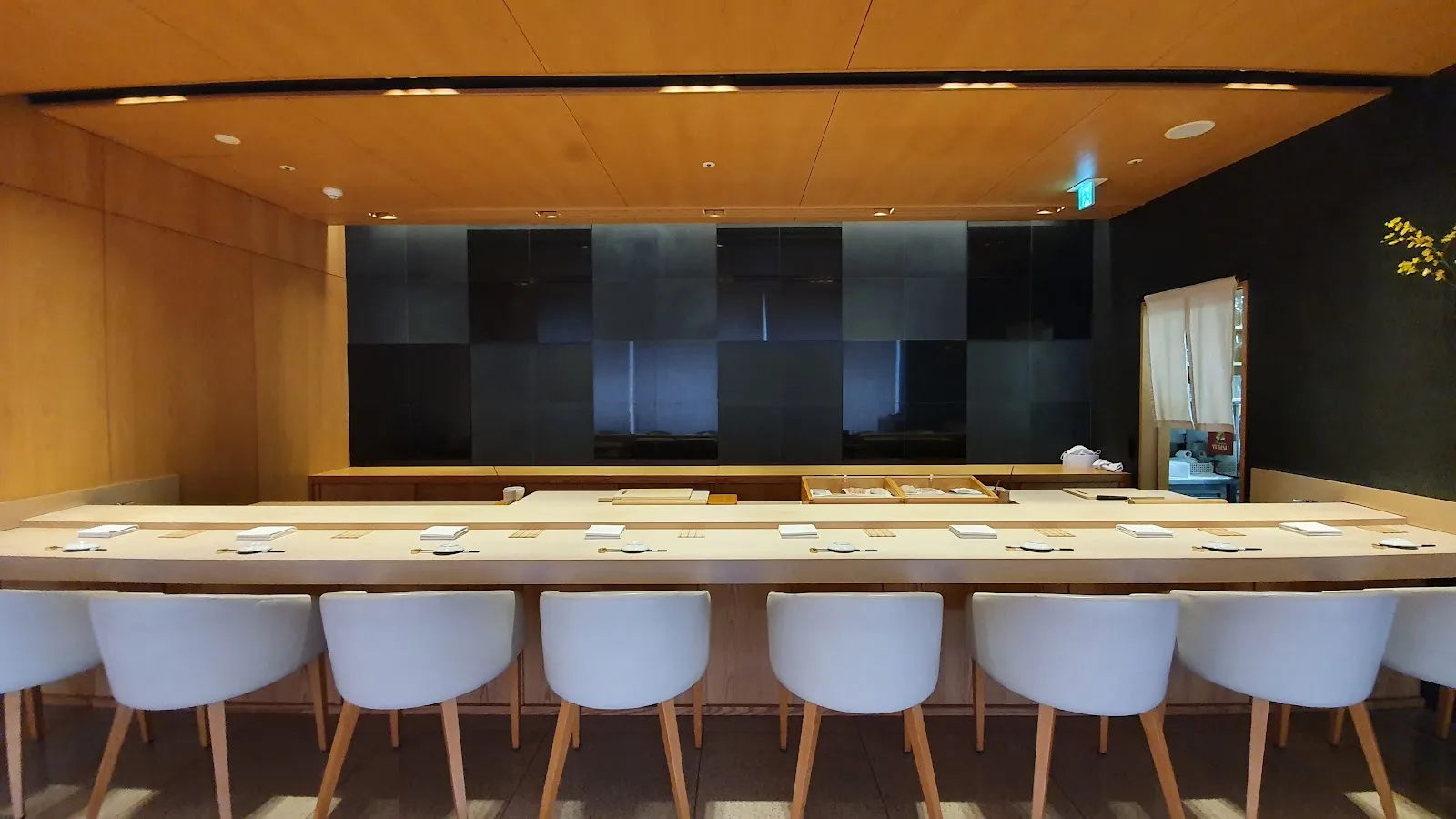
“Korea's only two star Japanese restaurant: eight hinoki seats, about sixteen nigiri, dinner ₩420,000. Book weeks out to close a deal.”
About Kojima
Eight seats of pale hinoki on the sixth floor of Boon the Shop, a luxury fashion house in Cheongdam: that is the entire main stage of Kojima, the only Japanese restaurant in Korea to hold two Michelin stars, confirmed again in the 2026 Seoul and Busan guide. Founded by Park Kyung Jae, a sushi craftsman of more than thirty years, the counter now runs under chef Kim Woo Tae, who has kept the stars and sharpened the identity.
The style is strict Edomae with a Korean accent: rice from Niigata seasoned with red vinegar and a measure of salt, fish aged and cured to schedule, and a dinner arc of roughly sixteen nigiri that leans confidently on Korea's own wild seafood, plump firefly squid in season, lightly grilled bonito, local shellfish at their peak. Dinner at the counter runs ₩420,000, the private room version ₩380,000, and lunch offers the essential arc at ₩220,000.
Scarcity defines the experience. Eight counter seats per seating means the book fills through regulars, hotel concierges and persistence, and international booking platforms list it with limited windows. Plan weeks ahead, confirm the seating time precisely, and arrive early; an omakase this compact starts without stragglers. For visiting sushi obsessives it is the definitive answer to whether Seoul belongs on the world sushi map.
The Room
A hushed, spare room around a counter of eight hinoki seats, with a private room to the side taking small groups. Light falls on the wood and the fish and little else. Conversation stays low; the rhythm of the chef's hands sets the tempo. Dress smart, skip heavy fragrance out of respect for the rice, and surrender the evening's pacing to the counter.
Why book it, occasion by occasion
What follows is the honest map: the evenings Kojima was built for, and what to ask for on each.
For the counterpart best won over shoulder to shoulder
Some negotiations go better side by side than face to face, and a great sushi counter is the classic instrument: shared attention on the chef dissolves hierarchy, the seating time enforces punctuality, and the scarcity of eight seats tells your guest exactly how much planning they warranted. Book two counter seats for the early dinner weeks ahead, let the nigiri sequence pace the conversation, and settle terms over the final tamago and tea.
For the sushi pilgrim traveling alone
A solo seat at a great counter is the purest way to eat sushi, and Kojima treats the single diner as the format's ideal audience: sixteen courses of direct conversation between chef and guest, no table talk diluting the rice's temperature window. Book the lunch seating at ₩220,000 for the most attainable solo slot, sit center if offered, and eat each piece the moment it lands. The counter remembers serious returning guests.
For the client who counts sushi counters, not stars
For a certain guest, Tokyo counters are the reference points and Seoul is a question mark; Kojima is the answer you book them. Korea's only two star Japanese restaurant, Niigata rice under red vinegar, and local wild seafood Tokyo cannot source make it a flex with substance. Take the private room at ₩380,000 if the conversation needs privacy, or the counter if the craft is the show. Confirm the seating time in writing; latecomers lose the arc.
What to order
Omakase means the chef decides, so your choices are seat, seating and sides. Make them like this.
- The counter over the private room
The private room saves ₩40,000 and costs you the entire point: the hands, the rice timing, the pacing. Groups needing privacy take the room; everyone else earns a counter seat.
- Korean wild seafood pieces
When the seasonal pieces turn local, firefly squid, bonito touched by the grill, shellfish from Korean waters, you are eating what distinguishes this counter from Tokyo. Never substitute them away.
- Lunch at ₩220,000 as the entry
The essential arc at roughly half the evening price, and the most bookable seating. First visit or solo trip, start here and graduate to dinner.
- Sake by the counter's advice
The list is compact and chosen to sit under the rice's vinegar line. Tell the team your usual style and take their pour; bottles are the wrong scale for sixteen courses.
Practical
- Address
- Level 6, Boon the Shop, Cheongdam, Gangnam
- Reservations
- Weeks ahead · concierge or booking platforms
- Menus
- Dinner counter ₩420,000 · private room ₩380,000
- Lunch
- ₩220,000, the attainable seating
- Format
- About sixteen nigiri at dinner
- Seats
- Eight at the hinoki counter
- Dress
- Smart · no heavy fragrance
- Timing
- Fixed seatings; arrive early
Questions diners ask
Is Kojima worth it?
Yes, for anyone serious about sushi: it is the only Japanese restaurant in Korea holding two Michelin stars, and the ₩420,000 dinner puts Niigata rice and Korean wild seafood in the same sixteen piece arc. The Value score of six reflects Tokyo level pricing; lunch at ₩220,000 softens the entry considerably.
How do I book Kojima?
Plan weeks ahead. Eight counter seats per seating fill through regulars, hotel concierges and international booking platforms with limited windows. Ask your hotel to call, take any offered seating, and confirm the time in writing; the omakase starts on schedule with or without stragglers. The private room takes small groups more flexibly.
What makes Kojima different from Tokyo counters?
The sourcing. The Edomae fundamentals, Niigata rice, red vinegar, disciplined aging, would pass in Ginza, but the counter leans on Korea's own wild seafood: plump firefly squid, lightly grilled bonito and local shellfish Tokyo cannot buy. Founded by Park Kyung Jae, the counter now runs under chef Kim Woo Tae.
What does dinner at Kojima cost?
₩420,000 at the counter or ₩380,000 in the private room, before drinks, with lunch at ₩220,000. With sake, plan on ₩500,000 to ₩600,000 a head at dinner. Roughly sixteen nigiri plus openers and tamago; two hours, fixed seating, punctuality assumed.