Osaka's Finest Tables
60 restaurants listed


The Osaka Dining Guide
Osaka is Japan's most unabashedly food-obsessed city. The locals have a phrase for it: kuidaore — eat until you drop. It is not a warning. It is an instruction. Where Tokyo prizes subtlety and Kyoto prizes ceremony, Osaka prizes pleasure, and it has been fine-tuning the instruments of that pleasure for centuries.
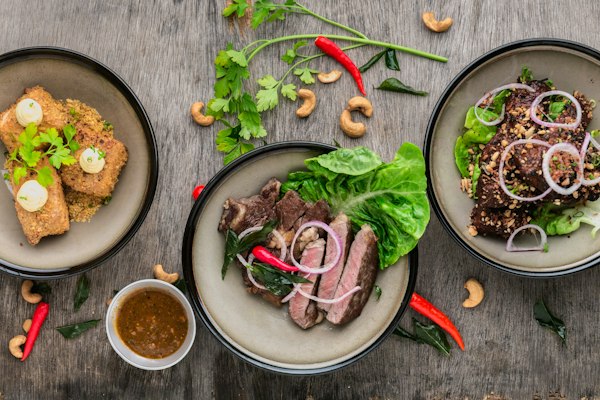
At the summit sits a triumvirate of three-Michelin-star restaurants that would challenge any city in the world for pure ambition: Hajime's seven-seat dining room where 110 ingredients converge into a single dish representing Earth's biosphere; Kashiwaya's seven private tatami rooms in the suburb of Senriyama where chef Hideaki Matsuo brings a physicist's rigour to kaiseki's ceremony; and Taian in Nagahoribashi, where Chef Hitoshi Takahata has held three stars since 2011 on a quiet street that gives nothing away from the outside. These three alone justify a transatlantic flight.
Below that rarefied tier, Osaka's two-star scene is among the most cosmopolitan in Asia. Fujiya 1935 — a fourth-generation restaurant that began as a udon hall in 1935 and became a Spanish revolution under chef Tetsuya Fujiwara — is one of the great originals anywhere. La Cime's Chef Yusuke Takada trained at Taillevent and Le Meurice before returning home to create something genuinely new, placing eighth in Asia's 50 Best Restaurants. Sushi Saeki trained the generation that now runs half of Osaka's great sushi counters.
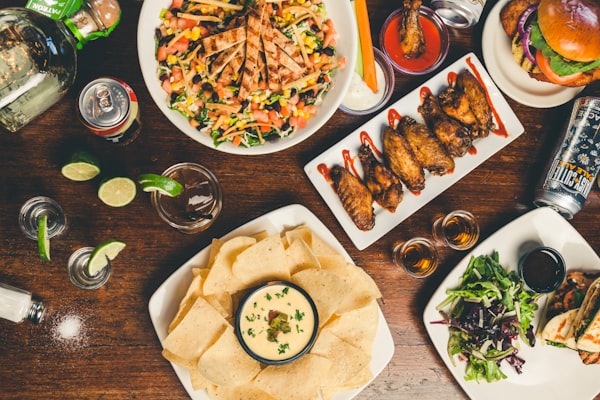
Then there is the street-level energy that no other city matches. Dotonbori is not a tourist trap — it is where Osaka eats on Tuesdays. Kushikatsu parlours, takoyaki stands that have occupied the same 90cm of pavement for four decades, ramen shops earning Michelin recognition, Mexican restaurants using indigenous ingredients that somehow feel more at home here than anywhere in the western hemisphere. This city absorbs everything and improves it.
Kitashinchi — The corporate heart of Osaka's fine dining. Expense accounts, private rooms, and the Michelin density of a neighbourhood that has been serious about food since the Meiji era. Book months in advance for the best counters.
Namba / Shinsaibashi — Where the city eats loudly and joyfully. Dotonbori runs through the centre. Mix Michelin-starred counter restaurants with legendary street food stands operating on the same block.
Nakanoshima — Osaka's island cultural district. Increasingly home to serious destination restaurants — quieter, more considered, and increasingly necessary for first-dates and proposals looking for something beyond the neon.
Umeda — The northern hub. Hotel dining reaches its Osaka peak here: La Baie at the Ritz-Carlton, Pierre at the InterContinental. The city's most reliable power-lunch territory.
Reservations — Three-star restaurants require booking three to six months ahead, often through dedicated concierge services or the restaurant's own system. Two-star sushi counters and kaiseki tables: two to four months. For Michelin Bib Gourmand and one-star restaurants, one to four weeks usually suffices.
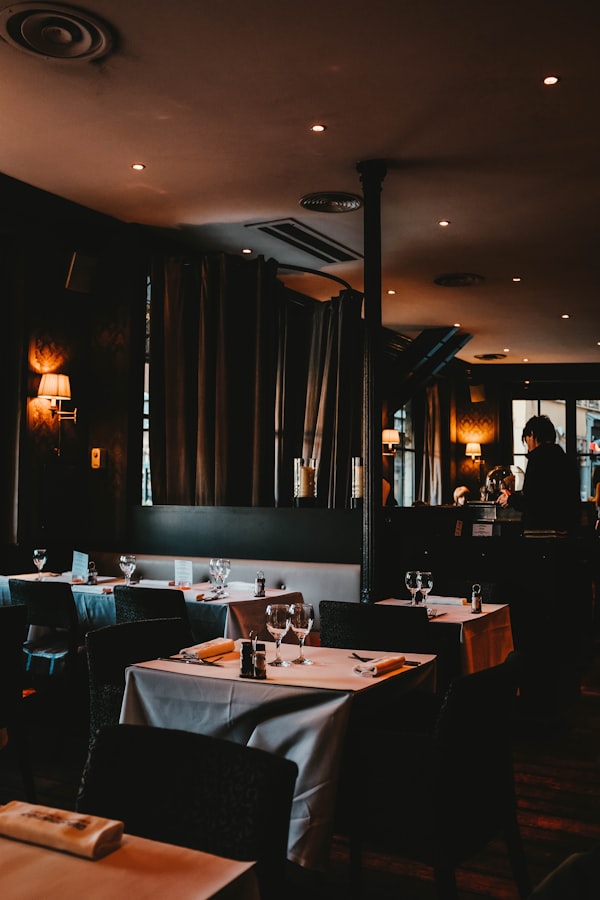
Dress Code — Osaka is more relaxed than Tokyo for fine dining. Smart casual is acceptable at most one-star establishments. Two-star and above: business casual at minimum, smart jacket at the three-star level. No shorts or sportswear at any serious restaurant.
Tipping — Do not tip. Ever. In any restaurant. Tipping in Japan is considered rude — a suggestion that the service charge in the meal price is insufficient. Excellent service is simply the baseline.
Language — Most fine-dining restaurants accommodate English-speaking guests with English menus or bilingual staff. Booking through a concierge service removes language barriers entirely.
Best Time — Spring (March–May) and autumn (September–November) offer the most dramatic seasonal menus, particularly at kaiseki restaurants oriented around cherry blossom and maple leaf seasons.
Best for First Dates in Osaka
All First Date restaurantsFirst dates in Osaka benefit from the city's inherent theatricality. A great first date table here offers a conversation driver — an unusual cuisine, a counter where the chef becomes part of the evening, a view that does the work. Fujiya 1935's Spanish-Japanese tasting menu never fails to spark a two-hour debate about technique. milpa's indigenous Mexican cuisine in a Japanese context is genuinely unlike anything your date has experienced. Rooots Nakanoshima on the island provides intimacy with substance. Bistrot d'Anjou offers forty years of Gallic warmth — reliable, romantic, and unhurried.
Best for Business Dinners in Osaka
All Close a Deal restaurantsOsaka's business dining culture runs through Kitashinchi with the certainty of a bullet train. The district's private rooms — at Naniwakappou Noboru, Sushi Saeki, and a dozen other Michelin-listed counters — exist precisely for discussions that cannot happen in open rooms. Taian's quiet Nagahoribashi location sends a message of considered authority. For the international client who has seen everything: Hajime's seven-seat cosmic dining room at 1-9-11 Edobori is the ultimate conversation-stopper. La Baie at the Ritz-Carlton handles the standard-issue executive power dinner with genuine competence. Koryu in Umeda offers live-counter kaiseki for the client who responds to theatre.