"One of Manila's first Michelin stars for Filipino food, book the Metodolohiya menu for a milestone anniversary or a serious business dinner."
About Hapag
Hapag began as a private dining concept in 2017 and grew into one of Manila's defining modern fine-dining rooms. Now on the seventh floor of The Balmori Suites in Rockwell Center, Makati, it is led by chefs Kevin Navoa and Thirdy Dolatre, who reimagine regional Filipino cooking with restraint and technique. In the inaugural 2025 Michelin Guide Philippines it was awarded one Michelin star, confirming it among the country's most important kitchens.
The Kitchen
The kitchen runs a single tasting menu, Metodolohiya, Methodologies, that traces the principles and influences behind Filipino cooking, changing with the seasons and the region in focus. Recent menus have travelled through Western Mindanao and the Western Visayas, using local produce and heritage techniques rather than imported luxury. The 12-course menu runs around ₱7,500 a head, with an optional wine pairing. This is a top-of-range Manila dinner ($$$$) built for a long evening.
The Room
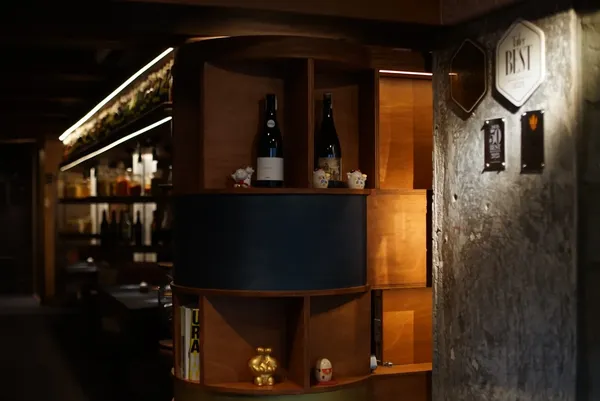
The room is calm and contemporary, warm woods, soft light and a counter that looks onto the kitchen, scaled for an intimate service rather than a crowd. Hospitality is a point of pride here; the team's warmth earned a Michelin Service Award in the same year as the star. Pacing is deliberate across the courses and the sound stays low, making it as comfortable for a quiet celebration as for a considered business dinner.
Best for a milestone anniversary
For a milestone anniversary, a proposal or a high-stakes business dinner, Hapag is Manila's choice: a Michelin star, a single regional tasting menu and warm, polished service. A natural anniversary and business-dinner table.
Not for
Not for a quick, casual or budget meal, Hapag is a single-tasting-menu destination built for a long, special-occasion evening, not a spontaneous walk-in.
Frequently Asked
Does Hapag have a Michelin star?
Yes. Hapag was awarded one Michelin star in the inaugural 2025 Michelin Guide Philippines, and its team also received the Michelin Service Award that year.
Who are the chefs at Hapag?
Hapag is led by chefs Kevin Navoa and Thirdy Dolatre, who reinterpret regional Filipino cooking. The restaurant began as a private dining concept in 2017.
What is the Metodolohiya menu?
Metodolohiya, or Methodologies, is Hapag's single tasting menu, tracing the principles and regions behind Filipino cooking and changing seasonally; it runs around ₱7,500 a head.
Where is Hapag in Manila?
Hapag is on the 7th floor of The Balmori Suites on Hidalgo Drive in Rockwell Center, Makati, with parking at Power Plant Mall nearby.
Is Hapag good for a special occasion?
Yes. A Michelin star, a single regional tasting menu and award-winning service make it one of Manila's strongest choices for an anniversary, proposal or business dinner.
Reserve a Table →
Reserve a Table
Reserve at Hapag
Booking via Hapag; we may earn a commission at no cost to you.
Affiliate disclosure: Restaurants for Kings may earn a commission when you book through our reservation links, at no cost to you. Our scores are editorial and never paid for.
Practical Information
Address7/F The Balmori Suites, Hidalgo Drive, Rockwell Center, Makati
NeighbourhoodRockwell Center, Makati
CuisineFine Dining, Filipino
PriceModern Filipino; single tasting menu around ₱7,500 a head, top of the Manila range ($$$$)
Dress CodeSmart casual
SeatingContemporary dining room and kitchen counter on the 7th floor
ReservationReservations essential; single Metodolohiya tasting menu; open Tuesday to Sunday evenings