Chengdu's Finest Tables
19 restaurants listedGet the complete Chengdu dining guide.
New openings, reservation intelligence, and editor picks. Updated quarterly. Free to join.
$ under ¥200 · $$ ¥200–¥500 · $$$ ¥500–¥1,200 · $$$$ ¥1,200+ per person
Best for First Date in Chengdu
All First Date Restaurants →Best for Business Dinner in Chengdu
All Business Restaurants →Chengdu's Top 10
Two Michelin stars and eighteen seats. The most competitive reservation in Sichuan. Chef Lan Guijun has spent over thirty-five years refining Sichuanese cooking to something resembling perfection. The Golden Thread Noodles, hand-cut with a giant cleaver, are the dish that made his name worldwide. No menu exists. You surrender to the chef, and the chef does not disappoint.
Two Michelin stars on the fifth floor of the Chinese Financial Center, commanding views of Chengdu's Twin Towers. This branch of the celebrated upmarket chain brings Taizhou luxury seafood. Abalone, sea cucumber, premium crustaceans. And jazzs every recipe with local Sichuan touches. Furnished lavishly but without ostentation. The power table for people who close significant deals.
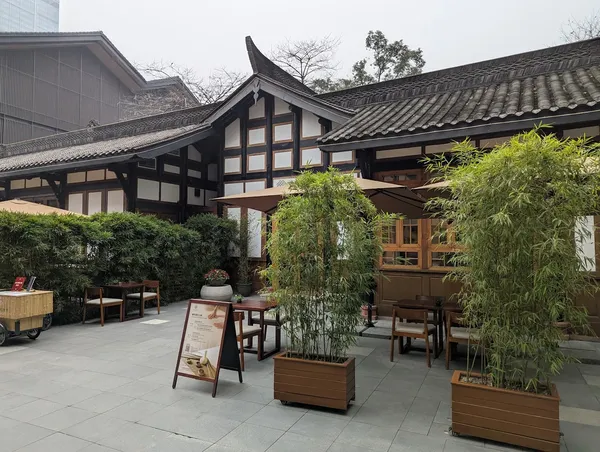
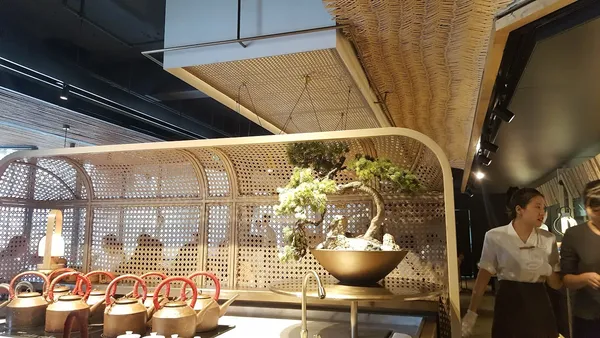
Chengdu's only Michelin Green Star sits in a historic courtyard beside Daci Temple. A quiet oasis in one of Asia's busiest food cities. Mi Xun's farm-to-table vegetarian menu proves that Sichuan cuisine doesn't need meat to be extraordinary. Seasonal ingredients sourced from farms near giant panda habitats. The open kitchen and airy feel create a setting that rewards slowness.
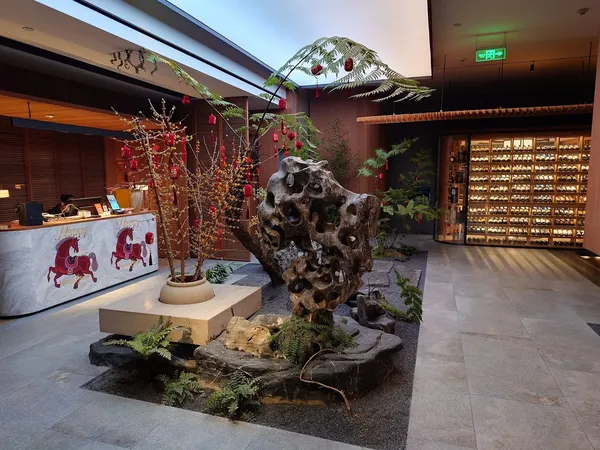
One Michelin star in a dining room decorated with the chef-owner's collection of global curios. A personal, oddly intimate backdrop for some of the city's most technically precise cooking. The cold appetiser of lamp-shadow sliced grass carp is exceptional. The roast pigeon smoked with Sichuan pepper leaves is mandatory. Half portions available for those dining alone with purpose.
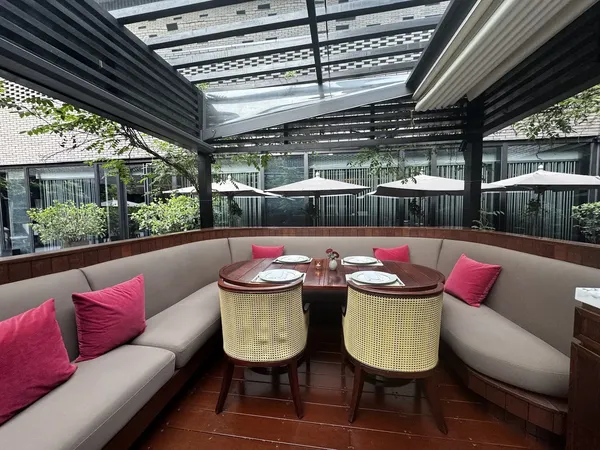
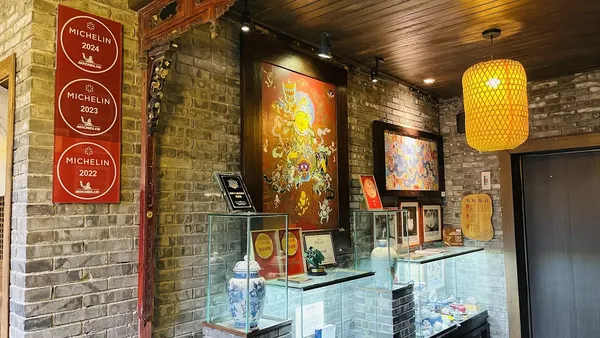
Louis Vuitton's first restaurant in China earned its Michelin star within a year of opening. Set inside a circa-1730s heritage building at Taikoo Li. Original brick walls, perforated wood windows, courtyard views. Italian chef Leonardo Zambrino creates European contemporary cuisine with Asia woven through every course. The setting is the most visually dramatic in Chengdu.
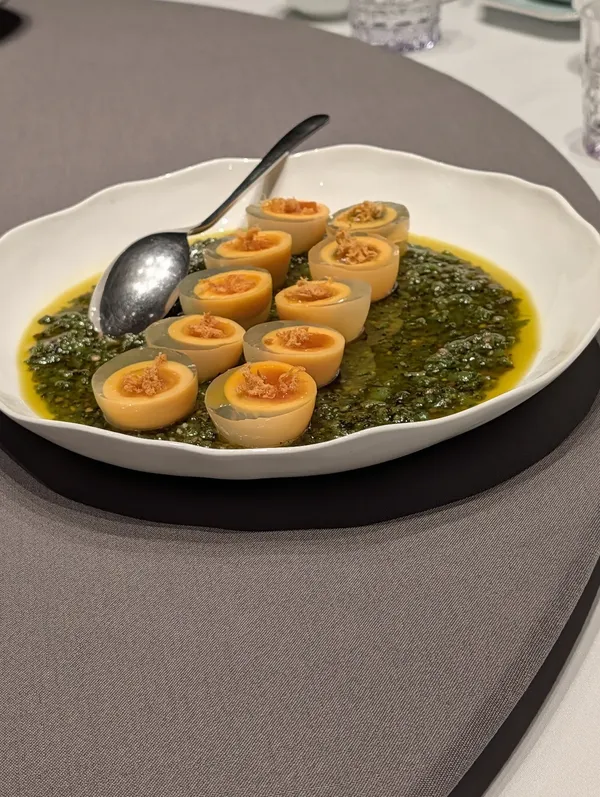
One Michelin star. Where most Sichuan restaurants announce themselves with heat, Xu's Cuisine whispers with complexity. The five-flavors platter topped with caviar opens the meal on a note of elegant confrontation. Sichuan pepper here is a perfume, not a weapon. Chef Xu's Crispy Pigeon with Sichuan Pepper may be the city's most beautifully balanced dish.
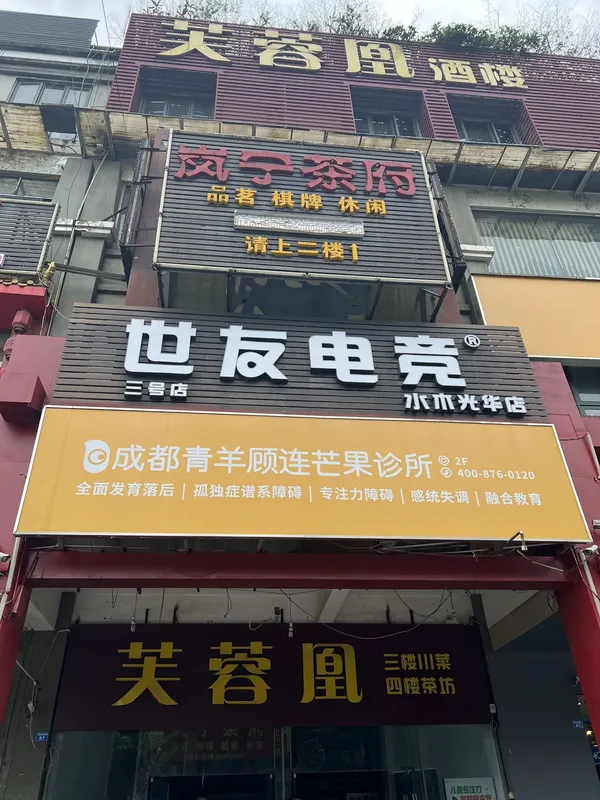
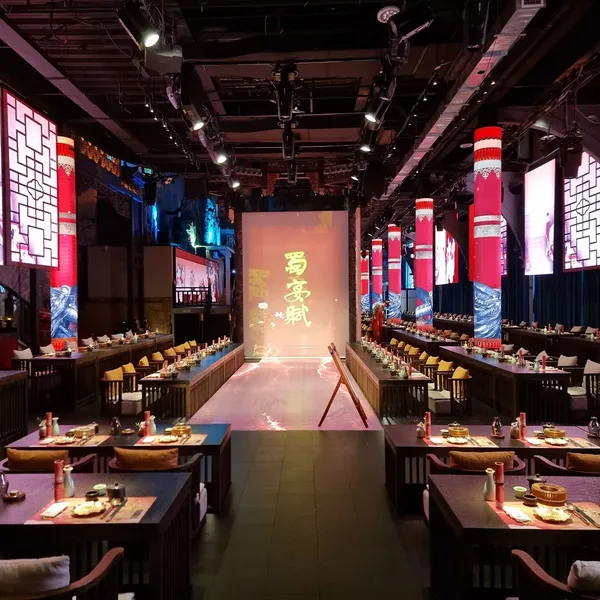
One Michelin star with private rooms that make every group meal feel like an event. Fu Rong Huang channels classical Sichuan banquet tradition. The crispy duck arrives ceremonially, the cold starters are meticulous. For birthdays and celebrations where you want the cooking to be the centrepiece rather than a backdrop.
Chef Yu Bo's thirty-plus course degustation has been described as Chengdu's most ambitious dining experience. Chinese culinary tradition is filtered through molecular gastronomy with results that are surprising without being gimmicky. The menu changes with the seasons and the chef's obsessions. No experience in the city is more likely to produce conversation that outlasts the meal.
Eight private dining rooms, each discreetly lit and impeccably serviced, within the Ritz-Carlton's Chengdu property overlooking Tianfu Square. The pairing of Cantonese delicacy with Sichuan soul is an act of culinary diplomacy. Two great traditions sharing a table. One of the most reliable venues in Chengdu for any meal where the stakes are genuinely high.
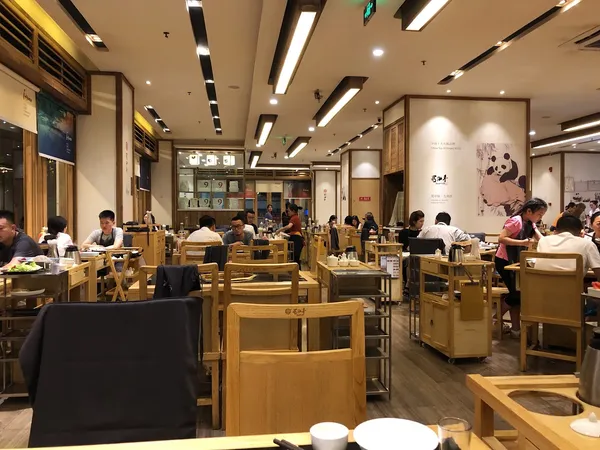
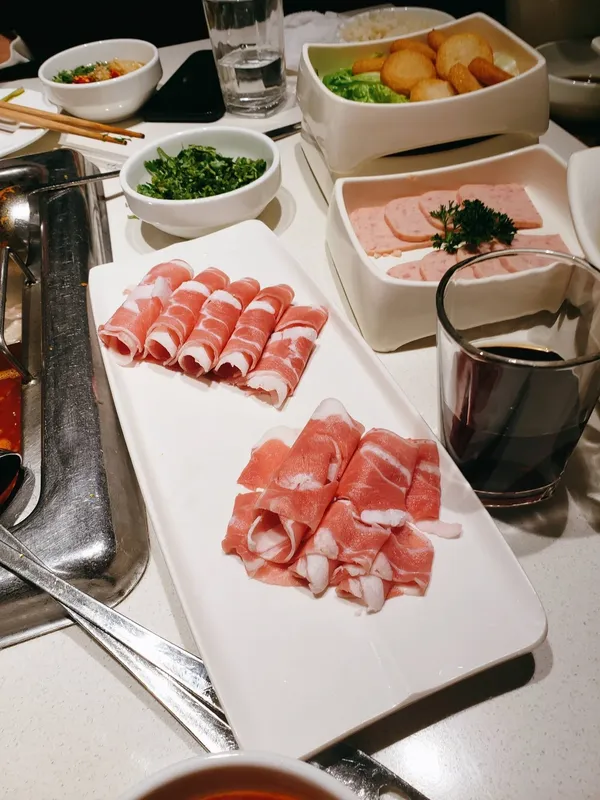
Traditional beef tallow broth beside the river. A Chengdu hotpot experience that has nothing to prove and everything to deliver. The Jiuxiang Beef is extraordinary. The fresh meat balls should not be skipped. A group dinner here is not just a meal; it is a ritual, and rituals are how teams are built. The most affordable and authentic way to understand why the world talks about Chengdu.
The Chengdu Dining Guide
Chengdu is the city that made the world afraid of food. In the best possible sense. The capital of Sichuan province sits at the intersection of extraordinary culinary legacy and modern gastronomic ambition, home to one of China's richest and most geographically distinctive food cultures. UNESCO designated it a Creative City of Gastronomy in 2010, an honor that city residents found both accurate and slightly overdue.
The foundations of Chengdu dining rest on two pillars: the numbing-spicy complexity of Sichuan cuisine, built from the interplay of chilli heat and Sichuan peppercorn's mouth-tingling mala sensation, and the hotpot culture that transforms communal cooking into a near-sacred social ritual. But reducing Chengdu to heat and numbness is a tourist's mistake. The city's finest tables. Yu Zhi Lan, Xu's Cuisine, Mi Xun Teahouse. Demonstrate that Sichuan cooking at its highest registers can be among the world's most subtle, layered, and intellectually demanding cuisines.
In 2026, the Michelin Guide Chengdu lists 76 restaurants across all categories. Thirteen starred establishments, twenty-seven Bib Gourmand recognitions, and thirty-six Michelin Selected restaurants. Two restaurants hold two stars: Yu Zhi Lan, the legendary tasting room of Chef Lan Guijun, and Xin Rong Ji, the Taizhou seafood chain's most ambitious outpost. The city continues to surprise the global dining establishment with the sophistication of its evolution.
Jinjiang District is the epicentre of Chengdu's international dining scene. Taikoo Li. The open-air luxury retail and hospitality complex around the ancient Daci Temple. Houses The Hall by Louis Vuitton and Mi Xun Teahouse, and remains the city's most selected square mile for food and atmosphere.
Wuhou District anchors the financial dining scene. The Chinese Financial Center on Jiaozi Avenue is home to both Xin Rong Ji and Silver Pot. Two Michelin-starred restaurants within walking distance of the same tower. The surrounding streets carry dozens of starred and Bib Gourmand establishments.
Qingyang District houses Yu Zhi Lan on Changfa Street. Pilgrimage territory for serious diners. The wider Qingyang area, including Kuanzhai Alley, blends heritage streetscapes with modern restaurants, making it ideal for a full evening's exploration before or after dinner.
Yulin is the neighborhood for authentic street dining. A residential maze where the permanent scent of hotpot is a feature rather than a by-product, Yulin rewards wandering. Arrive without a reservation and follow your nose.
Reservation difficulty: Yu Zhi Lan requires booking one to two months in advance, a 50% deposit, and often a hotel concierge intermediary for international visitors. Xin Rong Ji is slightly more accessible through direct hotel booking. Most one-star establishments can be reserved one to three weeks ahead with patience.
Language: Dedicated English menus exist at The Hall, Xin Rong Ji, and hotel restaurants. At most local starred restaurants, a Mandarin-speaking companion or translation app is advisable. The staff at Yu Zhi Lan are accustomed to international guests but the experience is conducted in Chinese.
Dress code: Chengdu fine dining is smart-casual to business attire. No jeans at Yu Zhi Lan or Xin Rong Ji. The Hall and Li Xuan expect business casual at minimum. Hotpot restaurants are casual. Wear something you don't mind smelling of beef tallow.
Tipping: Not standard practice in mainland China. Service charges are occasionally added at international hotel restaurants. At local starred restaurants, tip only if the service has been genuinely exceptional. And even then, it may be quietly declined.
Hotpot timing: Hotpot restaurants are best from 7pm onward when the energy peaks. Haidilao and Shu Jiuwei can have significant queues at prime time. Use their digital queuing systems. Late-night hotpot until 2am is culturally normal and encouraged.