"Tanguy Laviale's small-plate surprise menu won a Michelin star within months of opening, with a 700-label wine cellar and a EUR45 entry point."
About Ressources
Tanguy Laviale left Garopapilles to open Ressources on rue Fondaudege in October 2022. By the March 2023 Michelin Guide it had a star, Bordeaux's only new one that year. He runs it with Maxime Courvoisier, a sommelier whose unconventional list is half the reason to book, and the two have built one of the city's most talked-about young rooms.
The conceit is a short menu of about eight small plates you mix and match, four or five making a meal. Laviale's old address, Garopapilles, holds its own star; for the grand-luxe end of Bordeaux, see La Grande Maison de Bernard Magrez.
The Kitchen
The cooking is precise and produce-led, built on organic and wild ingredients, short supply chains and composting. Rather than a fixed degustation, Ressources offers a Menu Surprise in three, four or five courses, the four-course adds a cheese service, the five adds an amuse-bouche, main and dessert, or you can build a meal from the small plates yourself.
Entry starts around EUR 45, which is unusually accessible for a starred Bordeaux kitchen. Beyond the food, Laviale co-founded a charity, L'Assiette, that teaches healthy, inclusive eating, the social commitment is part of the restaurant's identity.
The Room
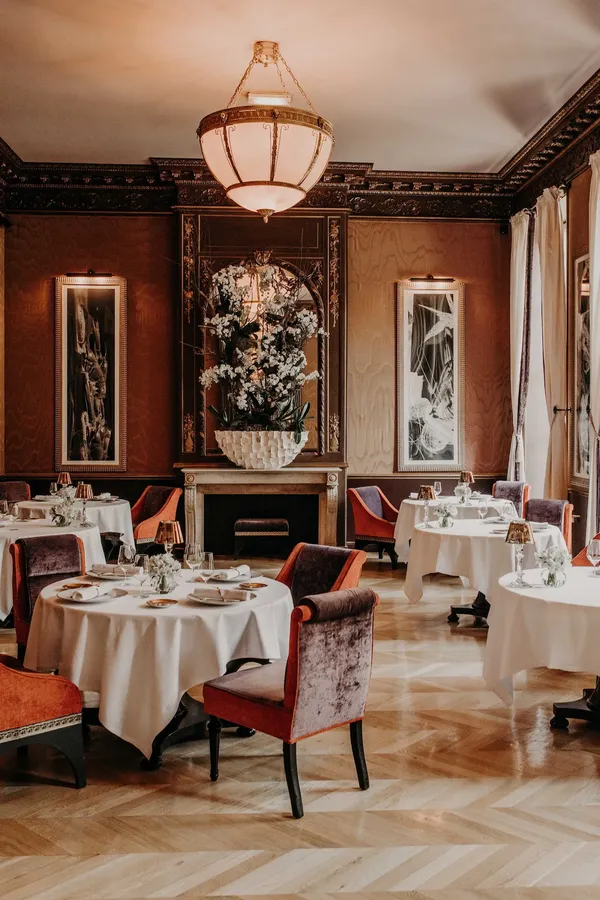
The room is small and contemporary, and wine takes centre stage: more than 700 ready-to-drink labels are on the list, plus a deeper cellar, ranging from big Bordeaux names to tiny growers. Courvoisier's pairings turn a meal here into a guided tasting as much as a dinner, which is why the wine reputation often arrives before the food's.
Best for an anniversary
Ressources suits an anniversary or a serious first date: a starred kitchen at a fair price, an intimate room and a sommelier worth following. The wine depth also makes it a smart client dinner for anyone who cares about the list.
Not for
Not for diners who want a long, formal grand-menu ritual or a fixed multi-course parade, the format is short, small-plate and deliberately relaxed.
Frequently Asked
Does Ressources have a Michelin star?
Yes. Ressources earned one Michelin star in the March 2023 Guide France, the only new star in Bordeaux that year, months after opening in October 2022.
Who is the chef at Ressources?
Chef Tanguy Laviale, formerly of Garopapilles, who runs Ressources with sommelier Maxime Courvoisier.
How much does Ressources cost?
The Menu Surprise and small plates start from around EUR 45, an accessible entry point for a one-star Bordeaux restaurant; wine is extra from a 700-label list.
Where is Ressources in Bordeaux?
On rue Fondaudege in central Bordeaux. The room is small, so booking ahead is essential.
What is special about the wine list?
Sommelier Maxime Courvoisier keeps more than 700 ready-to-drink labels, from major Bordeaux estates to small growers, with pairings that drive the meal.
Reserve a Table →
Reserve a Table
Reserve at Ressources
Reservations via the restaurant site. The room is small; book well ahead.
Affiliate disclosure: Restaurants for Kings may earn a commission when you book through our reservation links, at no cost to you. Our scores are editorial and never paid for.
Practical Information
Address56 rue Fondaudege, Bordeaux
NeighbourhoodRue Fondaudege, central Bordeaux
CuisineModern French
PriceMenu Surprise & small plates from EUR 45
Dress CodeSmart casual
SeatingSmall contemporary dining room
ReservationEssential; limited seats