About El Chato
In June 2025, Alvaro Clavijo's El Chato was named the best restaurant in Latin America, the first Colombian kitchen to top the list. The room is a stripped-back bistro on Calle 65 in Chapinero Alto, its walls lined with the produce Clavijo drives the country to find. Plates run from about COP 34,000 a la carte, with a tasting menu for the full arc, and a counter looks straight into the open kitchen.
The Kitchen
Alvaro Clavijo cooked at Per Se, L'Atelier de Joel Robuchon and Noma before coming home to Bogota, and he describes the result plainly: French cooking, Colombian ingredients, American discipline. The menu changes with what he finds on sourcing trips across Colombia, but the markers hold, chicken hearts with potato, suero costeno and egg yolk, and a roast lamb that reads equal parts Boyaca and Provence under a buttery cream. The meal opens with a house mule of herbs and tropical fruit.
There is an a la carte menu with plates from around COP 34,000 and a tasting menu served at the first-floor counter, where the walls double as the kitchen's spice library. The dated proof is the headline: No. 1 on Latin America's 50 Best Restaurants in 2025. See it among the best tasting menus worldwide, in our Bogota dining guide, and for a working dinner our best Bogota restaurants to close a deal.
The Room
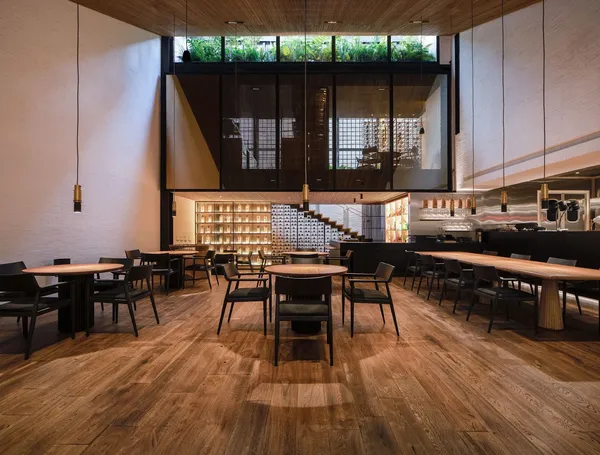
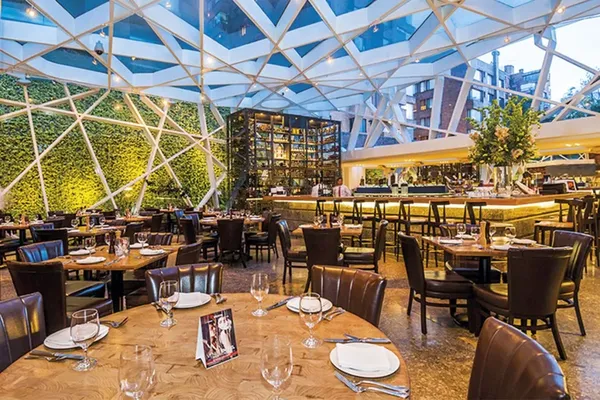
El Chato is deliberately plain, bare tables, exposed concrete, a counter over the open kitchen on the ground floor and a calmer room above. Sound is lively without being loud, lighting is warm, and the energy reads as a serious kitchen that refuses to dress up. Service is sharp and unstuffy. Dress is smart-casual; nobody is checking for jackets. It is a room that wants the food, not the decor, to carry the night.
Frequently Asked Questions
Is El Chato worth it?
Yes, it is currently the best restaurant in Latin America. El Chato took the No. 1 spot on Latin America's 50 Best Restaurants in 2025, the first Colombian kitchen to do so, and Alvaro Clavijo's cooking pairs French technique with Colombian produce he sources himself. With plates from around COP 34,000 it is also far more affordable than its ranking suggests, which makes it one of the best-value great meals anywhere.
How hard is it to book El Chato?
Harder since the 2025 win. Tables book two to three weeks ahead through the El Chato website, and the ground-floor kitchen counter goes first. Weekends are tightest. If you cannot get a counter seat, the upstairs room is calmer and easier to talk in. Book as far ahead as you can and have a weeknight as your backup.
What is the dress code at El Chato?
Smart-casual, and genuinely relaxed. El Chato is a stripped-back bistro of bare tables and exposed concrete, not a formal dining room, so nobody is checking for jackets. Dress as you would for a good neighbourhood restaurant in Chapinero, tidy and comfortable. The room rewards confidence, not formality, and the focus stays squarely on the food.
What should I order at El Chato?
The tasting menu at the counter is the fullest experience, but the a la carte is excellent too. Look for the chicken hearts with potato and suero costeno and the roast lamb, two dishes that show Clavijo's range, and start with the house mule. The menu shifts with his sourcing trips, so trust the kitchen on the day's catches.
Is El Chato good for impressing clients?
Very. As the No. 1 restaurant in Latin America for 2025, the name carries weight, and the unpretentious room signals confidence rather than flash. The counter gives a client a front-row kitchen view and the tasting menu structures the evening. It is also affordable for the calibre, so it impresses without ostentation. See our Bogota guide for client dinners.