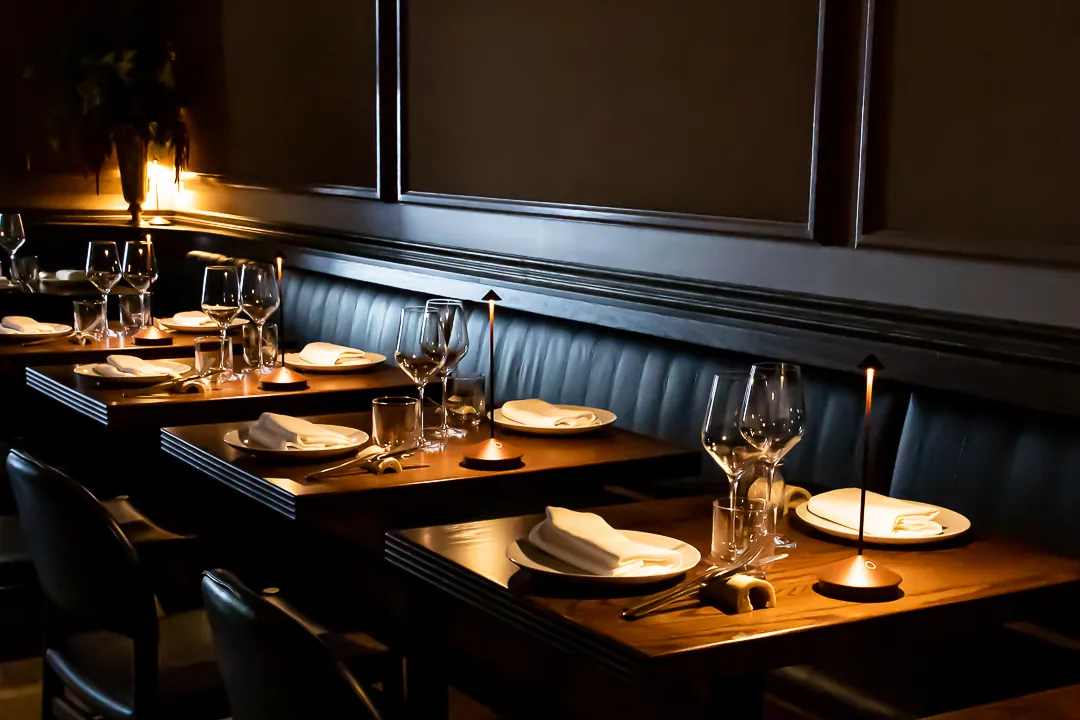
Peter Luger Steak House has been broiling porterhouse for two at 1,500°F under a stainless steel salamander on Broadway in Williamsburg since 1887. Three thousand miles east, in a converted farmhouse in the Basque village of Atxondo, Bittor Arginzoniz cooks every single dish, including the ice cream and the bread, over a custom open hearth at Asador Etxebarri, which ranked #2 in the World's 50 Best Restaurants in 2024. In Buenos Aires, Don Julio's parrillero turns 700 kilograms of grass-fed Argentine ribeye over hardwood every Saturday and charges $40 a head for the privilege. Same animal. Three completely different cuisines.
This guide is the definitive global ranking of steakhouses. Fourteen restaurants across six countries, organised by tradition and ranked by what each room actually does best. The frame is editorial: not every Michelin-starred steakhouse, not every Vegas mega-room, but the kitchens that define the four global traditions. American broiler-driven, British dry-aged, Spanish wood-fire, and Argentine parrilla. We name the chef, we name the cut, we name the price, and we name what isn't a steakhouse, a section that exists precisely because the category has been diluted by every hotel chain on six continents.
The Five Signals of a Great Steakhouse
A great steakhouse carries five distinguishing signals. The classical American steakhouses tend to lead with the first; the Spanish and Argentine traditions lead with the third; the new-wave kitchens (Cote, CUT, Carbone) blend all five. These are the criteria we apply before a kitchen earns inclusion.
1. Beef provenance and grading
The first signal is where the beef comes from and how it is graded. USDA Prime is the top 5 to 8% of American beef, with intramuscular fat marbling that produces the buttery texture associated with the American steakhouse. The serious American rooms, Peter Luger, Keens, 4 Charles, Mastro's, Bourbon Steak, buy only USDA Prime. The Japanese Wagyu system (A1, A5, BMS 1 to 12) is the parallel: A5 BMS 8+ is the highest grade, where the meat is roughly 35% intramuscular fat. The British tradition (Hawksmoor, Goodman) prizes single-source Aberdeen Angus or Longhorn. The Argentine and Spanish traditions prize grass-fed pasture beef from specific Pampas or Iberian farms. A great steakhouse names its source. A mediocre one names a USDA grade and stops.
2. Aging program
Dry-aging, holding the beef in a temperature and humidity-controlled room for 21 to 120+ days, is the second diagnostic signal. The American steakhouse median is 28 days; serious commitment starts at 45 days; the British and northern European tradition (Hawksmoor, Goodman) pushes to 60 days and beyond. Bodega El Capricho in Spain ages retired-ox cuts (animals 18+ years old) for 180+ days, producing what is widely considered the most flavour-concentrated beef in the world. The visible dry-aging room, the glass-walled chambers at Cote, Wolfgang's, and the front-of-house chambers at Hawksmoor and Asador Etxebarri, is the architectural signature.
3. Cooking method and char
The third signal is how the beef hits heat. The American broiler-driven steakhouse, Peter Luger, Keens, Wolfgang's, the Mastro's family, runs salamanders at 1,500°F+ to develop a hard, dark char in 90 seconds. The Spanish wood-fire tradition, Asador Etxebarri, Bodega El Capricho, runs lower temperatures over Basque oak and beech, producing a slower, more aromatic crust. The Argentine parrilla works between the two, with hardwood charcoal at 500 to 700°F. The Japanese A5 Wagyu tradition, Aragawa, the high-end yakiniku rooms, cooks at low heat for short time because A5 marbling renders too aggressively over high flame. Each tradition is correct on its own terms.
4. Sides, sauces, and the table
The fourth signal is what comes alongside the meat. The canonical American steakhouse side sheet, creamed spinach, hash browns, the wedge salad with bleu cheese, the bone-marrow potato, is non-negotiable; a steakhouse that does not run all four is dishonest. The British tradition (Hawksmoor, Goodman) adds bone-marrow gravy. The Argentine tradition runs sides hard: provoleta, chorizo, blood sausage as antipasto; chimichurri at the table. The sauce question divides everyone: béarnaise, peppercorn, bordelaise, Béchamel-based Diane, the simple beef-jus reduction. A great steakhouse offers the right three sauces and refuses the wrong eight.
5. The room and the suit ratio
The fifth signal is sociological. A great steakhouse has a specific architectural register that has barely changed in seventy years: red-leather banquettes, dark wood panelling, a bar with the gold-leaf back-bar, a piano lounge or comparable, dim lighting calibrated for the steak crust rather than skin tone. The "suit ratio", what proportion of the male guests are in jackets at 19:30 on a Friday, is a useful heuristic. Peter Luger, Mastro's, Cote, 4 Charles: above 60%. Bourbon Steak, CUT, Carbone: above 70%. A steakhouse where the suit ratio is below 25% on a Friday night is not running the room the tradition demands.
Lineage, The Four Steakhouse Traditions
The global steakhouse splits into four distinct traditions, each with its own grammar and its own canon of essential rooms.
The American broiler tradition. Born in late-19th-century New York around the Lower Manhattan financial district, Keens (1885), Peter Luger (1887), Delmonico's (1837), and refined through Chicago (Gibsons, Morton's), Las Vegas, and the resort-corridor American steakhouse. The signature is the high-temperature salamander broiler, the porterhouse-for-two convention, the deep red-leather room, and the canonical side sheet (creamed spinach, hash browns, bone-marrow potatoes). USDA Prime is the unspoken standard. The lineage exports cleanly to the Mastro's, Wolfgang's, and Smith & Wollensky brands across the US and to international outposts like Wolfgang's Singapore and Mastro's London.
The British dry-aged tradition. Defined by Hawksmoor (founded 2006 by Will Beckett and Huw Gott in Spitalfields, London) and Goodman (2008), the British line emphasises long dry-aging (40 to 60+ days), single-source Aberdeen Angus and Longhorn, and a beef-jus-and-marrow gravy alongside French-influenced sauces. The dining rooms are dressier than the American tradition, dark-wood townhouses rather than red-leather banquettes, and the cooking is more restrained, with less aggressive char. Smith & Wollensky London, M Restaurants, and the Heston Blumenthal beef program at Dinner have all built on the Hawksmoor framework.
The Spanish-Basque asador tradition. The most ancient and the most respected by the global fine-dining establishment. Asador Etxebarri (1990, Bittor Arginzoniz) in the village of Atxondo runs every single course over Basque oak fire, including the bread, the milk-and-cream ice cream, and the seasonal greens. Bodega El Capricho in Jiménez de Jamuz, León, ages retired-ox cuts for 180+ days, producing the most flavour-concentrated beef commercially available. The tradition is wood-fire, lower-temperature, ingredient-led, and Michelin-recognised in a way the American line is not. Asador Etxebarri sat at World's 50 Best #2 in 2024.
The Argentine parrilla tradition. Built on Pampas grass-fed beef and hardwood charcoal at 500 to 700°F, with the chimichurri and provoleta opening service and the bife de chorizo (ribeye) anchoring the centre. Don Julio in Buenos Aires (1999) is the modern flagship, World's 50 Best #14 in 2024, and the price-to-quality ratio remains the most under-priced in serious beef cooking globally. La Cabrera, Parrilla Peña, and El Pobre Luis are the supporting cast. The Argentine tradition exports less cleanly than the American line, but the export outposts that work (Asado at the Palace Downtown Dubai, La Cabrera Asuncion) carry the essentials.
Global Picks, Ranked
1. Asador Etxebarri, Atxondo, Spain
The world's most respected wood-fire steakhouse, book the chuleta in a Basque farmhouse and travel for the rest of the menu too.
Chef Bittor Arginzoniz opened Asador Etxebarri in a 16th-century stone farmhouse in the Basque village of Atxondo in 1990 and has built the most respected wood-fire kitchen in Europe. Etxebarri holds one Michelin star (a deliberate undersell, the Michelin guide has resisted promoting wood-fire restaurants to higher tiers) but sat at World's 50 Best Restaurants #2 in 2024 and has hovered in the top 10 for fifteen years. The kitchen runs every course over Basque oak and beech: the seasonal milk-skimmed butter, the smoked anchovies, the chuleta de vaca (aged-cow chop) cooked over coals, the milk-and-charcoal ice cream. The tasting menu is around €260. The dining room is fourteen tables in a wood-beamed Basque farmhouse forty minutes from Bilbao. Book three to six months ahead through the Etxebarri site.
Best for: Once-in-a-Lifetime, Anniversary, Honeymoon
2. Peter Luger Steak House, Brooklyn, NY (since 1887)
The canonical American steakhouse since 1887, book the porterhouse for two, take the cash because Luger's still doesn't take Amex.
Peter Luger has been broiling porterhouse for two on Broadway in Williamsburg since 1887, making it the oldest continuously operating fine-dining steakhouse in the United States. The room is wood-panelled, beer-hall-lit, with sawdust on the floor in the original Brooklyn German Bierhalle tradition. The menu is intentionally short: porterhouse for two ($120), porterhouse for three or four, a single steak, the canonical sides (Luger's-style hash browns, German fried potatoes, creamed spinach, the iceberg-bacon-tomato salad with steak-sauce dressing). The salamander broiler runs at 1,500°F and the dry-aging program (28 to 30 days in-house, USDA Prime) is the American template. Peter Luger lost its Michelin star in 2018, controversially, and has not regained it. The kitchen has not changed.
Best for: Birthday, Close a Deal, Father-Son Dinner
3. 4 Charles Prime Rib, Greenwich Village, NY
The unmarked Greenwich Village steakhouse and the hardest reservation in the city, book six weeks out for the 16 oz Chicago cut and a Manhattan.
4 Charles Prime Rib on Charles Street in Greenwich Village is one of the hardest reservations in New York. Chef Brendan Sodikoff (also behind Au Cheval in Chicago) opened the restaurant in 2016 in an unmarked Federal-style townhouse. The dining room is dim, dark-wood-panelled, jazz-on-vinyl, with eighteen tables and a bar that serves a cult Manhattan. The menu is short: the 16 oz Chicago cut (a center-cut New York strip wet-aged 30 days), the 22 oz dry-aged ribeye, the prime rib for two carved tableside on Sundays, the canonical sides. Sodikoff sources from Creekstone Farms in Kansas. Resy releases tickets thirty days out at midnight Eastern; weekend tables sell out in ninety seconds.
Best for: First Date, Birthday, Anniversary
4. Cote, New York
Simon Kim's Michelin-starred Korean steakhouse with USDA Prime cooked tableside on the smokeless grill, book the Butcher's Feast and let the room cook for you.
Simon Kim opened Cote on West 22nd Street in 2017 as the first Korean-American steakhouse hybrid, fusing the tableside hardwood-grill convention of the Seoul gogi-jip with the USDA Prime sourcing of the American steakhouse. Cote earned one Michelin star in 2018 and has held it through 2025. The signature "Butcher's Feast" ($75 per person in 2024) is four cuts grilled tableside on a smokeless hardwood charcoal grill: hanger steak, dry-aged ribeye, marinated short rib (galbi), and American Wagyu skirt. Banchan and the kimchi stew side complete the meal. The dining room is dark, leather-banquette, mirrored, a Korean reading of the classical American steakhouse architecture.
Best for: Birthday, Close a Deal, First Date
5. Keens Steakhouse, Manhattan (since 1885)
New York's oldest continuously operating restaurant (1885) with 90,000 clay churchwarden pipes on the ceiling, book the mutton chop, the cut nobody else still does correctly.
Keens Steakhouse on West 36th Street opened in 1885 as the Lambs Club Pipe Bar, Manhattan's first continuous restaurant, and the dining rooms are still hung with the 90,000 clay churchwarden pipes that members left in trust at the bar for a century. The architecture is the most museum-piece American steakhouse interior in New York. The menu runs all the canonical American cuts (dry-aged prime rib, porterhouse for two, dry-aged sirloin) but the dish to order is the cult mutton chop, a 26 oz saddle of lamb dry-aged 21 days and broiled, an essentially extinct New York convention that Keens has refused to drop since 1885. The Bull Moose Room is the historic dining room, Theodore Roosevelt, Babe Ruth, J.P. Morgan all dined there.
Best for: Birthday, Anniversary, Father-Son Dinner
6. Don Julio, Buenos Aires
The most under-priced great-beef restaurant on the planet, fly into Buenos Aires for the bife de chorizo, a bottle of Catena, and a $50 bill.
Pablo Rivero opened Don Julio on Guatemala Street in Palermo Soho, Buenos Aires, in 1999 and the restaurant ranked World's 50 Best Restaurants #14 in 2024, the highest-ranked parrilla in the world. The kitchen runs only grass-fed Pampas Aberdeen Angus and Holando-Argentino beef from a handful of named farms, cooked over Argentine hardwood charcoal. The canonical order: provoleta and chorizo to start, bife de chorizo (ribeye) or ojo de bife (eye of ribeye) for the centre, chimichurri at the table, dulce de leche pancake to close. The wine cellar, Rivero is a serious Malbec collector, holds over 18,000 bottles. Phone-only reservations; two to three weeks ahead. Dinner with a bottle of mid-tier Mendoza Malbec is roughly $50 per person at current exchange rates.
Best for: Birthday, Close a Deal, Honeymoon
7. Hawksmoor, London
Britain's defining modern steakhouse, book the Borough basement for a dry-aged sirloin and the city's best beef-and-marrow gravy.
Founders Will Beckett and Huw Gott opened the first Hawksmoor on Commercial Street in Spitalfields in 2006 and have built the British steakhouse modern canon. Six London locations across Borough, Knightsbridge, Air Street, Spitalfields, Wood Wharf, and Guildhall, plus international outposts in New York, Edinburgh, Manchester, Liverpool, Chicago, and Dublin. The kitchens buy only single-source Longhorn cattle from family farms in North Yorkshire (Charles Ashbridge's farm in Ginger Pig's network is the most quoted source) and dry-age all cuts 30 to 60 days. The signature is the 1kg or 1.5kg porterhouse, the chateaubriand for two, and the beef-and-marrow Sunday roast at Borough. Cocktails (the Hawksmoor Daiquiri, the Marmalade Cocktail) are a serious program.
Best for: Close a Deal, Birthday, Father-Son Dinner
8. Goodman, London
London's most serious dry-aging program, book the Mayfair Maddox Street room for the 60-day rib of Casterbridge Angus.
Goodman opened in Mayfair in 2008 (with Russian backers, a fact t…