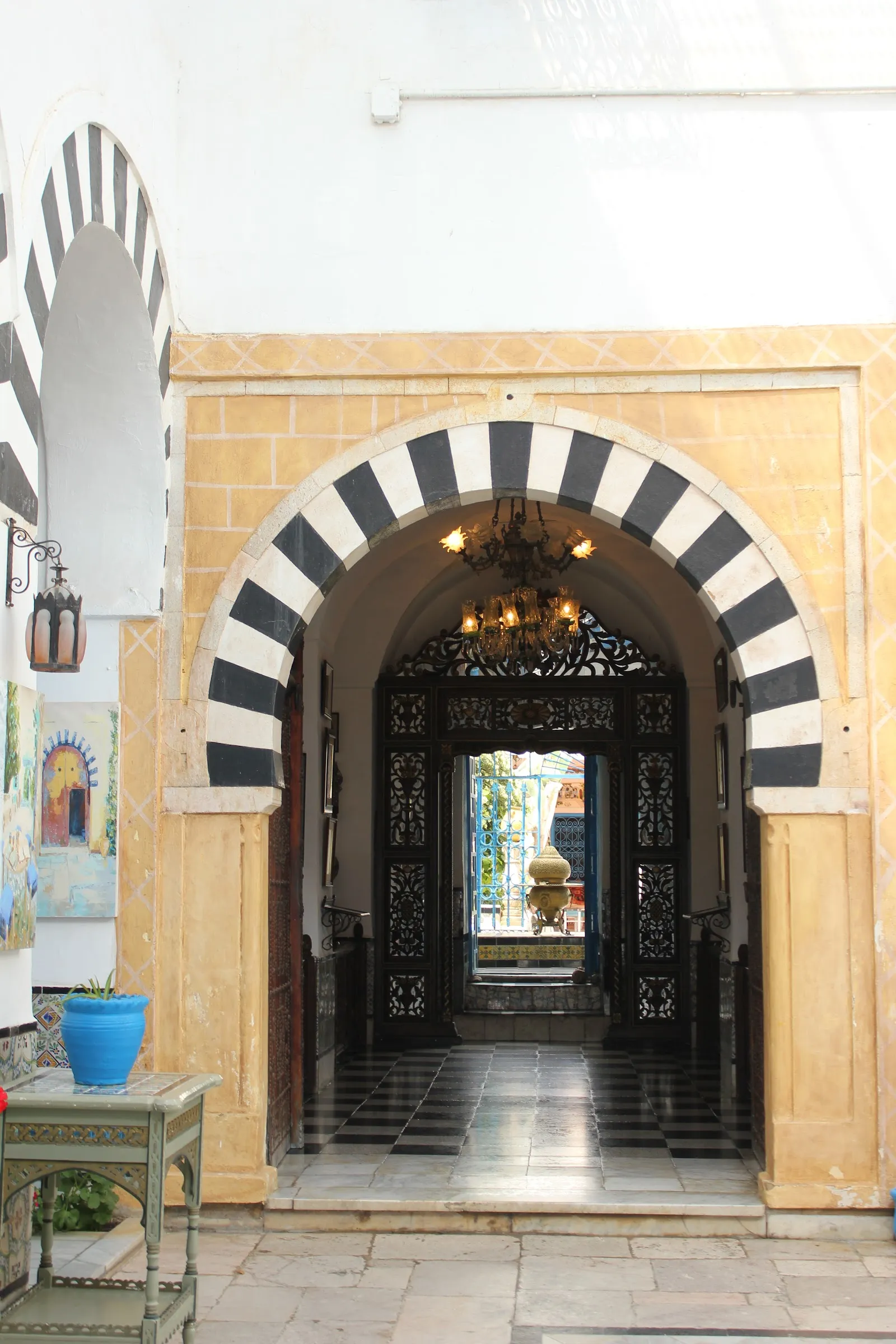
Café des Nattes — Tunisian Café, Sidi Bou Said
Café des Nattes is one of the world's most historically layered cafés. Paul Klee and August Macke stopped here in 1914 on the journey that Klee described as producing his understanding of colour — the watercolours he made here are among the 20th century's most influential paintings. The café's straw-mat (nattes) ceiling and white-and-blue terrace are unchanged.
The mint tea is prepared in the traditional Tunisian manner — gunpowder green tea, fresh mint, pine nuts on top, served in small glasses at exactly the right temperature. It is the correct and only appropriate order.
The baklava and the ghraiba (shortbread with sesame) served alongside the tea represent the Tunisian café pastry tradition at its most authentic. The café does not produce ambitious food; it produces exactly what has always been produced here, correctly.
The terrace looks out over the village's main square and across the Gulf of Tunis. Klee's view — a century later, slightly different in detail but identical in quality — is still visible from the same seats.
Best Occasion: Perfect for Solo Dining
Mint tea in Paul Klee's café, baklava, and the view that produced some of the 20th century's most important paintings. The most historically loaded solo afternoon in North Africa.
Best Occasion: Works for First Dates
The café's art history provides immediate conversation. The mint tea provides the shared ritual. The Gulf of Tunis provides the backdrop.