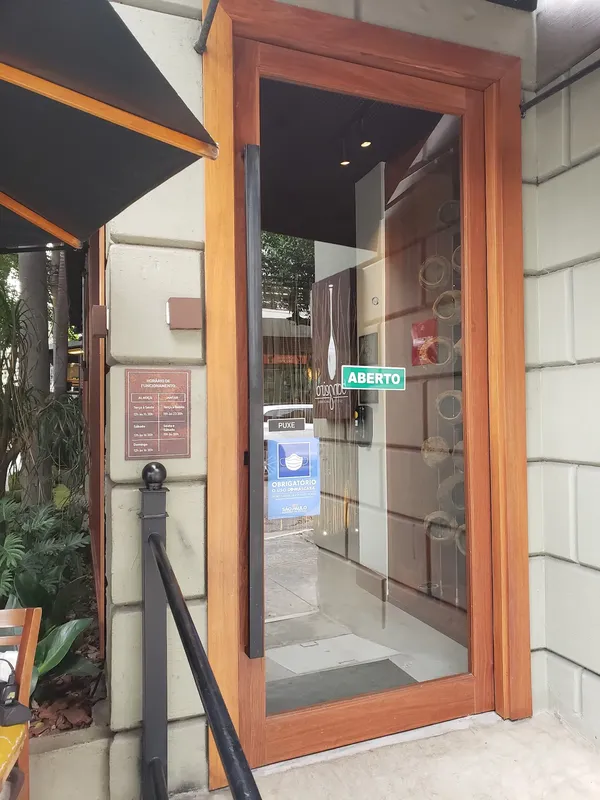
Mara Salles opened Tordesilhas on Alameda Barros in 1998 and moved to the current converted townhouse on Alameda Tietê in 2010. In the twenty-five years since, she has travelled relentlessly, to the Amazon, the Pantanal, the Sertão, the coastal states, collecting recipes, studying techniques, befriending the grandmothers who still remember how a proper moqueca was made before the restaurants simplified it. Tordesilhas is the notebook that came out of those travels. It is arguably the most important single document of Brazilian regional cuisine currently operating in São Paulo.
The menu reads like a map. Caranguejo from Bahia. Pirarucu from the Amazon. Carne de sol from Ceará. Pato no tucupi, slow-braised until the duck and the broth become a single ingredient. And then, on Saturdays, the feijoada, the national dish, built from first principles, served in the original sequence of cachaça, oranges, farofa, couve, rice, and the black bean stew itself, with four different cuts of pork and the kind of quiet confidence that only comes from doing something for a quarter century.
The room is a house: high ceilings, wooden floors, vintage Brazilian art on the walls, a garden at the back. The service is senior, unhurried, and warm. The wine list leans Brazilian and South American with intelligent picks from Chile, Argentina, and Uruguay. Salles herself is often in the dining room, greeting regulars, answering questions about specific regional techniques, quietly lobbying for a cuisine that is still under-recognised on the world stage.
Tordesilhas is not cutting-edge and has no interest in being so. It is the opposite: a restaurant that argues, with every plate, that Brazil's traditional cooking is already sufficient, already sophisticated, already worthy of the same reverence that France and Italy take for granted. The argument is persuasive. The feijoada is the proof.