The Hill Where Bavarian Beer Was Born
The story of Paulaner begins on this hill. In the 17th century, Paulaner monks at the monastery above the Au district began brewing Salvator, a strong dark beer that sustained them through the Lenten fast. The name derives from "Sanktvatorbier," the monks' beer of the Holy Father. Over two centuries later, their brewery became the commercial enterprise that would define Munich's beer culture globally. The hill is called Nockherberg. The restaurant that stands here today carries that history in every barrel.
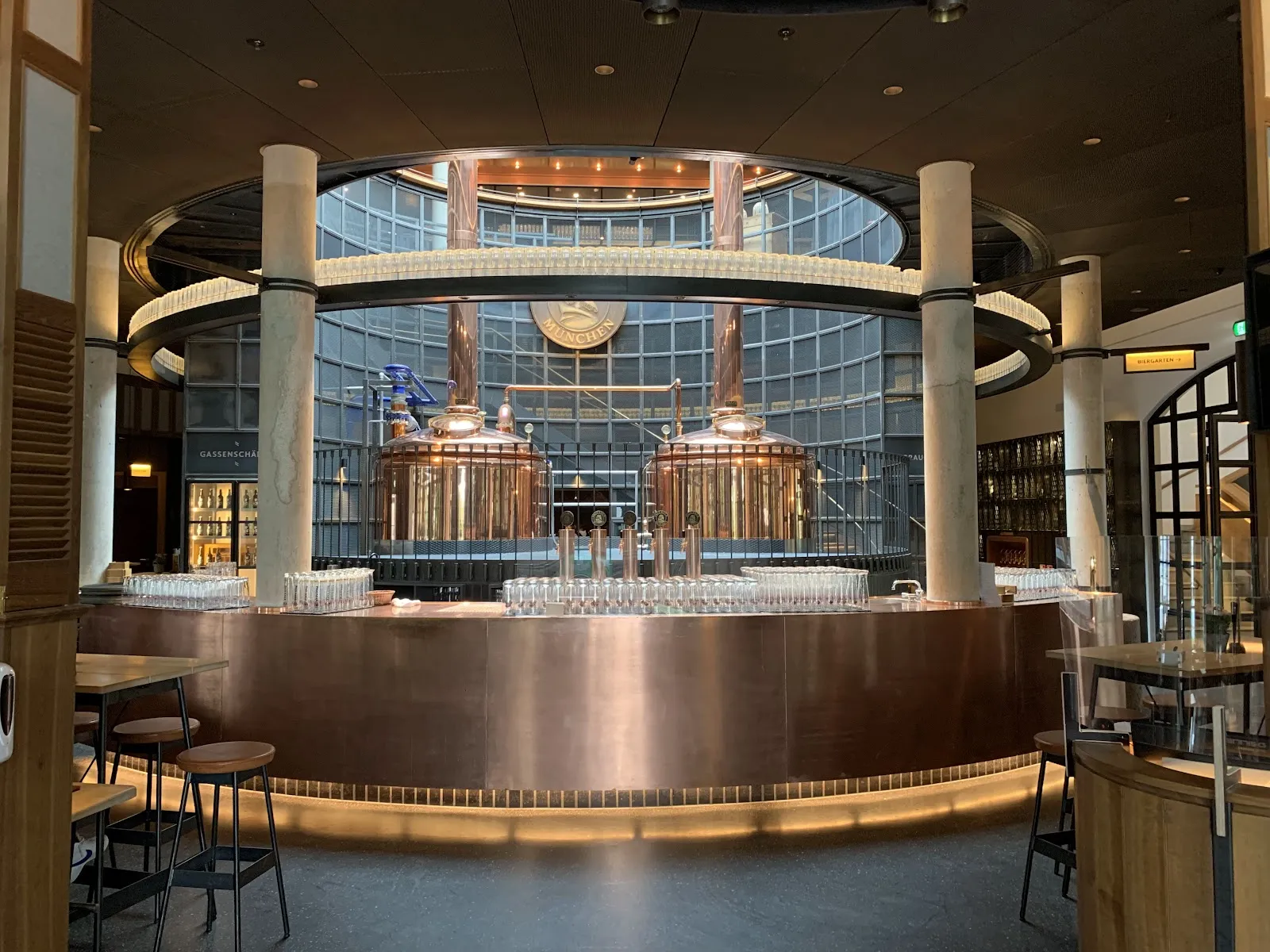
The current building was comprehensively renovated in 2018, merging tradition with an industrial aesthetic: exposed copper brewing kettles in the centre of the restaurant, wooden structural elements, and sight lines that connect the dining room to the active brewhouse producing up to 540 hectoliters of beer. The new format strips away the tourist-facing excess that afflicts lesser Munich beer institutions and instead leans into authenticity, the food is genuinely good, the beer is brewed metres from where you sit, and the views over the Isar valley from the beer garden remain unchanged for generations.
The beer garden is the city's most voted favourite among Munich residents. It seats 3,000: a large self-service section of 2,000 under traditional beer garden tables and an attendant-service area of 1,000. The chestnut trees providing shade are themselves century-old specimens. In summer, the garden fills from midday and holds until close; the wait for bench space is cheerfully accepted as part of the experience.
The menu delivers new Bavarian cuisine alongside regional classics. Obatzda (a seasoned Camembert spread with butter and onion) arrives with freshly baked pretzel rolls. The Schweinebraten (roast pork with gravy and bread dumplings) is the version by which Munich judges all others. The Steckerlfisch, freshwater fish on a stick, grilled over charcoal, is a beer garden speciality unique to Bavaria.
The annual Starkbierfest, held each March during the Lenten period, is the event that separates Munich's genuine beer culture from its tourist-facing version. Political figures are satirised in a theatrical performance. Salvator is dispensed in one-litre Maß. The garden fills before noon. Tickets require advance booking months ahead. To attend is to understand something essential about how Munich functions as a community.
Why It Works for a Team Dinner
Teams function differently when placed on long benches under ancient chestnut trees, served a litre of house-brewed Salvator by a waitress who has been working this garden for twenty years. The formality collapses. The conversation flows. The Schweinebraten arrives in portions that generate genuine surprise. There is no dress code, no wine list to navigate, no performance of sophistication required of anyone.
The eight event rooms, capable of hosting between ten and 3,000 guests, make the Nockherberg equally effective for the structured team dinner. Private rooms with direct views of the copper kettles seat groups of twenty to fifty in a setting that is genuinely atmospheric rather than merely functional. The Munich business community books these rooms heavily; for international visitors in particular, the combination of authentic setting and professional event management is difficult to replicate elsewhere.
Community Reviews
"The Starkbierfest is the most authentic Munich experience that exists. Nothing the tourist industry has created comes close.", T.H., Annual regular
"Took eight clients here from Chicago. They had all done Hofbräuhaus. This was completely different, quieter, more local, more genuine. They all bought Maß glasses on the way out.", B.K., Corporate host
"The copper kettles visible through the restaurant windows are magnificent. You drink the beer and you can see where it was made. In Munich, this still feels special.", C.R., First visit