"Modena's most honest plate of pasta - cash-only, no-bookings tagliatelle al ragu above the market, the table Massimo Bottura sends visitors to."
About Trattoria Aldina
Trattoria Aldina has fed Modena since the early 1970s from a simple first-floor room reached by a staircase above the Mercato Albinelli, the city's covered food market. The market below sells the prosciutto, Parmigiano, culatello and balsamic that define the Emilian pantry; Aldina cooks them.
Massimo Bottura recommended it in his Forbes guide to Modena, calling out its communal tables and traditional Modenese cooking. It anchors part of our Italian coverage of the city.
The Kitchen
The menu is short and unwaveringly traditional. The signature is tagliatelle al ragu - handmade, around EUR 8 - alongside gramigna al ragu di salsiccia and a pumpkin flan you rarely see elsewhere, plus the tortellini and tortelloni of the region. Everything is cooked to the standard a market kitchen demands.
This is not reinvention; it is preservation. Some plates of pasta, as the saying goes here, cannot be improved upon, only protected.
The Room
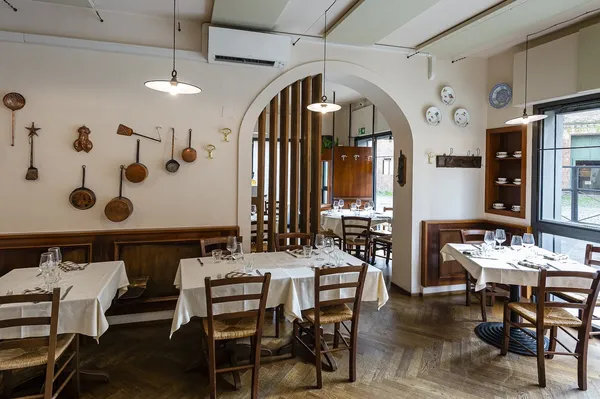
The room is plain and characterful - checked tablecloths, communal seating, the efficient hum of a kitchen that knows exactly what it is. There are no reservations and no credit cards: it takes cash or bancomat only, and you arrive at opening or queue on the stairs.
It draws local workers, families and increasingly well-informed visitors, lunch every day but Sunday and dinner on Fridays and Saturdays.
Not for
Not for a romantic, polished dinner or anyone wanting to book ahead or pay by card - it is a cash-only, no-reservations market trattoria with communal tables.
Frequently Asked
What is Trattoria Aldina known for?
Handmade classic Emilian pasta - above all tagliatelle al ragu at around EUR 8, plus gramigna al ragu di salsiccia and a rare pumpkin flan - cooked above Modena's Mercato Albinelli and recommended by Massimo Bottura.
Where is Trattoria Aldina?
Up a staircase at Via Luigi Albinelli 40, on the first floor above the covered Mercato Albinelli in central Modena.
How much does it cost?
It is excellent value in the $ range - pasta dishes are around EUR 8. Note it takes cash or bancomat only, with no credit cards.
Does it take reservations?
No - Trattoria Aldina does not take bookings. Arrive when it opens or expect to queue. It serves lunch every day except Sunday and dinner on Fridays and Saturdays.
Why does Bottura recommend it?
Massimo Bottura featured it in his Forbes guide to Modena, praising its communal tables, good cheer and traditional Modenese specialities such as tortellini, tortelloni and tagliatelle al ragu.
Reserve a Table
Reserve at Trattoria Aldina
There are no reservations - arrive at opening or expect to queue on the stairs. Cash or bancomat only; no credit cards. Lunch daily except Sunday, dinner Friday and Saturday.
Affiliate disclosure: Restaurants for Kings may earn a commission when you book through our reservation links, at no cost to you. Our scores are editorial and never paid for.
Practical Information
AddressVia Luigi Albinelli 40, above the Mercato Albinelli, Modena
NeighbourhoodAbove the Mercato Albinelli
CuisineClassic Emilian
PricePasta dishes around EUR 8; cash or bancomat only, no cards
Dress CodeCasual
SeatingSimple first-floor room with communal tables above the covered market
ReservationNo reservations; arrive at opening or queue