Akub
“Fadi Kattan cooks Bethlehem through British seasons: crunchy mansaf, Palestinian wines, plates £5 to £30. Book it for a first date.”
About Akub
Akub is named for a wild thistle foraged in the hills around Bethlehem, which tells you the register: Fadi Kattan, the Franco Palestinian chef behind Fawda in Bethlehem, opened this townhouse restaurant on Uxbridge Street in February 2023 to argue that Palestinian cooking belongs at London's top tables. The argument has landed. Akub sits in the 2026 Michelin Guide selection and made the Good Food Guide's 100 Best Local Restaurants list for 2026, rare territory for a cuisine London barely served four years ago.
The food reworks tradition through British seasons. The crunchy mansaf turns the national dish into crisp golden parcels of lamb shoulder and rice; arak cured monkfish borrows the anise spirit for the cure; labaneh balls arrive rolled in sumac, zaatar, turmeric and Aleppo pepper; and the short rib fatteh piles slow cooked beef over toasted bread and yogurt. Smaller plates run £5 to £15 and larger dishes £20 to £30, so a generous dinner stays near £60 a head before wine, and the list pours Palestinian and Jordanian bottles alongside the French.
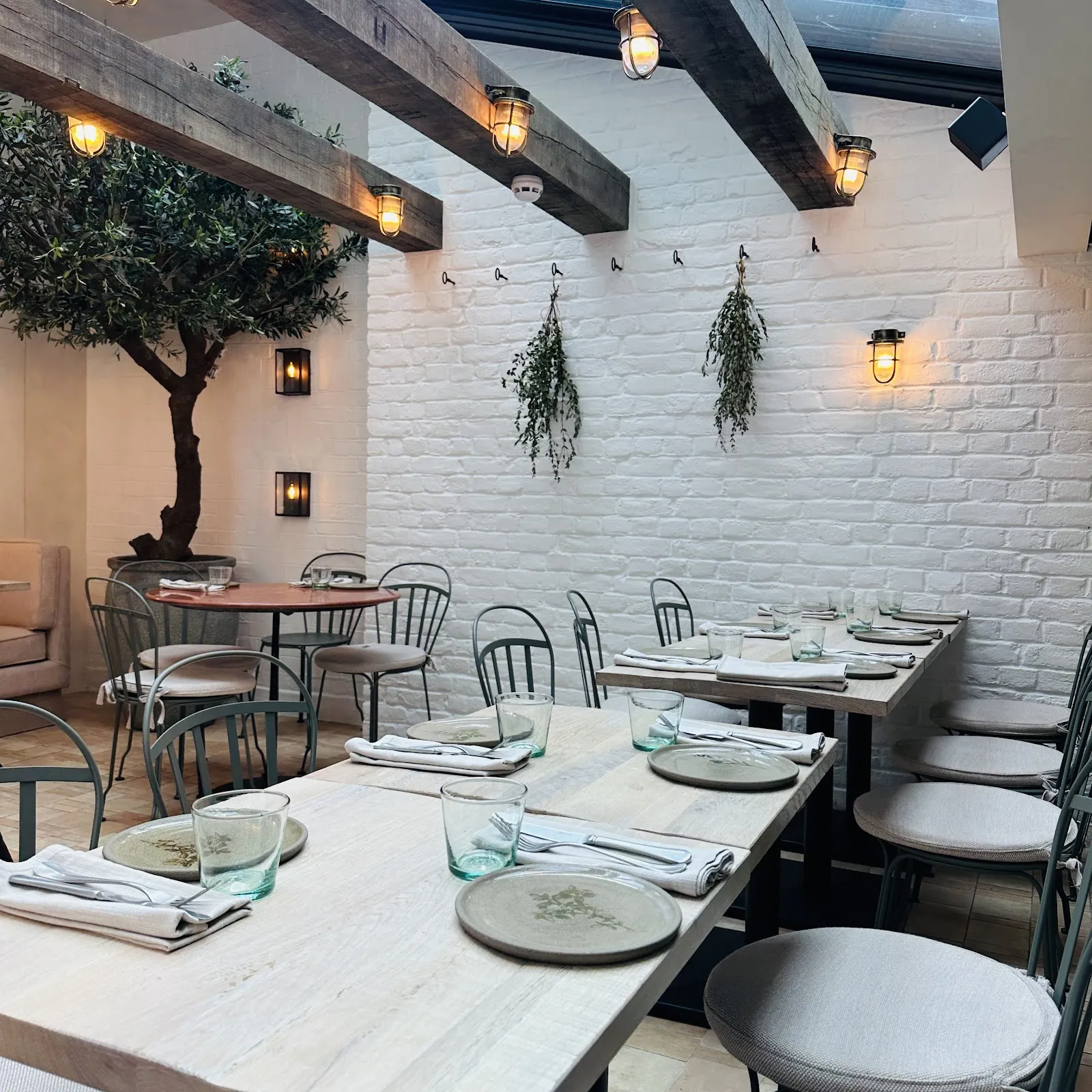
The room climbs three floors of a corner townhouse painted in warm ochre, with a glass roofed floor that makes lunch the insider's booking. Kattan published his cookbook Bethlehem in 2024 and splits his time between there and London, but the kitchen holds his line either way: seasonal produce, Palestinian memory, no clichés. Reservations run through SevenRooms, Tuesday to Sunday, and the ground floor keeps space for walk ins early in the week.
The Room
Three floors of a Notting Hill corner townhouse, warm ochre walls, Palestinian embroidery and photography, and a glass roofed upper floor that fills with daylight at lunch. Tables are close enough to feel social, far enough for conversation, and the staff explain the menu without lecturing. It is a neighbourhood room with capital city ambition, and it dresses accordingly: relaxed, with intent.
Why book it, occasion by occasion
Not every star fits every plan. These are the plans Akub was built to carry.
For a first date with something to talk about
Every plate here arrives with a story you can actually tell: the thistle the restaurant is named for, the arak in the monkfish cure, the mansaf reinvented as finger food. Sharing does the icebreaking, the £5 to £15 smaller plates let you order in low stakes rounds, and the warm lit room flatters without dimming to gloom. Book the glass roofed floor for a lunch date, order the labaneh balls first, and let the wine list's Palestinian bottles carry the second conversation.
For a birthday dinner that feeds the whole table
Palestinian hospitality is engineered for celebration, and Akub's sharing format means a birthday table eats as one instead of as six separate orders. Build the spread wide: mansaf parcels, fatteh, the fish of the day, breads and dips across the table. The room's three floors mean a group can settle without dominating the whole restaurant, and at £20 to £30 for the larger dishes a generous feast lands kinder on the host than any tasting menu would.
For the guest who has done every Mayfair table
Taking a client to Akub says you follow food, not just expense account convention. The Good Food Guide 2026 listing and the Michelin Guide selection give it credentials to name drop, the story of a Bethlehem chef cooking through British seasons gives the meal a narrative no French room can match, and the bill, near £60 a head before wine, reads as confidence rather than economy. Book the quieter top floor and order the short rib fatteh as the centrepiece.
What to order
The menu is built for the middle of the table. Order in two rounds and keep bread coming. These are the fixed points.
- Crunchy mansaf
The signature: Palestine's national dish rebuilt as crisp parcels of lamb shoulder and rice. Order one per person; sharing a single portion causes disputes.
- Short rib fatteh
Slow cooked beef over toasted bread, yogurt and pine nuts. The richest plate on the card and the right centrepiece for a hungry table.
- Arak cured monkfish
The cure borrows the anise spirit and the dish shows the kitchen's precision. The plate to order if you want the modern argument in one bite.
- A Palestinian bottle from the list
Wines from Palestinian and Jordanian producers are the list's point of difference. Ask the team to match one to the spread; it completes the story.
Practical
- Address
- 27 Uxbridge Street, Notting Hill, London W8 7TQ
- Reservations
- SevenRooms · Tuesday to Sunday
- Prices
- Smaller plates £5 to £15 · larger £20 to £30
- Format
- Sharing plates across the table
- Rooms
- Three floors · glass roofed floor for lunch
- Wine
- French plus Palestinian and Jordanian bottles
- Dietary
- Vegetarian breadth is real · ask for vegan routes
- Tube
- Notting Hill Gate, 3 minutes
Questions diners ask
Is Akub worth it?
Yes, especially if you want a meal with a point of view. A 2026 Michelin Guide selection, a Good Food Guide 100 Best Local listing for 2026 and plates from £5 mean the credentials and the bill both work in your favour. It is London's most convincing Palestinian kitchen and one of Notting Hill's warmest rooms.
What does dinner at Akub cost?
Smaller plates run £5 to £15 and larger dishes £20 to £30, so a generous shared dinner lands around £50 to £65 a head before drinks. A lighter lunch of three smaller plates and a glass can be done for about £35. Wine from the Palestinian and Jordanian list adds £10 to £15 a glass.
How do I book Akub?
Through SevenRooms, linked from the restaurant's own site, or by phone. The restaurant runs Tuesday to Sunday, and weekend dinners book out furthest ahead. The glass roofed floor is the seat to request for lunch; midweek evenings usually have space a few days out.
What should I order at Akub?
Build the meal around the crunchy mansaf and the short rib fatteh, open with labaneh balls and the arak cured monkfish, and keep bread on the table throughout. One larger dish plus two smaller plates per person feeds a table properly. Finish with the Palestinian sweets.